
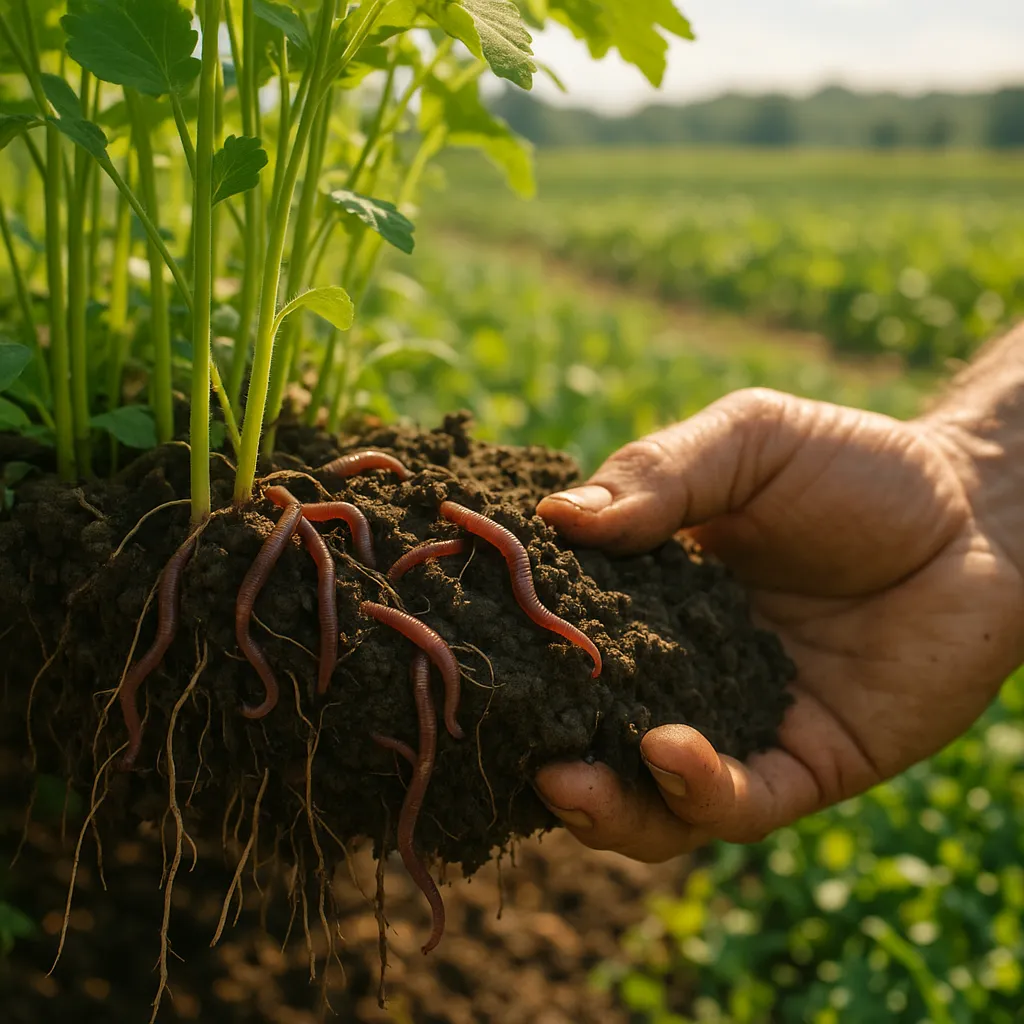
In the heart of the Amazon, a silent revolution is taking root, one that could reshape the future of agriculture and climate change mitigation. A recent meta-analysis published in *Current Research in Environmental Sustainability* has shed light on the potential of climate-smart agricultural (CSA) systems to boost soil organic carbon (SOC) stocks, offering a beacon of hope for farmers and environmentalists alike.
The study, led by Chukwudi Nwaogu from the Department of Soil Science at the University of São Paulo, Brazil, and the Department of Environmental Management at the Federal University of Technology, Owerri, Nigeria, along with the Sydney Institute of Agriculture, The University of Sydney, Australia, delved into the dynamics of SOC under different CSA systems in Rondônia State, Brazil. The findings are promising, with integrated crop-livestock-forest (iCLF) systems showing the highest SOC change rate at 0.76 Mg C ha−1 yr−1.
“This study provides a regional-level appraisal of SOC stock changes, which is crucial for understanding the scale at which CSA systems can contribute to reversing SOC losses and promoting carbon storage,” Nwaogu explained. The research highlights that climate, altitude, and soil depth significantly influence the rates of SOC stock change, with Oxisols and Ultisols promoting carbon sequestration, while Alfisols and other soil groups did not.
The implications for the agriculture sector are substantial. By adopting CSA systems, farmers can not only mitigate greenhouse gas emissions but also enhance food security. The study suggests that CSA systems can accumulate SOC at rates that vary depending on the system and the duration of the study. For instance, short-term studies (< 11 years) showed an average SOC change rate of 0.47 Mg C ha−1 yr−1, while studies spanning 11–20 years and above 20 years showed rates of 0.93 and 0.55 Mg C ha−1 yr−1, respectively.The commercial impacts of this research are far-reaching. Farmers can potentially increase their yields while contributing to environmental sustainability, a dual benefit that could drive the adoption of CSA systems. Moreover, the findings support Brazil's Low-Carbon Agriculture Plan and the country's Nationally Determined Contributions commitments on climate change mitigation through agriculture.As the world grapples with the challenges of climate change and food security, this research offers a glimmer of hope. It underscores the importance of integrated agricultural systems in promoting SOC accumulation and mitigating GHG emissions. The study's insights could shape future developments in the field, encouraging more farmers to embrace CSA systems and paving the way for a more sustainable agricultural sector.In the words of Nwaogu, "The results from our meta-analysis established that CSA under the prevailing soil and environmental conditions can encourage more adoption of CSA by farmers, promote SOC accumulation, and consequently mitigate greenhouse gases (GHG) emissions, while guaranteeing food security." This research is not just a step forward in scientific understanding but a call to action for the agricultural community to embrace climate-smart practices for a sustainable future.