
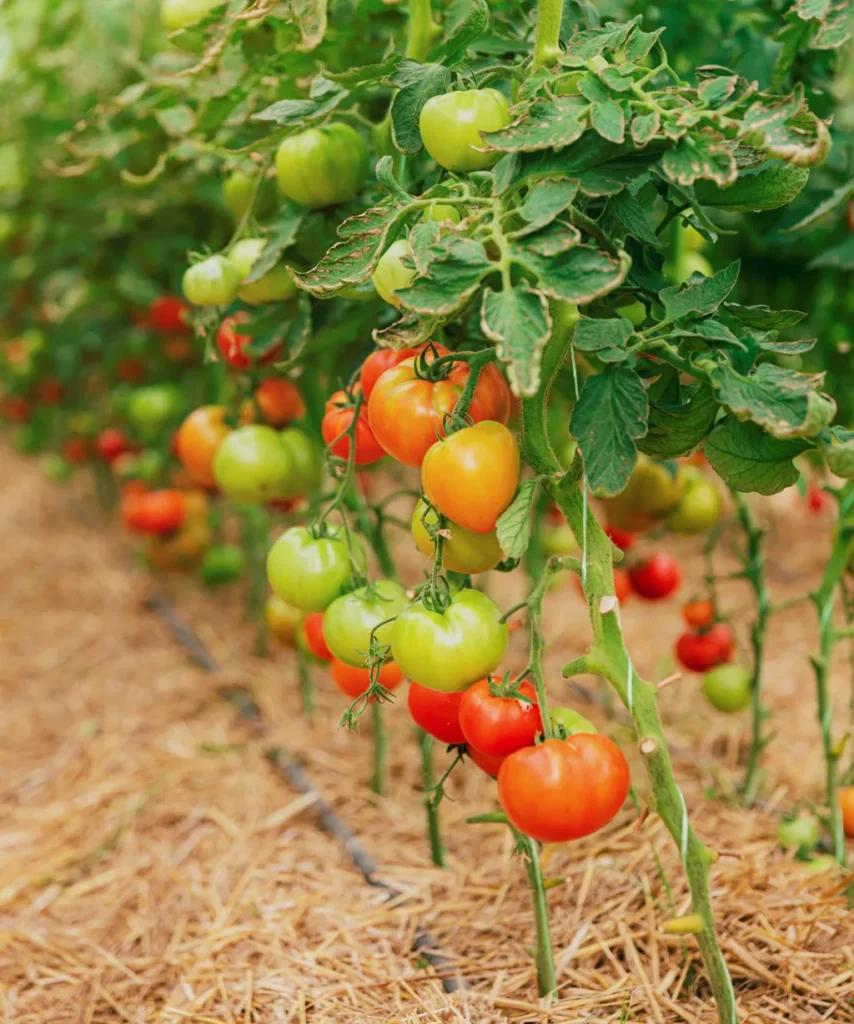
In the quest for sustainable and high-yield agriculture, farmers have long turned to mulching practices to improve soil health and crop performance. A recent study published in *Frontiers in Microbiology* sheds new light on how different mulching techniques influence soil properties and microbial communities, ultimately affecting tomato yields. The research, led by Xiaoxia Li of the Millet Research Institute at Shanxi Agricultural University, offers valuable insights that could reshape agricultural practices and boost commercial impacts in the sector.
The study, conducted over three years, compared four mulching treatments: plastic film mulching alone (SBF), straw mulching alone (SM), film-straw dual mulching (SBFSF), and no mulching (CK). The findings revealed that all mulching treatments significantly increased tomato yield, with SBFSF leading the pack, showing a remarkable improvement of 50.17%. This dual mulching method also demonstrated the strongest effects on soil moisture and thermoregulation, crucial factors for optimal plant growth.
“Our results indicate that the combination of film and straw mulching not only enhances soil properties but also selectively promotes beneficial microbial communities,” said Li. This selective promotion includes plant growth-promoting rhizobacteria and functional microorganisms involved in carbon-nitrogen cycling, such as Firmicutes, Lysobacter, Bacillus, Ascomycota, and Mortierellomycota. These microorganisms play pivotal roles in nutrient cycling and plant health, contributing to the superior performance of the SBFSF treatment.
In contrast, straw mulching (SM) and plastic film mulching (SBF) led to an increase in the abundance of pathogenic fungi like Fusarium, Cladosporium, Alternaria, and Cephaliophora, which could explain their inferior yield performance compared to SBFSF. The study highlights the importance of choosing the right mulching strategy to maximize yields and minimize the risk of pathogen proliferation.
The research also employed partial least squares path modeling (PLS-PM) to analyze the direct and indirect effects of mulching practices on soil properties and microbial communities. The findings suggest that mulching practices directly influence soil bacterial and fungal community composition and diversity, which in turn affect soil properties and tomato growth. This comprehensive analysis provides a scientific foundation for improving mulching practices and promoting sustainable agriculture.
The commercial implications of this research are substantial. Farmers can leverage these insights to optimize their mulching strategies, leading to higher yields and improved soil health. The study’s emphasis on the beneficial effects of dual mulching (SBFSF) offers a practical approach for farmers looking to enhance their tomato production while maintaining sustainable practices.
As the agricultural sector continues to evolve, understanding the intricate relationships between mulching practices, soil properties, and microbial communities will be crucial. This research not only advances our knowledge in this area but also paves the way for future developments in sustainable agriculture. By adopting evidence-based practices, farmers can achieve better yields, reduce environmental impact, and contribute to a more resilient and productive agricultural system.
The study, led by Xiaoxia Li from the Millet Research Institute at Shanxi Agricultural University, was published in *Frontiers in Microbiology*, providing a robust framework for future research and practical applications in the field. As the agricultural industry continues to seek innovative solutions, this research offers a promising path forward, blending scientific rigor with practical insights to drive sustainable growth and productivity.