
India, the world’s second-largest producer of food, is grappling with significant challenges in its agricultural sector, which is the primary livelihood for its rural population. The sector is facing a daunting task of meeting the increasing food demand of the Indian populace and ensuring food security. The main obstacles include unpredictable weather, uncontrolled pest attacks, dependence on seasonal monsoon rains for irrigation, and the continuing use of traditional farming practices. Additionally, the sector is hindered by structural issues such as small landholdings, with small and marginal farmers accounting for over 86% of all farmers in India. These farmers have limited access to essential inputs like water, fertilizers, electricity, tractors, harvesters, and drip irrigation technologies, leading to low productivity and often unprofitable ventures.
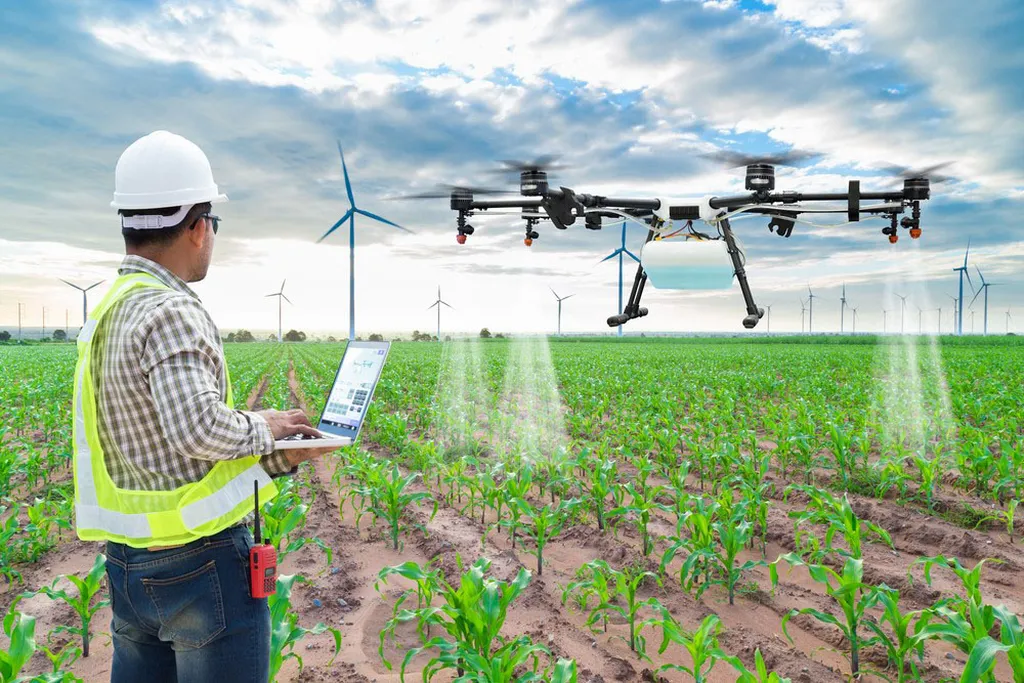
The Indian government has set an ambitious goal of doubling farmers’ income, which necessitates the adoption of advanced technology such as precision agriculture. Precision agriculture, or precision farming, aims to achieve the highest yield, sustainability, and maximum production. One of the examples of precision agriculture is the use of drones equipped with multispectral sensors. These drones capture images across multiple wavelengths of light, enabling farmers to monitor crop health, soil moisture levels, and optimize irrigation practices.
Drones also help in cutting costs by reducing manual pesticide spraying expenses and lowering pesticide exposure for workers. They allow for efficient and fast pesticide application, improving pest control and decreasing environmental pollution. The diverse agro-climatic zones in India result in varied cropping patterns and agricultural practices, necessitating specialized solutions for crop monitoring and management, which drones can effectively provide.
The transition to Agriculture 4.0, or smart farming, is expected to play a crucial role in leveraging cutting-edge technologies to optimize food production and resource management. Agriculture 4.0 emphasizes the integration of the Internet of Things (IoT), big data, artificial intelligence, and robotics throughout the entire agricultural production and supply chain.
Global trends have shown promising results in countries like the United States and Japan, demonstrating how drones can boost agricultural productivity. However, India’s specific challenges, such as small farm sizes and limited access to technology, call for customized solutions suited to its socio-economic and agro-climatic conditions. The Indian government is actively working to implement drone technology across various agricultural sectors, with policies like the National Drone Policy and Drone Rules 2021, and financial aid being offered for drone adoption under the Drone Scheme.
In conclusion, drones are expected to play a significant role in the future of Indian agriculture. They enable farmers to adapt to specific environments, make informed decisions, and reduce labor costs and exposure to hazardous chemicals. Crop health monitoring, seed planting, and precision agriculture are just a few examples of how drones can enhance sustainability, productivity, and efficiency in Indian agriculture. However, the high cost of precision agriculture remains a major obstacle to its wider affordability and adoption in developing countries like India.