
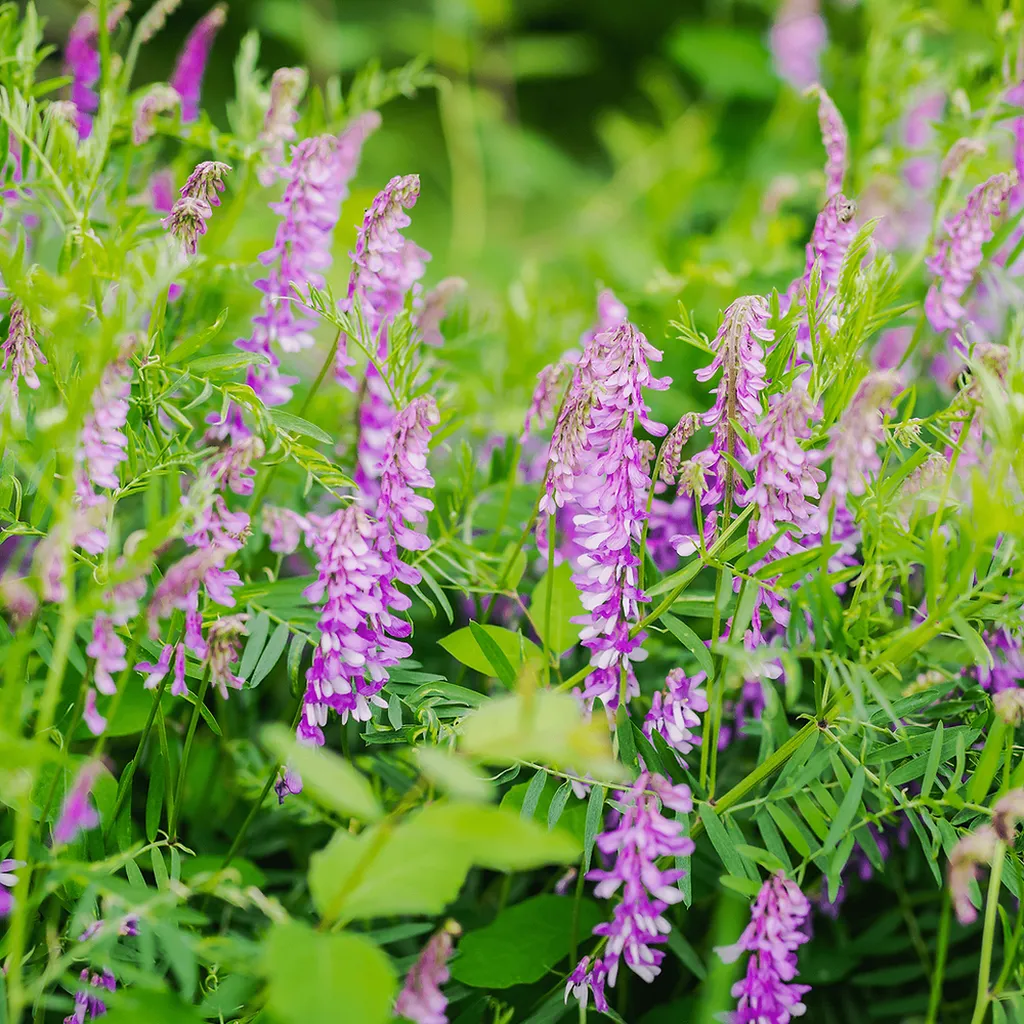
In the pursuit of sustainable agriculture, a recent study published in *Industrial Crops and Products* has shed light on a promising practice that could revolutionize tobacco production. Researchers, led by Wenhai Huang from the College of Agronomy and Biotechnology at China Agricultural University, have discovered that incorporating leguminous green manure, particularly hairy vetch, into tobacco cultivation can significantly reduce nitrogen (N) inputs while boosting yield, quality, and nitrogen use efficiency.
The study, conducted over seven years in southwestern China, compared the effects of four different green manures—white radish, ryegrass, barley, and hairy vetch—against a fallow control. The results were striking. Hairy vetch, a leguminous cover crop, demonstrated the strongest nitrogen legacy effect, providing an additional 93.5 kg of nitrogen per hectare for the subsequent tobacco crop. This led to a substantial increase in tobacco yield, reaching 2320 kg per hectare, a notable improvement over the fallow treatment.
“Hairy vetch performed exceptionally well, not only enhancing the soil’s nutrient profile but also improving the overall quality of the tobacco,” said Wenhai Huang. “This combination of high yield and quality, achieved with optimized nitrogen inputs, presents a sustainable model for tobacco production.”
The implications for the agriculture sector are profound. Tobacco farming, like many other crops, has faced challenges due to excessive nitrogen inputs, which can lead to environmental degradation and lower yields. By integrating leguminous green manures, farmers can reduce their reliance on synthetic fertilizers, thereby cutting costs and minimizing environmental impact.
“This research provides a clear pathway for farmers to adopt more sustainable practices without compromising on yield or quality,” added Huang. “It’s a win-win scenario that benefits both the environment and the agricultural industry.”
The study’s findings suggest that hairy vetch, combined with optimized nitrogen inputs of 67 kg per hectare during the tobacco season, offers the best balance for achieving high yield, quality, and nitrogen use efficiency. This approach could serve as a model for other regions and crops, promoting the green development of agricultural systems worldwide.
As the agricultural sector continues to seek sustainable solutions, this research offers a compelling case for the adoption of leguminous green manures. By leveraging the natural benefits of cover crops like hairy vetch, farmers can enhance soil health, reduce input costs, and produce higher-quality crops, ultimately contributing to a more sustainable and profitable future for agriculture.