
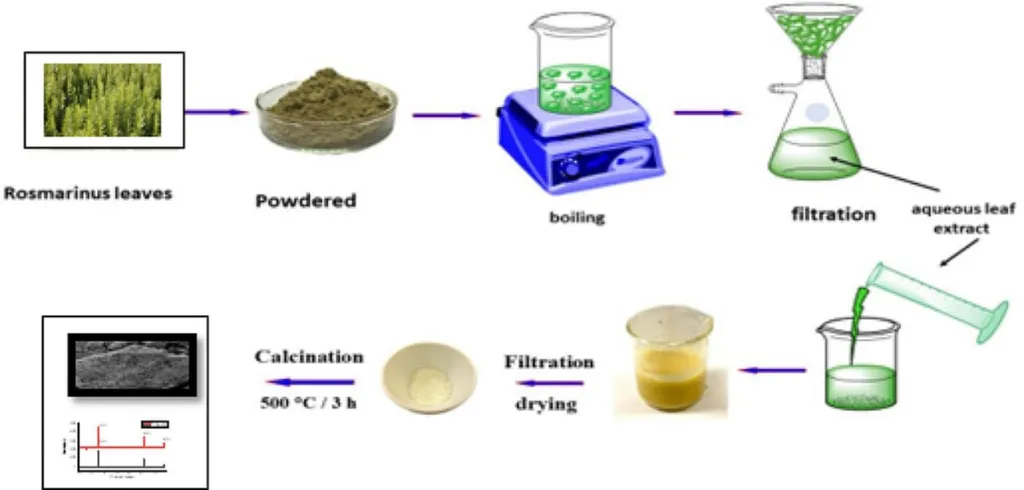
In the ever-evolving landscape of agricultural technology, a groundbreaking study published in *Industrial Crops and Products* has unveiled a novel approach to combating bacterial infections that plague crops and livestock. Researchers, led by Shahid Wahab from the Department of Agricultural Convergence Technology at Jeonbuk National University, have successfully synthesized silver nanoparticles (AgNPs) using an extract of Salvia rosmarinus, commonly known as rosemary. This green synthesis method not only offers a sustainable alternative to traditional chemical processes but also demonstrates significant antibacterial and antibiofilm properties against Pseudomonas aeruginosa, a notorious pathogen in agriculture.
The study’s findings are particularly relevant for the agriculture sector, where bacterial infections can lead to substantial crop losses and economic damage. “The use of rosemary-mediated silver nanoparticles (Rm-AgNPs) presents a promising avenue for developing eco-friendly and effective antimicrobial agents,” Wahab explained. The Rm-AgNPs exhibited a minimal inhibitory concentration (MIC) of 32.5 µg/mL against P. aeruginosa, indicating their potential to be integrated into agricultural practices to protect crops from bacterial infections.
One of the most compelling aspects of this research is the mechanistic insight into how Rm-AgNPs exert their antibacterial effects. The study revealed that treatment with Rm-AgNPs led to a substantial increase in reactive oxygen species (ROS) production, glutathione depletion, and notable leakage of intracellular proteins and DNA. These findings suggest that Rm-AgNPs induce severe membrane damage and oxidative stress in bacterial cells, effectively disrupting their ability to form biofilms—a critical factor in bacterial resistance to antibiotics.
The antibiofilm activity of Rm-AgNPs is particularly noteworthy. Biofilms are complex communities of microorganisms that adhere to surfaces and are highly resistant to conventional antimicrobial treatments. The study demonstrated that Rm-AgNPs could inhibit biofilm formation by up to 65.68% at twice the MIC, highlighting their potential as a powerful tool in combating biofilm-associated infections in agricultural settings.
Metabolite profiling of the rosemary extract identified multiple bioactive compounds, including Alnuside A and Umbelliferone, which showed strong interactions with key proteins involved in quorum sensing and biofilm formation. Molecular docking studies revealed that these phytochemicals could disrupt the communication systems that bacteria use to coordinate biofilm formation, offering a dual mechanism of action for the Rm-AgNPs.
The study also addressed the safety and toxicity of Rm-AgNPs. Toxicity assessments with Artemia salina revealed moderate toxicity, with an LC50 value of 202.55 µg/mL. This indicates that while Rm-AgNPs are effective against bacterial pathogens, their use must be carefully managed to minimize potential harm to non-target organisms.
The implications of this research are far-reaching for the agriculture sector. The development of sustainable and effective antimicrobial agents like Rm-AgNPs could revolutionize crop protection strategies, reducing reliance on synthetic chemicals and mitigating the development of antibiotic resistance. As Shahid Wahab noted, “This study emphasizes the potential of AgNPs derived from S. rosmarinus as sustainable and effective agents against infections associated with biofilms and antimicrobial resistance.”
Looking ahead, the integration of green-synthesized nanoparticles into agricultural practices could pave the way for more sustainable and environmentally friendly farming methods. The use of plant extracts like rosemary not only provides a renewable and biodegradable source for nanoparticle synthesis but also aligns with the growing demand for eco-friendly solutions in agriculture.
In conclusion, this research represents a significant step forward in the development of innovative antimicrobial agents for the agriculture sector. By harnessing the power of green synthesis and advanced characterization techniques, researchers have unlocked new possibilities for combating bacterial infections and biofilm formation. As the agricultural industry continues to evolve, the adoption of such sustainable technologies will be crucial in ensuring food security and environmental sustainability.