
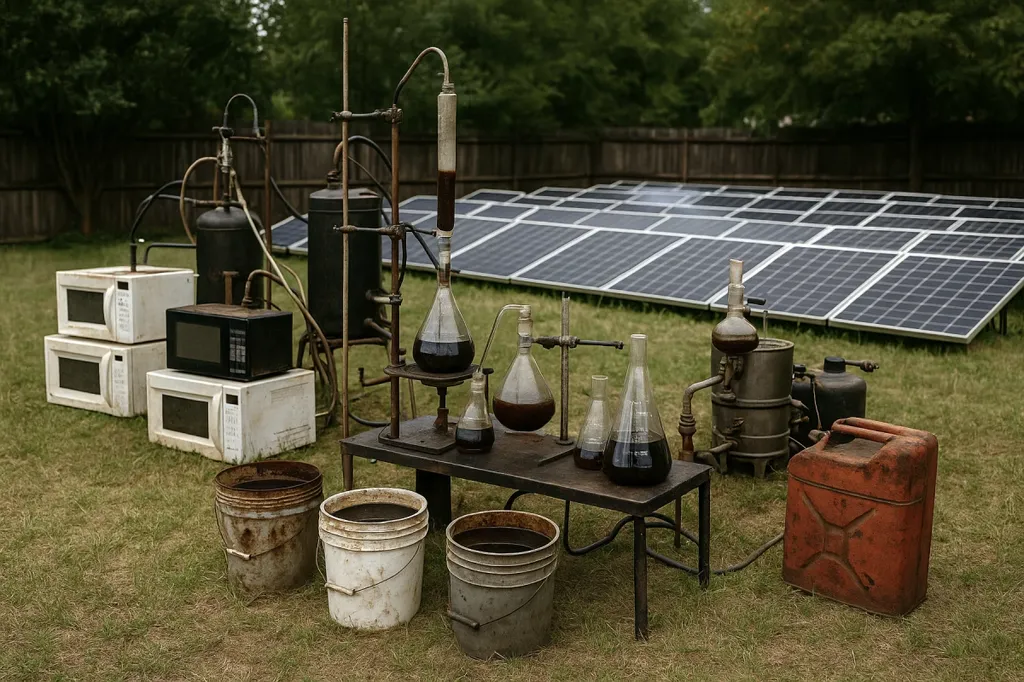
In the quest for sustainable energy solutions, a team of researchers has turned to an unlikely source: waste. A recent study published in the *Journal of Chemistry* explores the potential of third-generation dye-sensitized solar cells (DSSCs) fabricated using compounds derived from the copyrolysis of biomass and plastic waste. The research, led by Danielle R. Garcia from the Department of Materials Engineering, offers a promising avenue for diversifying the energy matrix while addressing environmental concerns.
DSSCs have long been touted for their efficiency and eco-friendliness, but the latest generation of these solar cells stands out due to their enhanced performance and streamlined manufacturing processes. The key to their success lies in the careful selection of electron donor and acceptor materials. In this study, Garcia and her team focused on porphyrin and fullerene compounds, which have shown great promise in previous research.
The researchers employed theoretical approaches such as Density Functional Theory (DFT) and Time-Dependent DFT (TD-DFT) to analyze systems formed by porphyrin, C60 fullerene, and compounds generated from the copyrolysis of biomass and inorganic waste. “By utilizing residues that would otherwise be discarded, we are not only reducing waste but also developing more efficient and ecological solutions,” Garcia explained.
The study identified several triads that showed particularly promising properties. Among them, the C60-3-methyl-1,2-benzenediol-P and C60-vanillin-P triads exhibited ideal values for properties such as bandgap, electrophilicity, and electron-accepting power. These systems demonstrated electronic transitions occurring in the visible region of the electromagnetic spectrum, making them suitable for solar cell applications.
One of the most significant findings was the light harvesting efficiency (LHE) of the proposed systems. All systems achieved an LHE of over 0.9, indicating an excellent energy-capturing capacity. “The high LHE values suggest that these triads could be highly effective in converting solar energy into electrical energy,” Garcia noted.
The implications of this research extend beyond the realm of solar energy. For the agriculture sector, which generates a substantial amount of biomass waste, this study offers a potential solution for repurposing that waste into valuable photovoltaic materials. By integrating these innovative solar cells into agricultural practices, farmers could not only reduce their environmental footprint but also generate additional revenue streams.
Moreover, the use of plastic waste in the fabrication of solar cells addresses a growing environmental challenge. As the world grapples with the issue of plastic pollution, this research provides a viable pathway for transforming waste into a valuable resource.
Looking ahead, the findings of this study could pave the way for further advancements in the field of photovoltaics. The combination of porphyrins, fullerenes, and copyrolysis compounds presents a unique opportunity for developing more efficient and sustainable solar cells. As Garcia and her team continue to explore the potential of these triads, the future of solar energy looks increasingly bright.
In the words of Garcia, “This research is just the beginning. We are excited about the possibilities that lie ahead and the potential impact on both the energy and agricultural sectors.”