
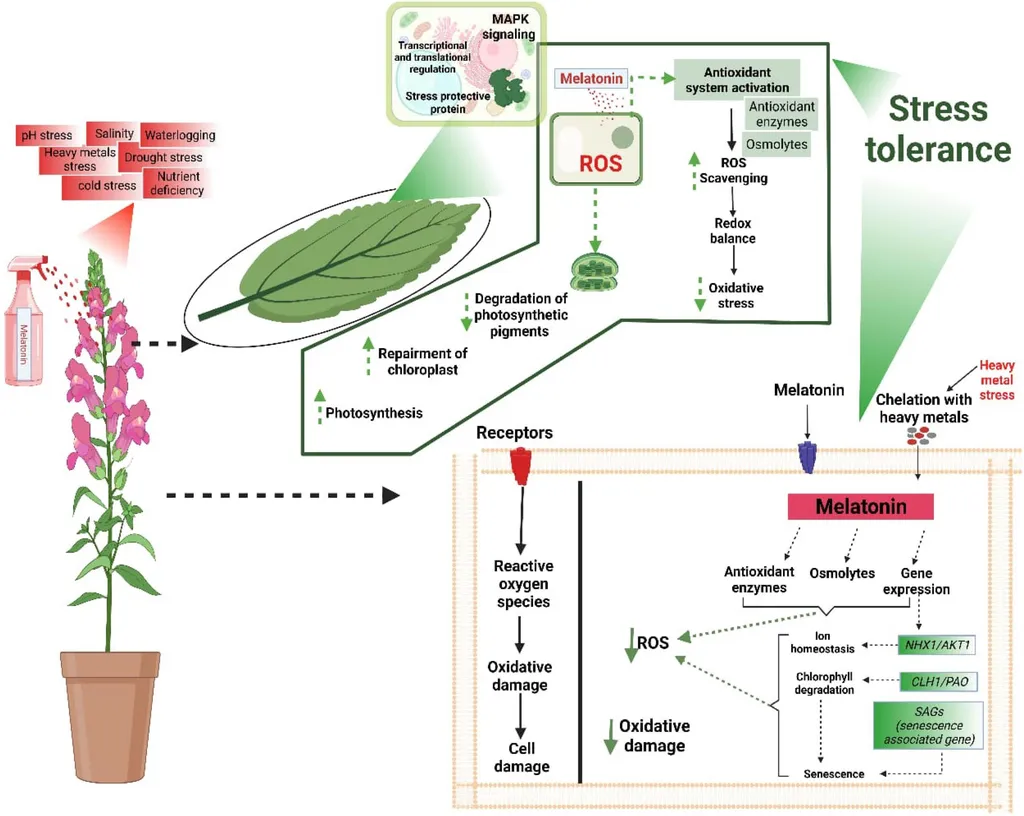
In a groundbreaking study published in *Guangdong nongye kexue*, researchers have uncovered a promising new strategy to combat the devastating East Asian Passiflora Virus (EAPV) in *Nicotiana benthamiana*, a model plant widely used in agricultural research. The study, led by Jianhua Wang from the Institute of Tropical Bioscience and Biotechnology at the Chinese Academy of Tropical Agricultural Sciences, explores the antiviral efficacy of exogenous melatonin, a hormone known for its role in regulating plant growth and stress responses.
EAPV poses a significant threat to agricultural productivity, causing severe stunting in infected plants. The study found that untreated infected plants exhibited a dramatic reduction in height, reaching only 52.2% of the height of healthy control plants. However, the application of melatonin at a concentration of 200 μmol/L significantly alleviated this stunting. When applied before virus inoculation, melatonin-treated plants showed heights 1.66, 1.27, and 1.06 times greater than untreated infected plants at day 1, day 4, and day 7 post-treatment, respectively.
While melatonin did not prevent infection, it demonstrated a substantial inhibitory effect on viral replication, reducing viral accumulation by an average of 26.9%. This finding suggests that melatonin could be a valuable tool in managing EAPV outbreaks, particularly in regions where the virus is endemic.
The study also shed light on the mechanisms underlying melatonin’s antiviral effects. “Our research indicates that melatonin activates jasmonic acid (JA)-mediated induced systemic resistance (ISR) in *N. benthamiana*,” explained Wang. “This activation leads to a significant increase in JA levels, which in turn enhances the plant’s defense mechanisms against EAPV.” Interestingly, salicylic acid (SA) levels remained unchanged, suggesting that melatonin’s protective effects are specifically mediated through the JA pathway.
The commercial implications of this research are substantial. EAPV infection can lead to significant crop losses, impacting both small-scale farmers and large-scale agricultural operations. The use of melatonin as a protective agent could provide a cost-effective and environmentally friendly solution for managing viral infections in crops. Furthermore, the insights gained from this study could pave the way for the development of new antiviral strategies that target the JA pathway, potentially benefiting a wide range of crops beyond *N. benthamiana*.
As the agricultural sector continues to face challenges from emerging viral pathogens, innovative solutions like those explored in this study are crucial. The findings not only offer a practical approach to combating EAPV but also contribute to our broader understanding of plant immunity and the role of melatonin in plant defense mechanisms. This research, published in *Guangdong nongye kexue* and led by Jianhua Wang from the Institute of Tropical Bioscience and Biotechnology, represents a significant step forward in the fight against plant viruses and highlights the potential of melatonin as a powerful tool in agricultural biotechnology.