
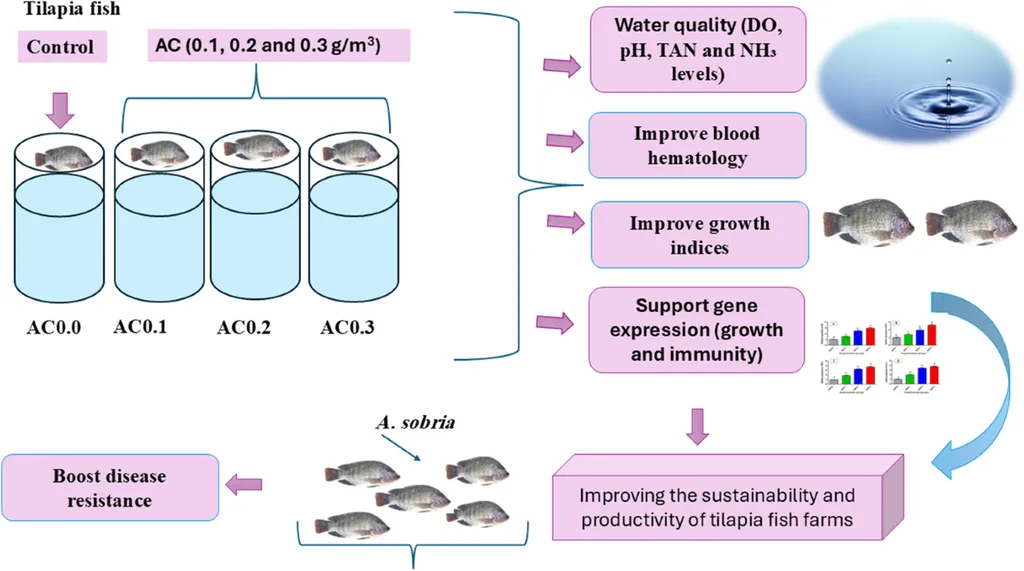
In the ever-evolving world of aquaculture, researchers are continually seeking innovative ways to enhance fish health and productivity. A recent study published in *AMB Express* has shed light on the potential benefits of a probiotic strain, *Pediococcus acidilactici* (PCA), for red tilapia farming. The research, led by Yousef Ahmed Alkhamis from the Animal and Fish Production Department at King Faisal University, offers promising insights into improving growth, blood physiology, immunity, and disease resistance in red tilapia (*Oreochromis niloticus × O. mossambicus*).
The study, which lasted 63 days, involved 180 tilapia fingerlings divided into four groups. Each group was fed a basal diet supplemented with varying amounts of PCA: 0, 1, 2, and 3 grams per kilogram of diet. The results were striking. Fish fed diets containing 2 or 3 grams of PCA per kilogram showed superior final body weight, specific growth rate, and average daily gain. Moreover, these levels significantly improved the feed conversion ratio compared to the untreated diet.
“Our findings suggest that dietary supplementation with *Pediococcus acidilactici* can significantly enhance the growth performance of red tilapia,” Alkhamis noted. This is a crucial discovery for the aquaculture industry, as improved growth rates and feed efficiency can directly translate to increased profitability for fish farmers.
The study also revealed that PCA supplementation led to a significant increase in protein and ash content in the fish, accompanied by a decrease in lipid content. This alteration in body composition could be particularly beneficial for consumers seeking leaner fish options.
Beyond growth metrics, the research delved into the impact of PCA on the fish’s immune system and overall health. Dietary PCA significantly enhanced the phagocytic index and serum immunoglobulin (IgG and IgM) levels in a dose-dependent manner. This suggests that PCA can bolster the fish’s immune response, making them more resilient to diseases.
“Enhanced immune function is a game-changer in aquaculture,” Alkhamis explained. “It not only improves the health and survival rates of the fish but also reduces the need for antibiotics, promoting more sustainable and environmentally friendly farming practices.”
The study also found that PCA supplementation sustained liver enzyme levels and kidney function, indicating that the probiotic has a positive impact on the fish’s overall physiological health. Furthermore, PCA administration led to a significant upregulation of growth-related genes (GH, IGF-1, and IGF1-R) and immunity-associated genes (CXC chemokine, IL8, and IL1β) in a dose-dependent manner.
Perhaps most notably, the research demonstrated that PCA supplementation significantly improved the survival rate of red tilapia when challenged with the bacterial pathogen *Aeromonas hydrophila*. The highest survival rate was observed in the group fed the diet containing 3 grams of PCA per kilogram.
The implications of this research for the aquaculture industry are substantial. By incorporating *Pediococcus acidilactici* into fish diets, farmers can potentially enhance growth rates, improve feed efficiency, and boost disease resistance. This could lead to increased productivity and profitability, as well as more sustainable and environmentally friendly farming practices.
As the global demand for seafood continues to rise, innovative solutions like this are crucial for meeting the needs of a growing population. The study published in *AMB Express* by Yousef Ahmed Alkhamis and his team from King Faisal University offers a promising avenue for improving red tilapia farming and could pave the way for further advancements in the field of aquaculture.
In the words of Alkhamis, “This research highlights the significant benefits of dietary *Pediococcus acidilactici* supplementation for improving growth, blood physiology, immunity, and disease resistance in red tilapia. It underscores the potential of *Pediococcus acidilactici* as a practical and effective strategy for enhancing productivity and sustainability in red tilapia aquaculture.”
As the industry continues to evolve, such breakthroughs will be instrumental in shaping the future of aquaculture and ensuring its long-term success.