
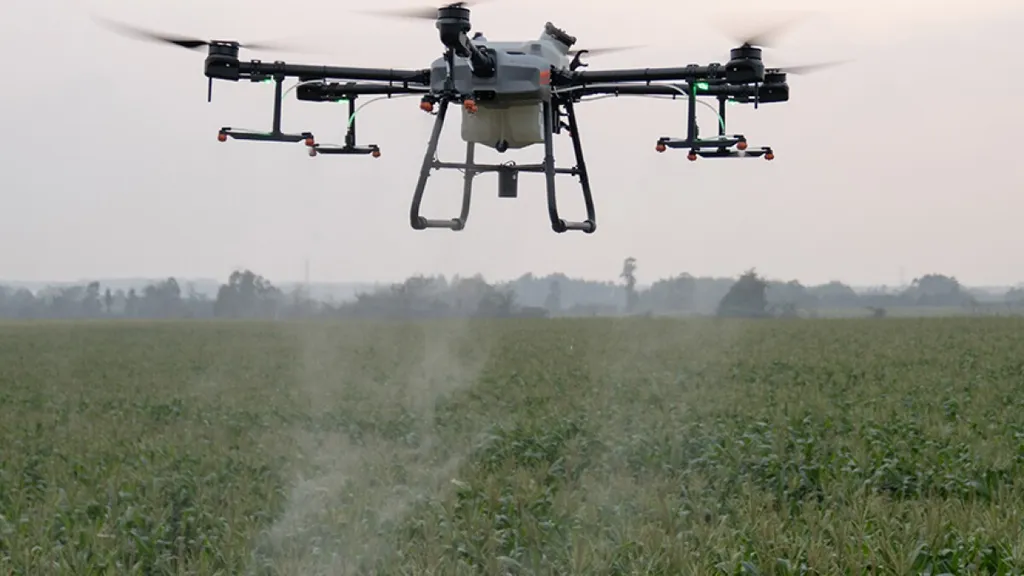
In the ever-evolving landscape of agricultural technology, a recent study published in the *Journal of Agricultural Machinery* has shed light on the efficacy and economic viability of spraying drones compared to traditional boom sprayers. The research, led by M. Safaeinejad from the Department of Agricultural Machinery and Mechanization Engineering at the Agricultural Sciences and Natural Resources University of Khuzestan, offers valuable insights into the future of precision agriculture.
The study, conducted in Khorramabad, Iran, compared the performance of a DJI Agras MG-1P spraying drone against a conventional 400-liter boom sprayer. The focus was on controlling weeds and yellow rust disease in wheat fields, two critical challenges for farmers worldwide. The findings reveal a nuanced picture of the strengths and weaknesses of each technology.
One of the key findings was that boom sprayers had a higher pesticide deposition rate (82.8%) compared to drones (69.9%). However, the difference in weed control effectiveness was minimal. “The average dry weight of weeds was slightly lower with drone spraying, but the difference was not statistically significant,” noted Safaeinejad. This suggests that while boom sprayers might be more efficient in pesticide application, drones are equally effective in controlling weed growth.
The study also examined the economic aspects of using these technologies. The total annual cost for drone owners was significantly higher (2980.3 million rials) compared to boom sprayer owners (513.48 million rials). However, the benefit-cost ratio for drone owners (1.215) was higher than that for boom sprayer owners (1.030). “Despite the higher initial costs, drones offer greater profitability due to their efficiency and precision,” explained Safaeinejad.
The research highlights the potential of drones to revolutionize agricultural practices. “Drones can significantly increase the efficiency and profitability of spraying operations,” Safaeinejad added. This could be a game-changer for farmers looking to optimize their operations and reduce environmental impacts.
The findings have significant implications for the agriculture sector. As the global population grows, the demand for sustainable and efficient farming practices is on the rise. Drones, with their ability to precisely target pests and diseases, could play a crucial role in meeting this demand. Moreover, the economic viability of drones suggests that they could become a mainstream tool in modern agriculture.
This study not only provides a comprehensive comparison of spraying drones and boom sprayers but also offers a glimpse into the future of agricultural technology. As researchers and policymakers continue to explore innovative solutions, the insights from this research could shape the development of new technologies and practices aimed at achieving sustainable agriculture and food security.