
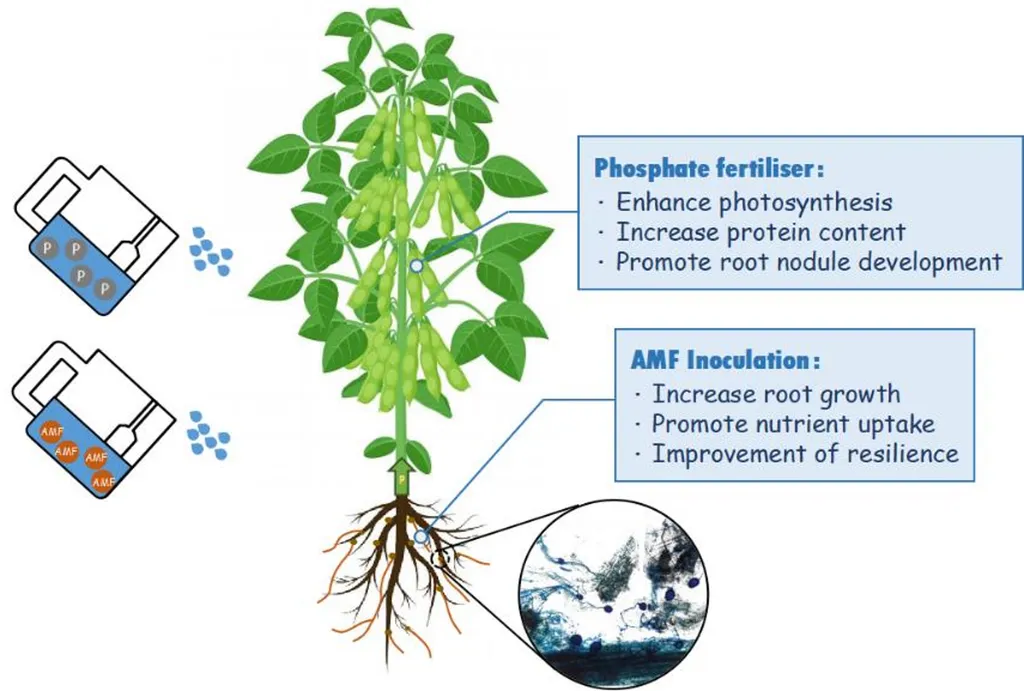
In the quest for sustainable agriculture, scientists are turning to nature’s own defenses to combat devastating crop diseases. A recent study published in the *FUUAST Journal of Biology* offers a promising alternative to synthetic pesticides, focusing on the symbiotic relationships between soybean plants, root nodule bacteria (rhizobia), and arbuscular mycorrhizae fungi. The research, led by Urooj Muhammad Sharif from the Agricultural Biotechnology & Phytopathology Laboratory at the University of Karachi, highlights a potential game-changer for soybean farmers worldwide.
Soybean (Glycine max) is a cornerstone of global agriculture, providing a vital source of protein, oil, and other agricultural products. However, its production is threatened by charcoal rot, a disease caused by the fungal pathogen *Macrophomina phaseolina*. Traditional management strategies have relied heavily on synthetic pesticides, but environmental concerns and regulatory restrictions have prompted a shift towards more sustainable solutions.
The study explored the use of rhizobia and vesicular-arbuscular mycorrhizae (VAM) fungi as biocontrol agents against charcoal rot. Soil inoculation with fermented rhizobia broth and VAM fungi significantly enhanced soybean growth, including plant height, biomass, and nodule formation. “The combination of rhizobia and VAM fungi not only promoted plant growth but also improved biochemical markers such as protein, phenol, and carbohydrate content,” Sharif explained. This enhancement in plant health and vigor is a critical factor in disease resistance.
Among the six rhizobia strains tested, NFB-301, NFB-302, and NFB-303 demonstrated the strongest antagonistic effects on the radial growth of *Macrophomina phaseolina* when combined with VAM fungi. The biocontrol treatments resulted in a significant reduction in root rot disease incidence, offering a sustainable and eco-friendly alternative to synthetic pesticides.
The commercial implications of this research are substantial. Soybean is a major cash crop, and any improvement in yield and disease resistance can have a profound impact on the agricultural sector. Farmers can potentially reduce their reliance on chemical pesticides, lowering production costs and environmental impact. “This study highlights the potential of rhizobia-VAM combinations as an ecofriendly alternative for managing charcoal rot in soybean cultivation,” Sharif noted. The adoption of such biological control methods could pave the way for more sustainable and resilient agricultural practices.
The findings also open new avenues for research into other crop diseases and the potential of microbial symbionts in plant protection. As the agricultural sector continues to seek sustainable solutions, the integration of rhizobia and VAM fungi could become a standard practice in disease management. This research not only addresses an immediate need but also sets the stage for future innovations in agricultural biotechnology.
In the ever-evolving landscape of agriculture, the synergy between science and nature offers hope for a more sustainable future. The study led by Sharif and published in the *FUUAST Journal of Biology* is a testament to the power of biological control methods and their potential to revolutionize crop protection. As farmers and researchers alike embrace these innovative strategies, the path to sustainable agriculture becomes clearer and more attainable.