
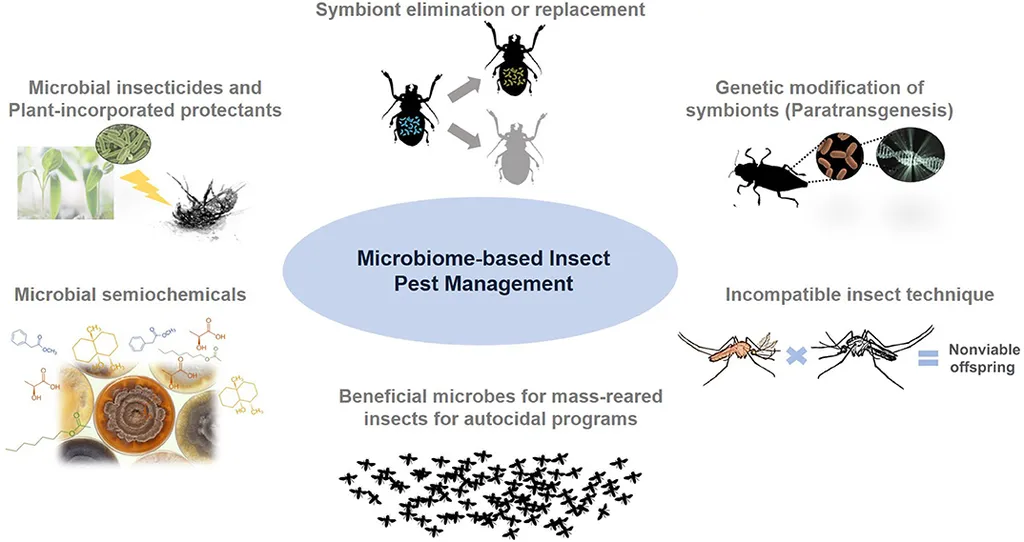
In the heart of India’s agricultural landscape, a groundbreaking study is challenging the status quo of pesticide management, offering a beacon of hope for sustainable farming. Published in the *Current Research in Microbial Sciences*, the research led by Ajay Kumar from the Amity Institute of Biotechnology at Amity University, Noida, delves into the microbial strategies for managing chemical pesticides, a pressing concern for the agriculture sector.
Chemical pesticides, while effective in protecting crops, have long been criticized for their adverse effects on human health, soil structure, and the environment. Despite these well-documented drawbacks, their use persists, particularly in developing countries. Traditional methods of managing these contaminants have proven costly and often generate toxic residues, prompting researchers to explore more sustainable alternatives.
Enter the world of microorganisms. Bacteria, fungi, and algae have emerged as unsung heroes in the battle against pesticide pollution. These tiny powerhouses transform toxic compounds into less harmful forms, a process known as bioremediation. However, to harness their full potential, a deep understanding of their metabolism and physiology is crucial.
This is where omics technologies—genomics, metagenomics, transcriptomics, proteomics, and metabolomics—come into play. These advanced tools allow scientists to identify key genes, enzymes, and metabolic pathways involved in pesticide degradation. “Omics technologies offer a comprehensive view of the molecular mechanisms at work,” explains Kumar. “This knowledge is instrumental in optimizing microbial bioremediation strategies.”
The study also highlights the role of advanced technologies like gene editing and artificial intelligence. Gene editing can enhance the efficacy of pesticide biodegradation by modifying microorganisms to knock out undesirable genes or introduce beneficial ones. Meanwhile, artificial intelligence can analyze big data to understand microbial communities’ structure and predict the most effective species for pesticide degradation.
The commercial implications for the agriculture sector are substantial. By adopting these eco-friendly and sustainable bioremediation strategies, farmers can reduce their reliance on chemical pesticides, leading to healthier crops and a cleaner environment. This shift could also open up new markets for biotechnology firms specializing in microbial solutions.
Looking ahead, this research could shape the future of pesticide management in agriculture. As Kumar notes, “The integration of omics technologies and advanced tools like gene editing and AI into microbial bioremediation strategies holds immense promise for sustainable agriculture.”
The study not only underscores the potential of microbial strategies in managing chemical pesticides but also paves the way for future developments in the field. As the agriculture sector grapples with the challenges posed by chemical pesticides, this research offers a glimmer of hope for a more sustainable and eco-friendly future.