
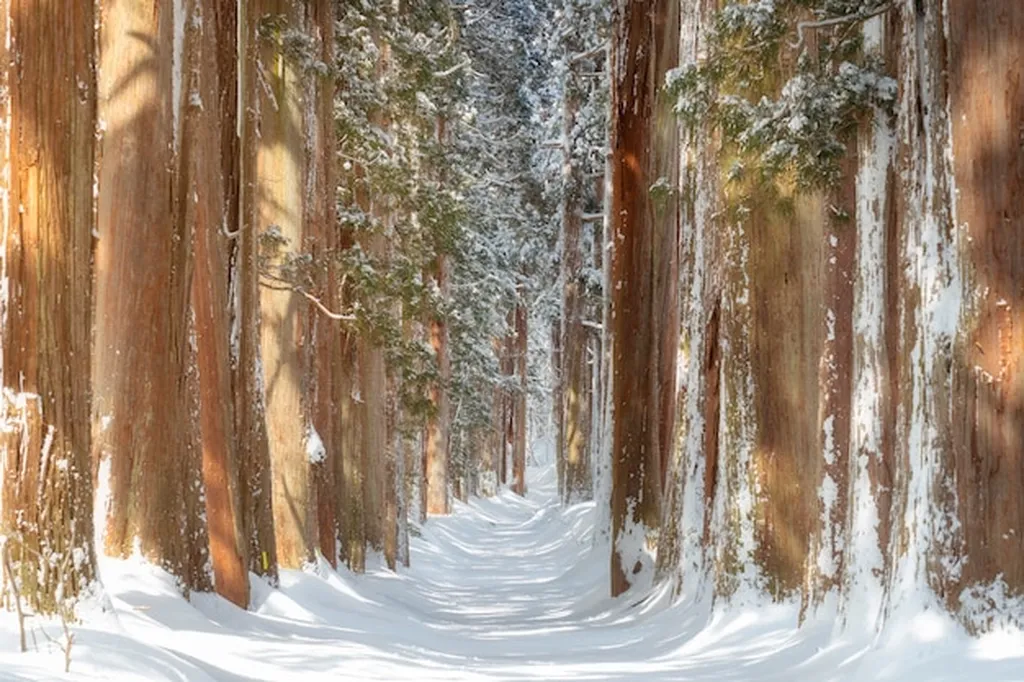
In the heart of Japan, a silent battle rages each winter as the iconic Japanese cedar, Cryptomeria japonica, faces the dual onslaught of freezing temperatures and intense light. Yet, this evergreen conifer is far from helpless, employing a suite of sophisticated strategies to weather the seasonal extremes. New research published in *Forestry Research* sheds light on these adaptive mechanisms, offering insights that could reshape our understanding of forest resilience and inform agricultural practices.
The study, led by Qingmin Han from the Department of Plant Ecology at the Forestry and Forest Products Research Institute (FFPRI) in Tsukuba, Japan, delves into the pigment composition and photosynthetic efficiency of C. japonica across two common gardens with starkly different climates. The findings reveal a complex interplay of genetic and environmental factors that enable the species to thrive in diverse conditions.
At the core of this adaptability lies the cedar’s ability to fine-tune its pigment composition. As winter approaches, the trees reduce their chlorophyll content, a process that might seem counterintuitive but serves to minimize light absorption and prevent photoinhibition. Simultaneously, they ramp up production of protective pigments like lutein and rhodoxanthin, which help dissipate excess light energy.
“All provenances exhibited winter chlorophyll reduction and increased xanthophyll cycle pigments, reflecting conserved photoprotective responses,” Han explains. However, the study also uncovered surprising variations. For instance, needle chlorophyll concentrations were higher in the colder site, particularly in the northernmost provenances, hinting at genotype-specific plasticity.
This flexibility in pigment composition is not just an academic curiosity; it has significant implications for the agriculture and forestry sectors. As climate change continues to alter temperature and light regimes, understanding how trees like C. japonica adapt could help breeders develop more resilient crop varieties. For instance, the trade-off between the xanthophyll cycle and rhodoxanthin-mediated protection, which is influenced by winter severity, could inspire new strategies for protecting crops from seasonal stress.
Moreover, the study’s findings suggest that both winter cold and summer heat play pivotal roles in shaping local adaptation. This dual influence could inform forest management practices, helping to preserve genetic diversity and ensure the long-term health of coniferous forests.
The research also highlights the importance of phenotypic plasticity—the ability of an organism to change its phenotype in response to environmental conditions. High plasticity in pigment composition and leaf morphology could enable C. japonica to adapt to a wider range of climates, a trait that could be harnessed in agricultural breeding programs.
As we grapple with the challenges of a changing climate, studies like this one offer a beacon of hope. By unraveling the intricate mechanisms of plant adaptation, we can pave the way for more sustainable and resilient agricultural practices. And in the process, we might just ensure that the iconic Japanese cedar continues to stand tall against the winter’s wrath for generations to come.