
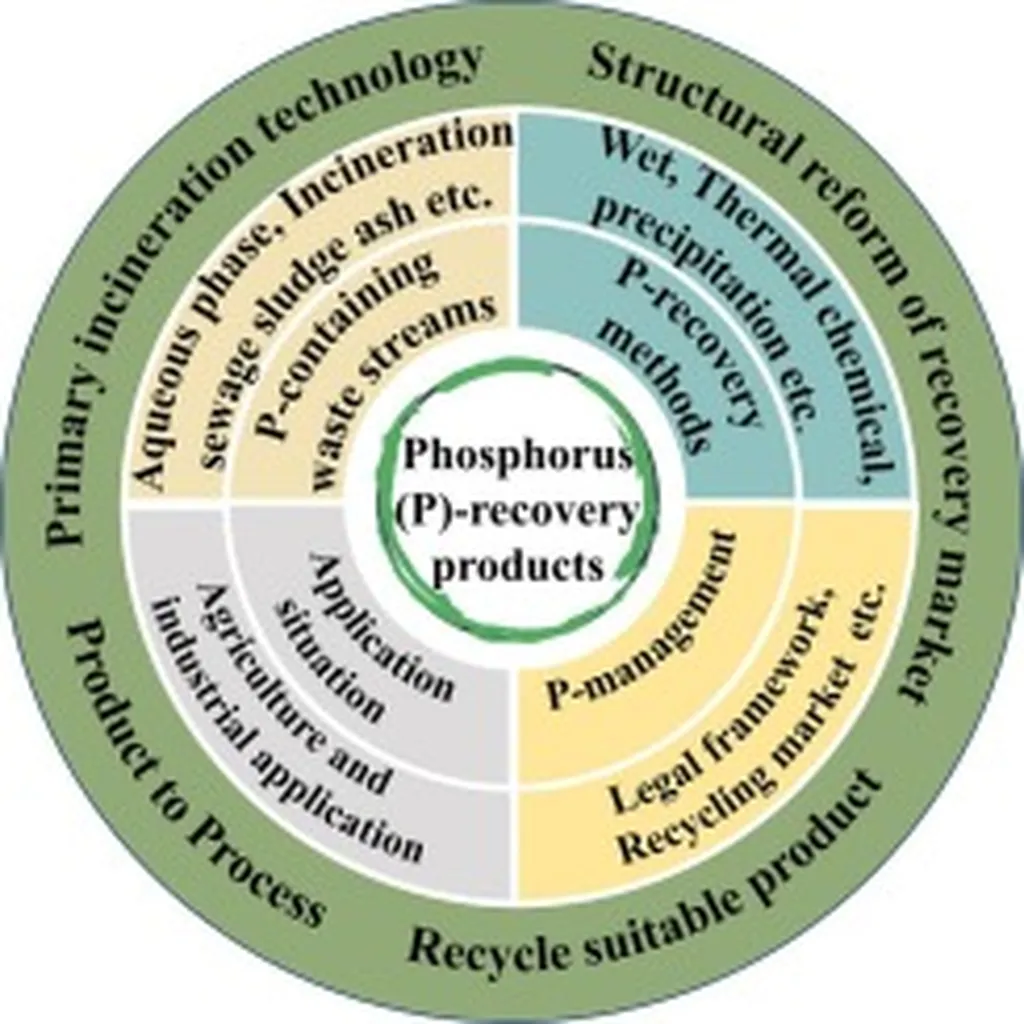
In the face of escalating global phosphorus (P) demands and the unsustainable linear economy of phosphorus management, a recent study published in *Frontiers in Agronomy* offers a beacon of hope for the agricultural sector. Led by Malika Oubohssaine of the Microbiology and Molecular Biology Team at the Center of Plant and Microbial Biotechnology, Biodiversity, and Environment, Faculty of Sciences, Mohammed V University in Rabat, Morocco, the research delves into innovative strategies for phosphorus recovery from agricultural wastes, promising to revolutionize sustainable crop production.
The study highlights the critical challenges posed by inefficient phosphorus fertilizer use, soil fixation, and the depletion of finite phosphate rock reserves. These issues not only strain the environment but also impose significant economic burdens on farmers and governments. Oubohssaine and her team propose a systems-based approach centered on circular strategies for phosphorus recovery from agricultural wastes such as manure, crop residues, and food industry byproducts. This approach not only offers renewable alternatives but also enhances soil health and carbon sequestration.
Biological treatments like composting, vermicomposting, and anaerobic digestion have shown promising phosphorus recovery efficiencies. However, these methods face limitations in scalability, nutrient imbalances, and potential pollutant risks. The study emphasizes the pivotal role of microbial and biotechnological processes, particularly phosphate-solubilizing bacteria, in enhancing phosphorus availability through enzymatic and acidification mechanisms.
“Integrating these tools into crop production, particularly via precision application and microbial consortia design, can significantly reduce reliance on mined phosphorus, mitigate environmental harm, and bolster agricultural sustainability,” Oubohssaine explains. This integration could lead to more efficient and environmentally friendly farming practices, ultimately benefiting both farmers and the planet.
The research underscores the need for future directions that prioritize omics-driven inoculant development, regulatory frameworks for biofertilizer deployment, and climate-resilient microbial strategies. These advancements are crucial for ensuring resilient phosphorus cycling in agroecosystems, paving the way for a more sustainable and economically viable agricultural future.
As the agricultural sector grapples with the challenges of phosphorus management, this study offers a glimpse into the potential of microbial and biotechnological approaches to harness agricultural wastes for sustainable phosphorus recovery. The findings not only highlight the importance of circular economy strategies but also underscore the need for continued innovation and research in this critical area. With the insights provided by Oubohssaine and her team, the future of phosphorus management in agriculture looks increasingly promising and sustainable.