
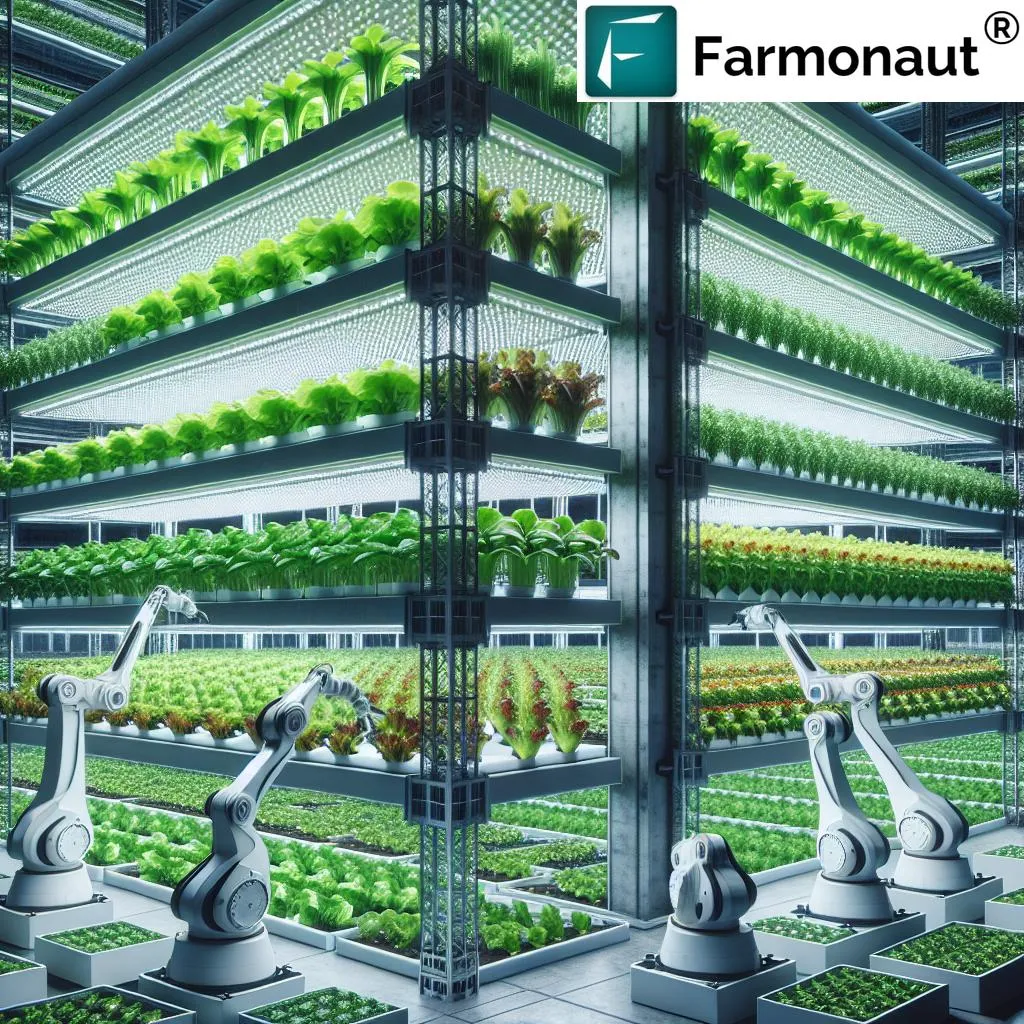
In the rapidly evolving world of indoor vertical farming, precision is key. A recent study published in *Smart Agricultural Technology* has taken a significant step forward in optimizing lettuce cultivation, one of the most popular crops in controlled environment agriculture. The research, led by Davide Marino from the Politecnico di Milano, extends a dynamic growth model for lettuce (Lactuca sativa) to include substrate water content as a dynamic state variable, providing a more accurate simulation of water stress effects on biomass accumulation.
Indoor farming systems are renowned for their sustainability and efficiency, offering higher yields with lower resource use. However, these systems rely heavily on accurate models to manage growth conditions effectively. Marino’s extended model integrates substrate water content dynamics, linking it to the original model through a water stress coefficient. This innovation allows for more precise predictions of dry weight production under varying irrigation regimes and substrate types.
The model was validated using experimental data from a commercial indoor farm, where lettuce was grown on two different substrates—peat and wood fiber—under two irrigation regimes. Following sensitivity and collinearity analyses, the model was calibrated to optimize light use efficiency and substrate water content at the wilting point. The results were impressive, with the extended model demonstrating high accuracy in predicting dry weight production across all experimental conditions.
“This model has the potential to revolutionize how we approach irrigation strategies and substrate selection in indoor farming,” said Marino. “By providing a more nuanced understanding of water stress dynamics, we can optimize resource use and enhance crop yields.”
The commercial implications of this research are substantial. Indoor farming is a burgeoning industry, driven by the need for sustainable food production in urban environments. Accurate growth models like Marino’s can help farmers make data-driven decisions, reducing water waste and improving crop quality. This is particularly relevant as the industry scales up, with more commercial farms adopting vertical farming techniques.
The extended model’s ability to predict biomass accumulation under different conditions can also inform substrate selection. For instance, understanding how different substrates respond to water stress can help farmers choose the most suitable medium for their specific growing conditions. This level of precision is crucial for maximizing efficiency and profitability in indoor farming operations.
Looking ahead, this research could pave the way for more sophisticated models that incorporate additional environmental factors, such as temperature and humidity. As indoor farming continues to evolve, the integration of advanced modeling techniques will be essential for optimizing growth conditions and ensuring sustainable food production.
The study, led by Davide Marino from the Politecnico di Milano, Department of Electronics, Information and Bioengineering, was published in *Smart Agricultural Technology*. This groundbreaking work not only advances our understanding of lettuce growth dynamics but also offers practical tools for the agriculture sector to enhance productivity and sustainability.