
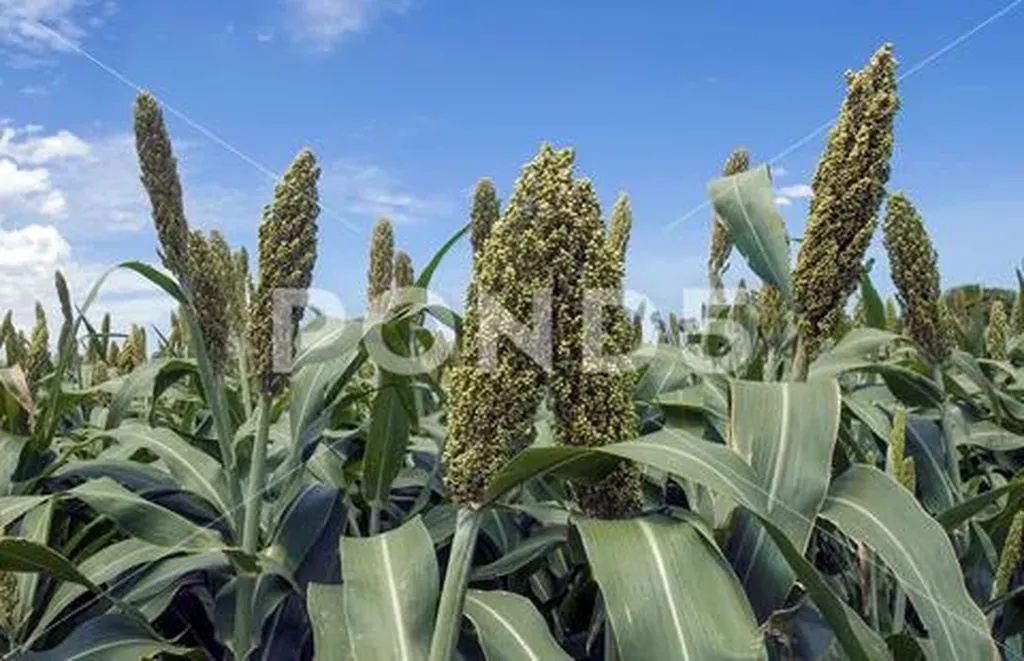
In the quest to enhance sorghum crops, researchers have been exploring innovative techniques to induce genetic variability, aiming to boost yield and resilience. A recent study published in the *International Journal of Bio-Resource and Stress Management* compares the effectiveness of γ radiation and tissue culture in generating genetic diversity in sorghum, offering promising insights for the agriculture sector.
Sorghum, a staple crop in many parts of the world, is valued for its grain and fodder. To improve its productivity, scientists have been experimenting with different methods to induce mutations and enhance genetic variability. The study led by M. Jayaramachandran from the Centre for Plant Breeding and Genetics at Tamil Nadu Agricultural University, Coimbatore, India, delves into the comparative analysis of two such methods: γ radiation and tissue culture.
The researchers utilized two sorghum varieties, CO(S) 28 (grain sorghum) and CO(FS) 29 (fodder sorghum), for their experiments. They collected apical shoots and immature inflorescences, which were then cut into pieces and used as explants for callus induction. The callus, which formed four weeks after inoculation, was subcultured every two weeks. The embryogenic calli obtained were transferred to a shoot regeneration medium and grown under controlled conditions. The resulting plantlets were then transferred to a rooting medium and eventually moved to a glasshouse after hardening.
The first generation plants derived from in vitro culture were termed SC1, and their selfed progeny were labeled as SC2. The SC2 generation was raised in the field with two replications following a randomized block design (RBD). The data on quantitative traits were recorded for both mutation and in vitro culture studies.
For the mutation studies, three different dosages of γ radiation were applied to the sorghum varieties: 25KR, 35KR, and 45KR for CO(S)28, and 50 KR, 60 KR, and 70 KR for CO(FS)29. The M1 generation was raised in the field, and 30 M1 plants were randomly selected and forwarded to the M2 generation. Observations on quantitative traits were recorded for 150 plants per treatment per replication.
The study found that in both grain and fodder sorghum, the genetic coefficient of variability (gcv) observed among the mutant plants generated through γ irradiation for yield-contributing traits was higher than the gcv recorded among the soma clones generated through in vitro culture. However, the research indicated that both mutation and in vitro culture techniques can serve as efficient tools to generate more variability, enhancing the scope for further selection and improvement in sorghum.
“Both techniques have their merits, and the choice between them will depend on the specific goals of the breeding program,” said Jayaramachandran. “γ radiation can induce a broader range of mutations, while tissue culture offers more controlled and targeted genetic modifications.”
The commercial implications of this research are significant. Sorghum is a crucial crop for both food and fodder, and enhancing its genetic diversity can lead to improved yields and better resistance to environmental stresses. This study provides valuable insights into the comparative effectiveness of γ radiation and tissue culture, guiding breeders in selecting the most appropriate method for their specific needs.
As the agriculture sector continues to face challenges such as climate change and increasing demand for food, innovative techniques like those explored in this study will be crucial in developing more resilient and productive crops. The findings of this research not only contribute to the scientific community but also offer practical solutions for farmers and breeders aiming to improve sorghum crops.
The study, published in the *International Journal of Bio-Resource and Stress Management*, was led by M. Jayaramachandran from the Centre for Plant Breeding and Genetics at Tamil Nadu Agricultural University, Coimbatore, India. This research underscores the importance of continued exploration and innovation in agricultural biotechnology to meet the growing demands of the global population.