
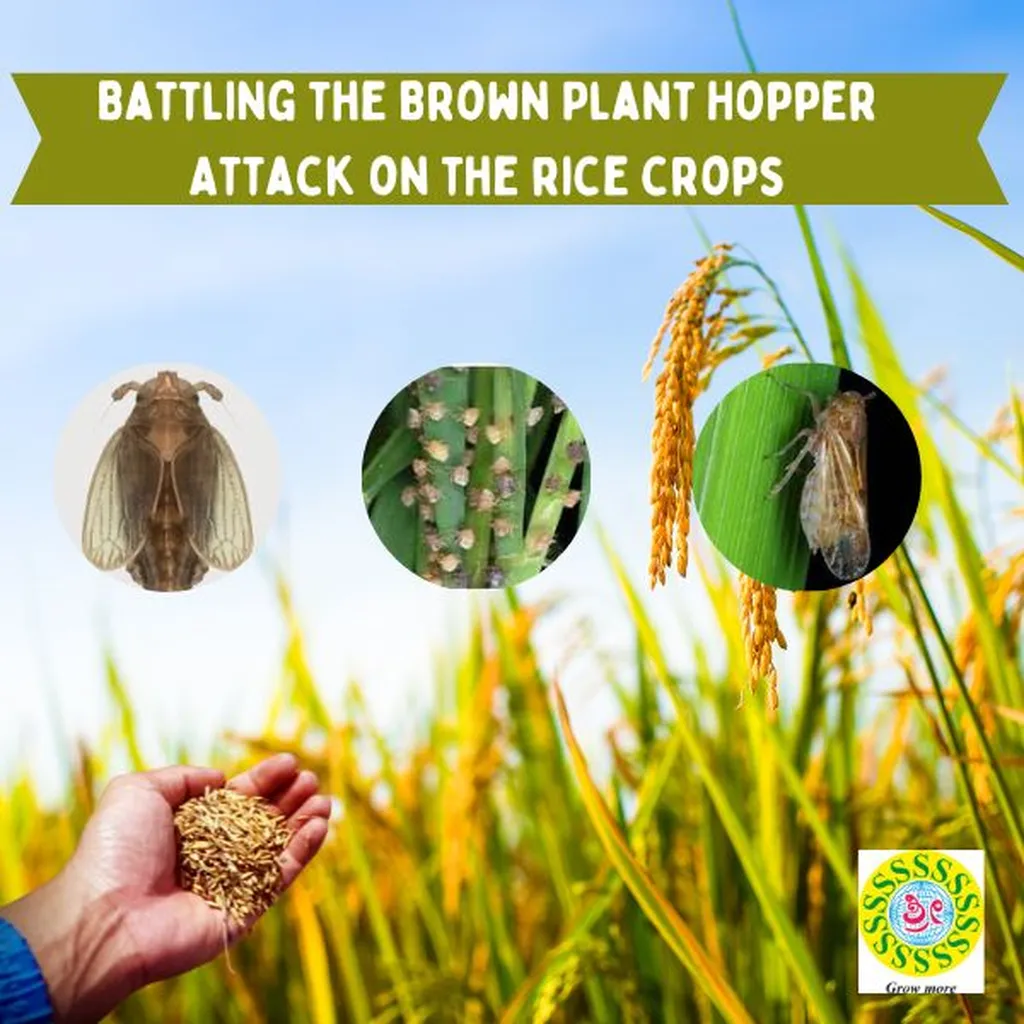
In the ongoing battle against crop-damaging pests, scientists have made a significant stride in the realm of rice cultivation. Researchers have identified a molecular marker linked to resistance against the brown plant hopper (Nilaparvata lugens Stal), a notorious pest that wreaks havoc on rice crops worldwide. This discovery, published in the *International Journal of Bio-Resource and Stress Management*, could pave the way for more resilient rice varieties, offering a much-needed boost to global agriculture.
The study, led by R. Selva Pirabu from the Department of Plant Molecular Biology and Biotechnology at Tamil Nadu Agricultural University, focused on recombinant inbred lines (RILs) derived from a cross between IR50 and Rathu Heenati, two rice varieties with differing levels of resistance to the brown plant hopper. Using the standard seedbox screening test (SSST) in a greenhouse setting, the team assessed the damage scores, which ranged from 3.0 to 9.0 among the RILs. The parents themselves showed a stark contrast, with IR50 averaging a damage score of 5.75 and Rathu Heenati a more resistant score of 3.08.
The researchers then turned their attention to chromosome 3, a region previously implicated in BPH resistance. They screened the parents using 15 SSR primer pairs, identifying five polymorphic markers. Among these, three markers—RM520, RM3180, and RM6283—exhibited the expected 1:1 segregation ratio, a crucial finding for breeding programs. Most notably, the SSR marker RM2346 was pinpointed as a potential key to BPH resistance, based on the damage scores from the SSST.
“This marker could be a game-changer for rice breeders,” said lead author R. Selva Pirabu. “By integrating RM2346 into marker-assisted selection programs, we can accelerate the development of rice varieties with enhanced resistance to brown plant hoppers, ultimately reducing reliance on chemical pesticides and improving crop yields.”
The commercial implications of this research are substantial. Brown plant hoppers cause billions of dollars in crop losses annually, particularly in Asia where rice is a staple food. The ability to breed resistant varieties could significantly reduce these losses, benefiting farmers and consumers alike. Moreover, the reduction in pesticide use would have positive environmental impacts, promoting more sustainable agricultural practices.
Looking ahead, this discovery opens new avenues for research and development in the field of rice genetics. Future studies could explore the functional mechanisms underlying the RM2346 marker, potentially uncovering additional targets for resistance breeding. Collaborative efforts between academic institutions and agricultural industries could further expedite the integration of this marker into commercial breeding programs, ensuring that the benefits reach farmers worldwide.
As the global population continues to grow, the demand for food security becomes ever more pressing. Innovations like this one, which bridge the gap between scientific discovery and practical application, are essential for meeting these challenges. With continued investment and collaboration, the agricultural sector can look forward to a future where crops are not just more resilient but also more sustainable.