
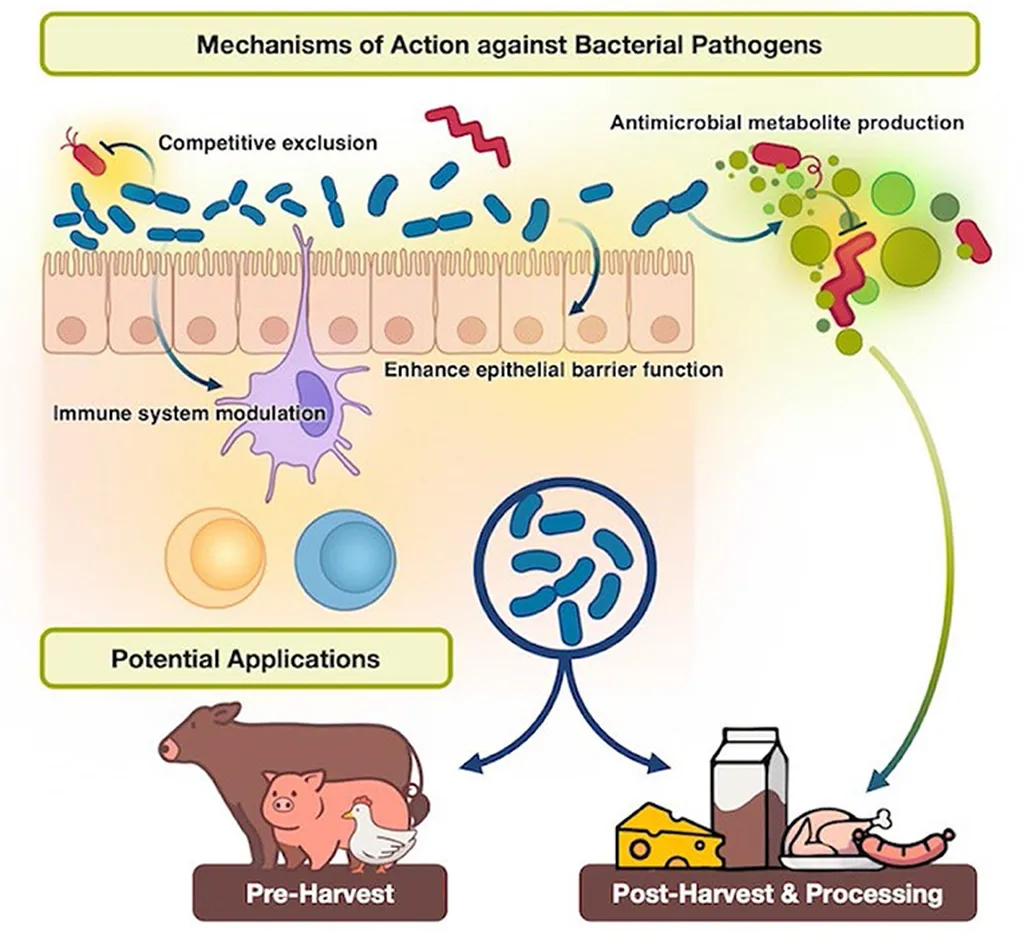
In the ever-evolving landscape of agritech and food science, a groundbreaking review published in *Current Research in Microbial Sciences* is shedding new light on the potential of Lactobacillus bacteria, not just as probiotics, but as powerful producers of short-chain fatty acids (SCFAs) with far-reaching implications for health and agriculture. Led by Yousef Nami from the Department of Food Biotechnology at the Agricultural Biotechnology Research Institute of Iran (ABRII), this research is poised to reshape our understanding of how these microorganisms can be harnessed for both food innovation and therapeutic applications.
SCFAs, such as acetate and lactate, are well-known for their role in mediating host-microbiota interactions, regulating immune responses, and maintaining gut homeostasis. While most studies have focused on obligate anaerobes like *Clostridium* and *Bacteroides*, Nami’s review highlights the untapped potential of Lactobacillus species, which have been largely overlooked in the context of SCFA production. “Lactobacillus spp. are versatile microorganisms with a long history of safe use in food fermentation,” Nami explains. “Their ability to produce SCFAs opens up new avenues for developing functional foods, synbiotics, and even nutraceuticals.”
The review compiles current knowledge on the species- and strain-specific biosynthetic capabilities of Lactobacillus for SCFA production, emphasizing the metabolic roles of acetate and lactate. These compounds, though not traditionally classified as SCFAs, play similar roles in activating G-protein-coupled receptors, inhibiting histone deacetylases, and influencing immune cell metabolism. This dual functionality makes them particularly attractive for both health and agricultural applications.
One of the most exciting aspects of this research is its exploration of synthetic biology and metabolic engineering approaches to enhance SCFA yield in Lactobacillus. Techniques such as gene circuit design, CRISPR editing, and co-culture optimization are being investigated to improve the efficiency and scalability of SCFA production. “By leveraging these advanced biotechnological tools, we can design Lactobacillus strains that are not only more efficient at producing SCFAs but also tailored for specific applications,” Nami notes.
The potential commercial impacts for the agriculture sector are significant. Enhanced SCFA production could lead to the development of next-generation probiotics and food-grade biotherapeutics, offering new solutions for gut health, immune modulation, and even metabolic and neuroimmune diseases. Additionally, the integration of SCFA-producing Lactobacillus strains into agricultural practices could improve animal feed formulations, enhancing livestock health and productivity.
However, the review also highlights key challenges that must be addressed before these innovations can be fully realized. Strain variability, delivery strategies, and regulatory oversight are among the hurdles that researchers and industry stakeholders must navigate. “While the potential is immense, we must ensure that these advancements are safe, effective, and compliant with regulatory standards,” Nami emphasizes.
As the agritech and food science communities continue to explore the possibilities of SCFA-producing Lactobacillus, this research provides a comprehensive framework for future developments. By integrating perspectives from microbiology, immunology, food science, and bioengineering, Nami and his colleagues are paving the way for a new era of functional foods and biotherapeutics. The implications for agriculture are vast, promising not only improved health outcomes but also innovative solutions for sustainable food production.