
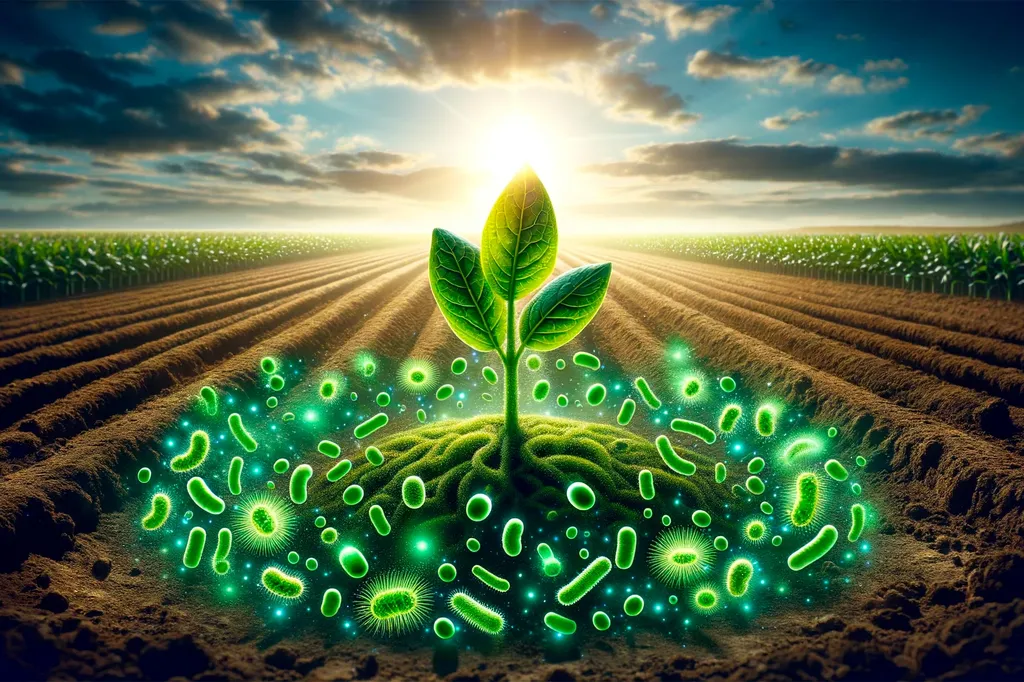
In the quest for sustainable agriculture, scientists are turning to an often-overlooked resource: soil microbes. A recent review published in *Current Research in Microbial Sciences* highlights the potential of these microscopic allies to revolutionize crop productivity and soil health. Led by Sandeep Sharma from the Department of Soil Science at Punjab Agricultural University, the research delves into the diverse benefits of rhizospheric microbes—those inhabiting the root zone—and their role in promoting plant growth and resilience.
Soil microbes are nature’s tiny engineers, working behind the scenes to improve nutrient uptake, produce growth-promoting phytohormones, and enhance soil structure. They also act as natural defenders, protecting plants from pathogens and abiotic stresses like drought and salinity. “These microbes offer a sustainable, eco-friendly way to boost crop yields and soil health,” says Sharma, emphasizing the importance of leveraging these natural resources.
The review underscores the potential of using these microbes as bio-inoculants, either individually or in consortia, to enhance soil fertility and plant productivity. This approach not only reduces the need for chemical fertilizers and pesticides but also promotes long-term soil health. The commercial implications are significant. Farmers could see improved yields, reduced input costs, and enhanced resilience to climate change, all while adopting more sustainable practices.
One of the most exciting aspects of this research is the application of multi-omics techniques—tools that integrate genomics, proteomics, and metabolomics—to explore the hidden potential of these beneficial microbes. “By understanding the complex interactions between microbes and plants, we can develop more effective bio-formulations tailored to specific crops and environmental conditions,” Sharma explains. This could lead to the creation of novel biological products that are more efficient and targeted than current offerings.
The review also highlights advances in screening and developing efficient bio-inoculants, paving the way for future innovations in agricultural biotechnology. As climate change continues to pose challenges to global food security, the insights from this research could be instrumental in shaping sustainable agricultural practices.
In an era where sustainability is paramount, the findings from Sharma’s team offer a promising path forward. By harnessing the power of soil microbes, farmers and agritech companies alike can contribute to a more resilient and productive agricultural sector. The future of farming may well lie in the soil beneath our feet, teeming with microscopic allies ready to support the crops of tomorrow.