
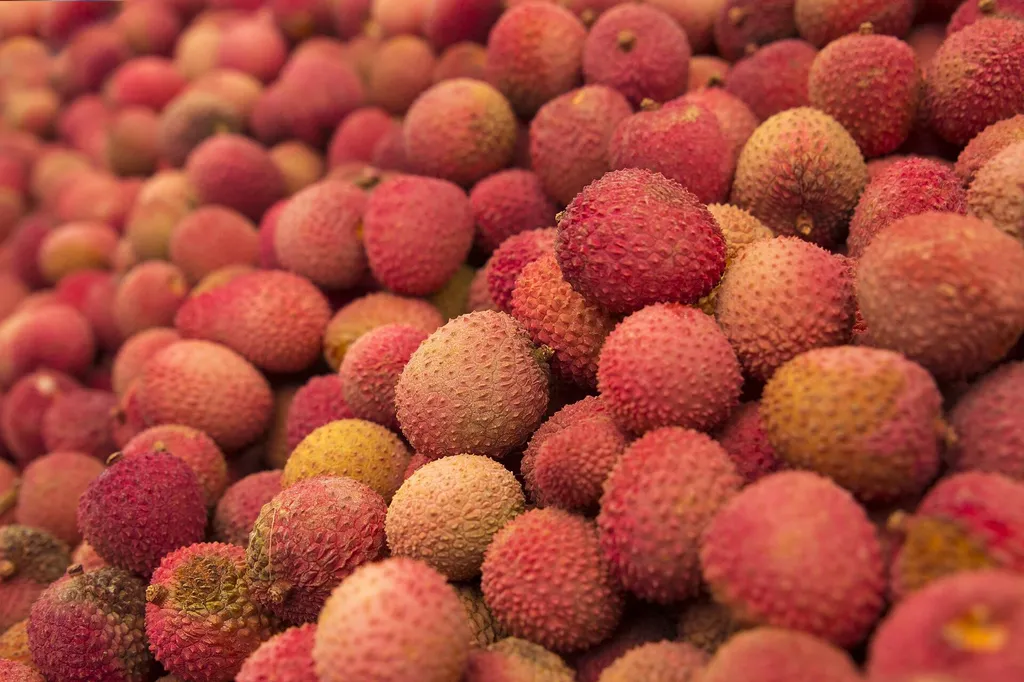
In the vibrant world of litchi cultivation, the color of the fruit’s pericarp, or outer skin, plays a pivotal role in market appeal and consumer preference. A recent study published in *Food Chemistry: Molecular Sciences* has shed new light on the complex interplay of genetic and metabolic factors that dictate these color variations, offering promising avenues for enhancing the quality and commercial value of litchi cultivars.
The research, led by Yanzhao Chen of the Hainan Provincial Key Laboratory of Quality Control of Tropical Horticultural Crops and the National Key Laboratory for Tropical Crop Breeding, focused on two distinct litchi cultivars: the red-pericarp ‘Ziniangxi’ (ZNX) and the green-pericarp ‘Guanyinlv’ (GYL). By integrating transcriptomic and metabolomic analyses, the study uncovered the intricate regulatory mechanisms underlying the accumulation of anthocyanins—the pigments responsible for the red coloration—and the degradation of chlorophyll, which contributes to the green hue.
“Our findings reveal that the red pericarp of ZNX litchis is rich in key anthocyanins like cyanidin-3-O-galactoside, cyanidin-3-O-glucoside, and cyanidin-3-O-rutinoside,” Chen explained. “In contrast, the green pericarp of GYL litchis contains only trace amounts of these anthocyanins but is abundant in flavonoids such as pelargonidin-3-O-galactoside, lonicerin, and rutin.” This differential accumulation of pigments is not merely a matter of aesthetics but has significant implications for the fruit’s antioxidant properties and overall quality.
The study’s transcriptomic analysis provided further insights into the genetic underpinnings of these color differences. In ZNX pericarps, structural genes involved in the anthocyanin biosynthesis pathway were significantly upregulated during ripening. Conversely, in GYL pericarps, genes such as CHS, F3H, and ANS were downregulated throughout the ripening process, while genes like F3’H, UFGT, and GST remained consistently low in expression.
One of the most intriguing aspects of the research was the identification of a synergistic regulatory network involving transcription factors (TFs) such as MYB, ERF, and WRKY, along with salicylic acid signaling genes (NPR1, TGA, PR1) and a cytokinin signaling gene (AHP). These findings suggest that the regulation of anthocyanin accumulation is a complex, multi-faceted process involving multiple genetic and biochemical pathways.
The commercial implications of this research are substantial. By elucidating the metabolic and regulatory mechanisms underlying litchi pericarp coloration, the study provides a robust theoretical framework for improving the external quality of litchi fruits. This knowledge can be leveraged by breeders and growers to develop new cultivars with enhanced market appeal and nutritional value.
“Understanding these regulatory mechanisms is a crucial step towards improving the quality of litchi fruits,” Chen noted. “It offers valuable genetic resources and theoretical insights that can be applied to the development of new cultivars with desirable traits.”
As the global demand for high-quality tropical fruits continues to grow, research of this nature is instrumental in driving innovation and sustainability within the agriculture sector. By unraveling the genetic and metabolic intricacies of litchi coloration, this study not only advances our understanding of plant biology but also paves the way for future advancements in horticultural science and agricultural biotechnology.