
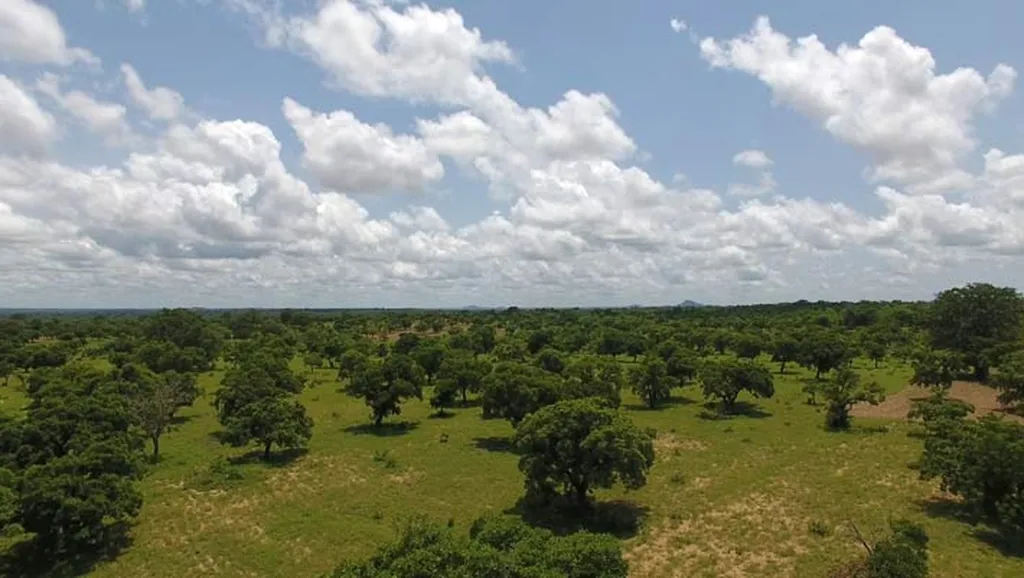
In the heart of Benin, a silent revolution is unfolding, not in the bustling markets or the political arena, but in the humble shea trees that dot the landscape. These trees, long valued for their butter rich in bioactive compounds, are now at the center of a groundbreaking study that could reshape the cosmetics, dermocosmetics, and pharmaceutical industries. The research, published in *Industrial Crops and Products*, reveals a metabolic diversity in shea trees that could unlock new opportunities for tailored industrial applications.
The study, led by Guillaume J. Bodjrenou of the Laboratoire Agronomie et Environnement de l’Université de Lorraine and the Genetics, Biotechnology and Seed Science Unit at the University of Abomey-Calavi, employed both targeted and untargeted metabolomics approaches to analyze shea kernel powders from 69 trees across nine localities in Benin. Using ultra-high-performance liquid chromatography and advanced statistical analyses, the researchers detected a staggering 4,634 signals, with 70% annotated in silico. This diverse chemical composition is dominated by fatty acids (42%), amino acids/peptides (22%), alkaloids (15%), and phenolics, polyketides, and terpene compounds (14%).
The findings are nothing short of transformative. Principal Component Analysis (PCA) and K-means clustering revealed three distinct metabolic groupings among the shea trees. A targeted analysis identified six key metabolites—gallic acid, gallocatechin, α-amyrin, epigallocatechin, α-tocopherol, and campesterol—that contribute significantly to the variance. Partial Least Squares Discriminant Analysis (PLS-DA) confirmed these groupings, with eight metabolites showing high discriminatory power and potential as biomarkers.
“This study highlights the substantial metabolic variability in Benin’s shea trees, which offers opportunities for tailored applications in the dermocosmetic and nutraceutical industries,” Bodjrenou explained. The implications for the agriculture sector are profound. By identifying specific chemotypic groups and their associated bioactive compounds, the study paves the way for targeted breeding programs and precision agriculture. Farmers could potentially cultivate shea trees with higher concentrations of compounds of interest, thereby increasing the value of their crops and opening new markets.
The commercial impacts are already being felt. Shea tree BG037 and BG143, for instance, exhibited particularly high concentrations of compounds of interest for cosmetic applications. This could lead to the development of high-value cosmetic products that leverage the unique metabolic profiles of these trees. The study also underscores the importance of preserving and studying the genetic diversity of shea trees, ensuring that the full potential of these valuable resources is realized.
As the world increasingly turns to natural and sustainable ingredients, the findings of this study could not be more timely. The shea tree, long a staple of traditional industries, is now poised to become a cornerstone of modern, high-tech applications. The research not only advances our understanding of shea tree metabolism but also opens up new avenues for innovation and economic growth in the agriculture sector. The future of shea trees is bright, and the possibilities are endless.