
In the ever-evolving landscape of agricultural technology, a recent study published in the *Iranian Journal of Chemistry & Chemical Engineering* has shed light on a promising innovation that could revolutionize the stability and shelf life of pomegranate seed oil-in-water emulsions. Led by Nayer Shahbazi from the Department of Food Science at Shahrood University of Technology in Iran, the research explores the use of chitosan-capric acid nanogels incorporating thyme essential oil to enhance the stability of these emulsions.
The study begins by synthesizing chitosan-capric acid nanogels at varying ratios of capric acid to chitosan. Scanning electron microscopy images revealed that increasing the ratio of capric acid to chitosan improved the uniformity of the particles. This finding is crucial as it directly impacts the effectiveness of the nanogels in stabilizing emulsions.
Shahbazi and her team then used these nanogels to stabilize pomegranate seed oil-in-water emulsions. The results were promising, with the most stable emulsion achieved at a pH of 8, a capric acid-to-chitosan ratio of 0.5:1, and an oil-to-nanogel ratio of 10:1. The interfacial structure of the emulsion droplets indicated that the nanogels contributed to stability by forming an interface layer and a network on the surface of the dispersed droplets.
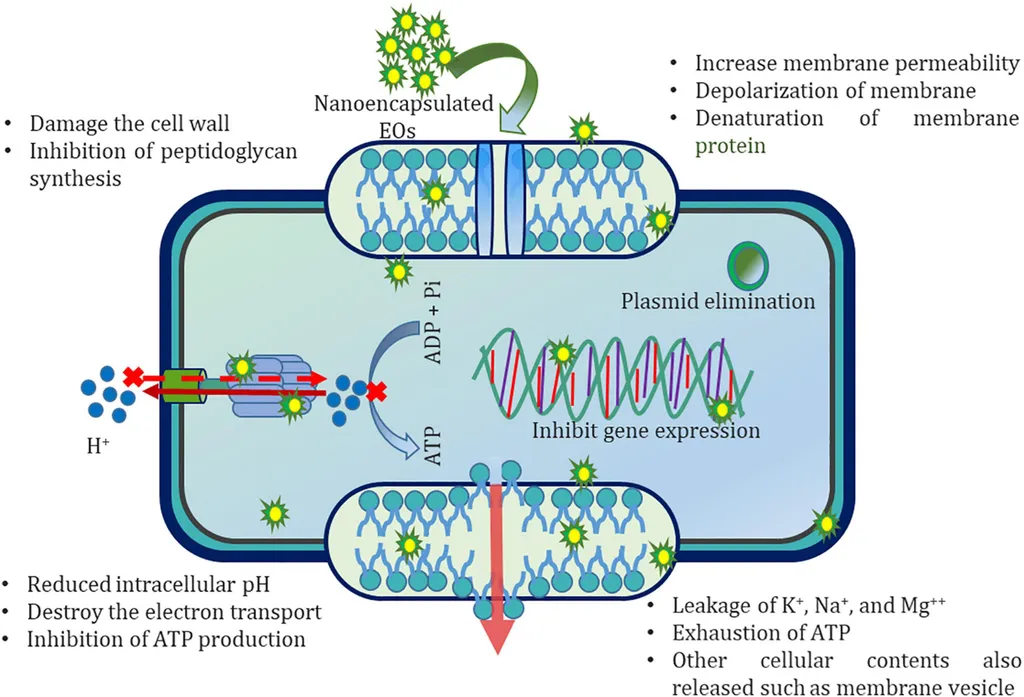
One of the most significant findings was the impact of thyme essential oil on the oxidative stability of the emulsions. When 0.1% thyme essential oil was incorporated into the chitosan-capric acid nanogels, it not only increased the oxidative stability of the emulsion but also reduced the droplet size. “The addition of thyme essential oil significantly enhanced the oxidative stability, which is a critical factor for extending the shelf life of pomegranate seed oil products,” Shahbazi explained.
The commercial implications of this research are substantial. Pomegranate seed oil is highly valued for its nutritional and health benefits, but its susceptibility to oxidation has limited its widespread use in the food industry. By developing a stable emulsion using chitosan-capric acid nanogels and thyme essential oil, this study opens up new avenues for the agricultural sector. Farmers and producers can now explore more efficient ways to process and market pomegranate seed oil, potentially increasing its commercial value and accessibility.
Moreover, the use of natural ingredients like chitosan, capric acid, and thyme essential oil aligns with the growing consumer demand for clean-label and sustainable products. This innovation could inspire further research into the use of natural stabilizers and antioxidants in the food industry, paving the way for more environmentally friendly and health-conscious agricultural practices.
As the agricultural sector continues to embrace technological advancements, this research serves as a testament to the potential of nanotechnology in enhancing product stability and quality. The findings not only offer practical solutions for the food industry but also highlight the importance of interdisciplinary research in driving innovation.
In the words of Shahbazi, “This study demonstrates the potential of combining natural ingredients with nanotechnology to create stable and high-quality food products. It is a step forward in our quest to develop sustainable and effective solutions for the agricultural sector.”
With the publication of this research, the agricultural community is one step closer to unlocking the full potential of pomegranate seed oil and other valuable agricultural products. The future of agritech looks bright, and innovations like these are leading the way.