
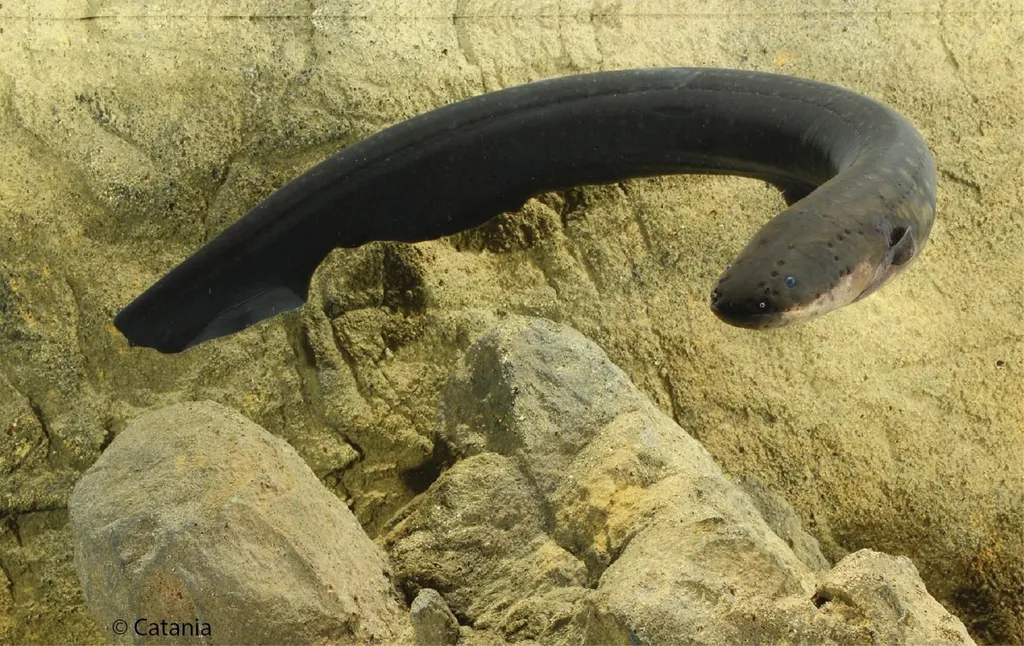
In the shadowy depths of aquaculture, a silent predator lurks, threatening the global eel industry. Anguillid herpesvirus (AngHV) has been wreaking havoc on eel populations since its discovery in the 1980s, causing high mortality rates and substantial economic losses. But a new review published in *Aquaculture Reports* sheds light on the current state of research and offers hope for future control strategies.
The review, led by Jun-Qing Ge from the Institute of Biotechnology at the Fujian Academy of Agricultural Sciences, compiles decades of research on AngHV, providing a comprehensive overview of its etiology, pathogenicity, diagnosis, and prevention. “Understanding the virus is the first step in developing effective control measures,” Ge explains. “This review aims to deepen our understanding and facilitate the development of strategies for managing AngHV infections.”
Eels, prized for their taste and nutritional benefits, are a valuable commodity in the global market. However, the eel aquaculture industry has been grappling with significant challenges from viral diseases, with AngHV being one of the most harmful. The virus not only leads to high mortality rates in cultivated eel populations but also contributes to the decline of wild eel stocks.
Despite extensive research efforts, no commercial vaccines or antiviral agents have been developed to combat AngHV. This review highlights the urgent need for innovative solutions to protect eel populations and the industry’s economic interests.
The commercial impacts of AngHV are far-reaching. Eel farming is a significant economic activity in several countries, including China, Japan, and South Korea. The loss of eel populations due to AngHV infections can lead to substantial financial losses for farmers and the industry as a whole. Moreover, the decline in wild eel stocks can disrupt the balance of aquatic ecosystems, further exacerbating the problem.
The review also discusses the potential of emerging technologies in the fight against AngHV. Advances in genetic engineering, for instance, could pave the way for the development of genetically modified eels resistant to the virus. Similarly, the use of CRISPR-Cas9 technology could enable precise editing of the viral genome, offering new avenues for control and prevention.
Looking ahead, the review emphasizes the need for continued research and international collaboration. “AngHV is a global problem that requires a global solution,” Ge states. “By working together, we can develop effective strategies to manage AngHV infections and ensure the sustainability of the eel aquaculture industry.”
As the world grapples with the challenges posed by AngHV, this review serves as a beacon of hope, highlighting the progress made and the promising paths forward. It is a testament to the power of scientific research in addressing real-world problems and shaping the future of aquaculture.