
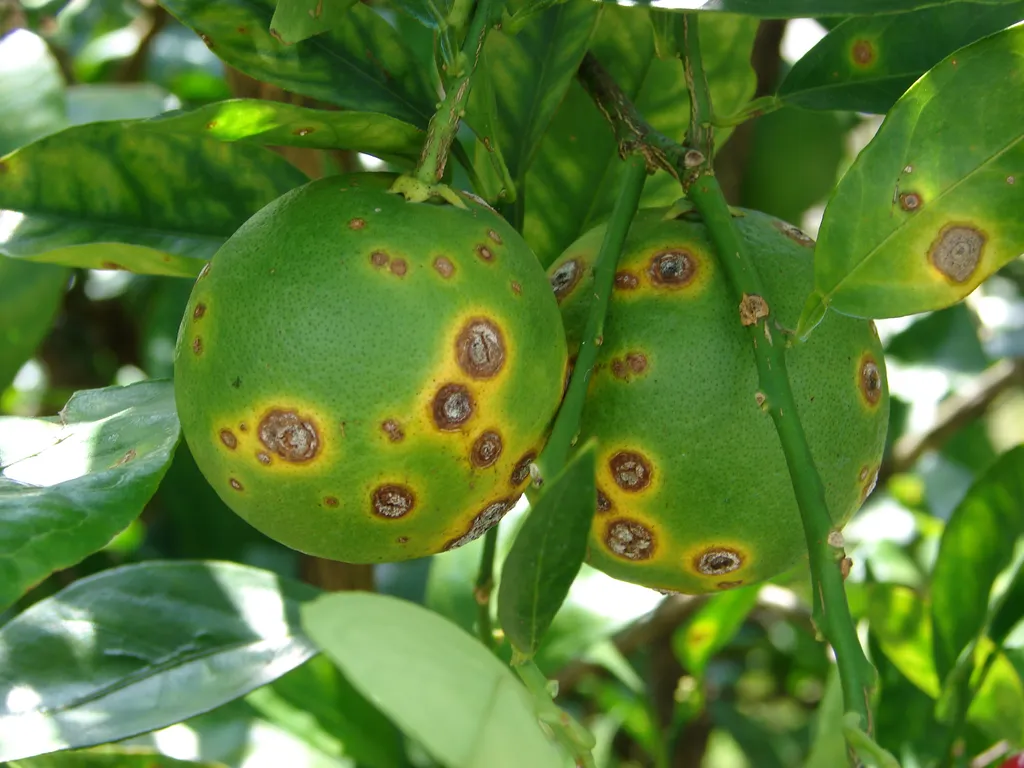
In the ongoing battle against citrus canker, a disease that has long plagued citrus growers worldwide, a glimmer of hope emerges from a recent study published in *Frontiers in Plant Science*. Researchers led by Yu Zhang from the State Key Laboratory for Conservation and Utilization of Bio-Resources in Yunnan at Yunnan Agricultural University have uncovered crucial insights into how the endophytic microbiome—the community of microorganisms living within plant tissues—responds to infection by *Xanthomonas citri subsp. citri* (Xcc), the bacterium responsible for citrus canker. The findings could pave the way for innovative biocontrol strategies that enhance citrus resistance and mitigate yield losses.
Citrus canker is a formidable foe, causing significant economic losses due to reduced fruit quality and yield. The study compared the microbial communities in two citrus cultivars: the highly susceptible *Citrus reticulata* cv. ‘Orah’ and the more resistant *Fortunella crassifolia* cv. ‘Cuimi’. By analyzing the bacterial and fungal communities before and after Xcc inoculation, the researchers revealed distinct shifts in microbial diversity. “We observed that bacterial community diversity was largely maintained in the resistant cultivar, while it significantly declined in the susceptible one following infection,” explained Zhang. This suggests that a stable microbial community may play a role in a plant’s ability to resist disease.
One of the most striking findings was the emergence of *Lysobacter* as a potential biocontrol agent. In the resistant cultivar, *Lysobacter* was the only bacterial genus that significantly increased in abundance under pathogen pressure. This discovery is particularly exciting because *Lysobacter* species are known for their antagonistic activity against plant pathogens. The researchers isolated a strain of *Lysobacter antibioticus* GJ-6, which showed potent activity against Xcc, offering a promising lead for developing microbial-based treatments.
Conversely, the study identified several fungal genera, including *Penicillium* and *Aspergillus*, that proliferated in susceptible plants under pathogen pressure. These fungi may contribute to disease susceptibility, highlighting the complex interplay between different microbial communities and plant health.
The commercial implications of this research are substantial. Citrus canker affects growers worldwide, and current management strategies often rely on chemical treatments that can be costly and environmentally harmful. The identification of *Lysobacter* as a key biocontrol agent opens new avenues for sustainable disease management. “By harnessing the power of beneficial microbes, we can develop eco-friendly solutions that enhance plant resistance and reduce reliance on chemical pesticides,” said Zhang.
This study not only advances our understanding of the endophytic microbiome but also underscores the potential of microbiome-based interventions in agriculture. As the global demand for sustainable farming practices grows, such research could shape the future of crop protection, offering farmers tools to combat diseases more effectively and sustainably. The findings published in *Frontiers in Plant Science* by lead author Yu Zhang and colleagues provide a foundation for further exploration into the role of endophytes in plant health and disease resistance, potentially revolutionizing the way we approach agricultural challenges.