
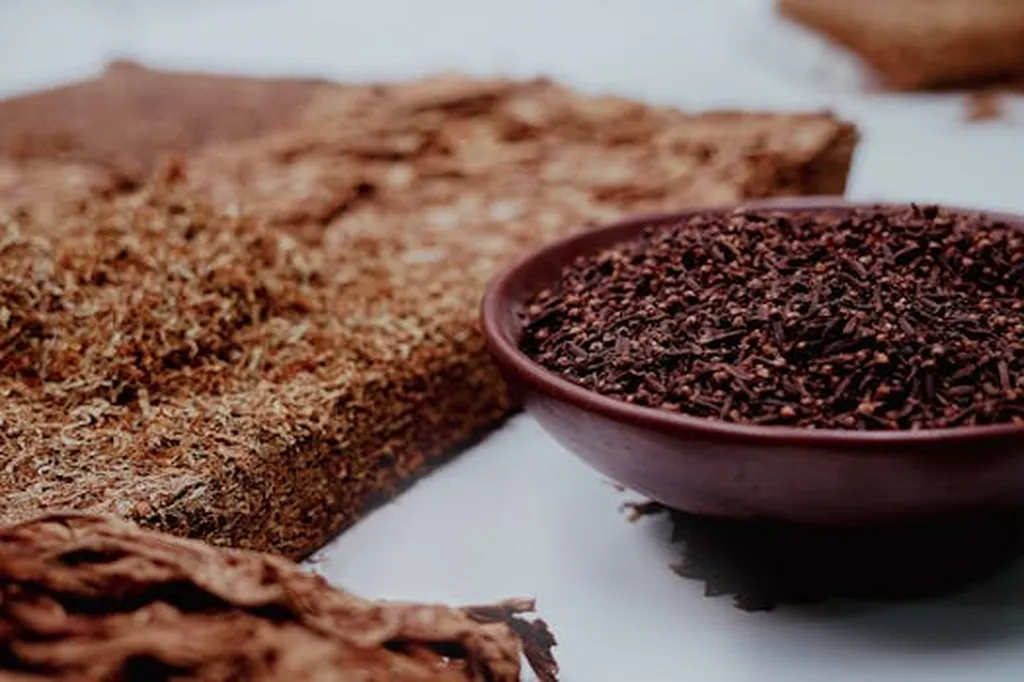
In the ongoing battle against crop diseases, a team of Moroccan researchers has uncovered a promising natural ally: clove essential oil. Their study, published in the *Journal of Bioscience and Applied Research*, reveals that the essential oil derived from *Syzygium aromaticum*, commonly known as clove, exhibits potent antifungal activity against *Rhynchosporium secalis*, the pathogen responsible for barley scald—a devastating foliar disease that threatens barley crops worldwide.
Barley scald is a significant concern for farmers, causing substantial yield losses and economic damage. The research, led by Naima Essouaadi from the Botanical Laboratory at the University of Science in Kénitra and the Aromatic and Medicinal Plants Research Unit at the Institute of Agricultural Research in Rabat, explored the potential of clove essential oil as a sustainable and effective treatment.
The study found that the essential oil, extracted from the flower buds of clove plants using hydrodistillation, had an impressive extraction rate of 9.07%. Gas chromatography analysis identified eugenol as the primary component, making up over 52% of the oil, followed by eugenol acetate (25.94%), caryophyllene (7.845%), and caryophyllene oxide (1.74%).
When tested against two isolates of *R. secalis* (Rs1 and Rs2), the essential oil demonstrated complete inhibition at a remarkably low concentration of 0.4 µl/ml. “The results were quite surprising,” Essouaadi noted. “The essential oil showed a strong antifungal effect, which could be a game-changer for barley farmers.”
The commercial implications of this research are substantial. Barley is a crucial crop for both food and industrial uses, including brewing and animal feed. The development of a natural, effective, and potentially low-cost treatment for barley scald could significantly reduce crop losses and improve farmer livelihoods. Additionally, the use of essential oils aligns with the growing demand for sustainable and eco-friendly agricultural practices.
This study opens up new avenues for research into the use of essential oils in plant disease management. As Essouaadi explained, “Our findings suggest that clove essential oil could be a valuable tool in integrated pest management strategies. Further research is needed to optimize its application and explore its potential against other crop pathogens.”
The agricultural sector is increasingly turning to natural and biotechnological solutions to combat pests and diseases. This research not only highlights the potential of clove essential oil but also underscores the importance of exploring traditional and natural remedies in modern agriculture. As the world faces increasing challenges from climate change and pesticide resistance, innovative solutions like this could play a pivotal role in ensuring food security and sustainable farming practices.