
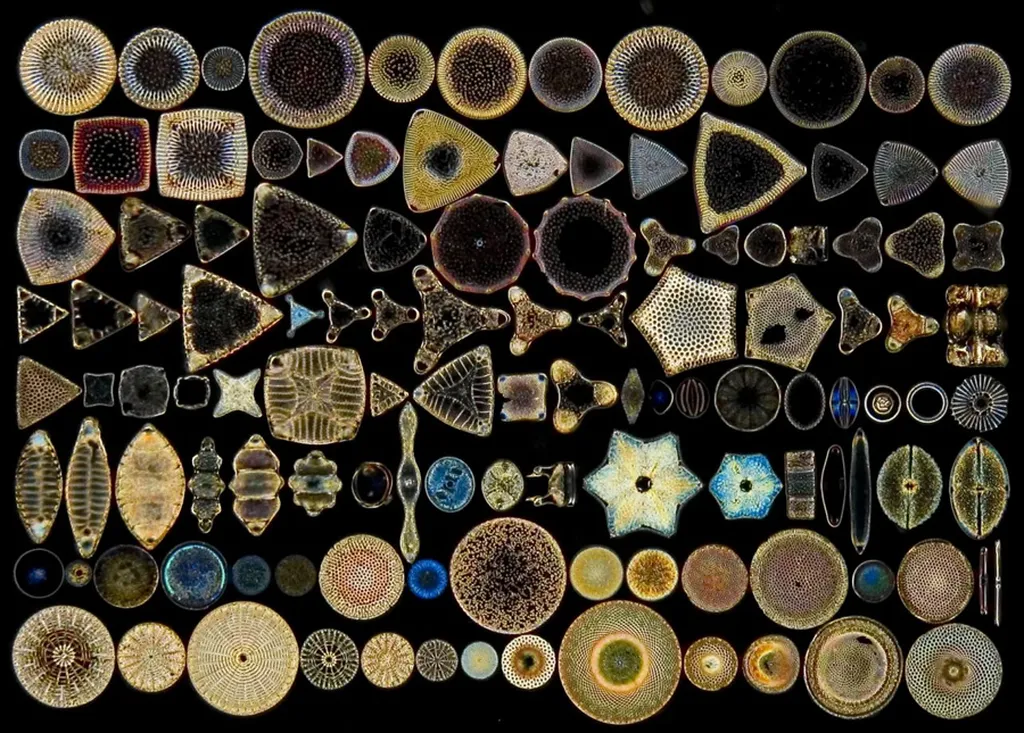
In the vast and dynamic world of marine ecosystems, a microscopic diatom has been making waves—not just in the ocean, but in the scientific community as well. Nitzschia navis-varingica, a benthic diatom, has been under the microscope for its production of domoic acid (DA), a neurotoxin that poses significant health and economic risks. A recent study published in *mBio* has shed new light on the genetic underpinnings of DA biosynthesis in this organism, with potential implications for agriculture and marine safety.
The study, led by Steffaney M. Wood-Rocca from the Center for Marine Biotechnology and Biomedicine at Scripps Institution of Oceanography, University of California San Diego, employed whole genome sequencing and transcriptomic analyses to unravel the complexities of DA production in N. navis-varingica. The researchers discovered that the diatom’s genome is unusually large, characterized by an abundance of repetitive elements and noncoding DNA. This genome expansion is not just a curiosity; it plays a crucial role in the organism’s ability to produce DA.
At the heart of the study is the discovery of an expanded domoic acid biosynthesis (dab) gene cluster, spanning over 60 kb. This cluster is marked by a unique organization, with core genes interspersed with additional genetic elements. Phylogenetic and syntenic comparisons suggest that transposition events may have driven the expansion and reorganization of this cluster. “The organization of the dab gene cluster is unlike anything we’ve seen before in diatoms,” Wood-Rocca noted. “This unique structure likely contributes to the distinct chemotype observed in N. navis-varingica.”
The study also validated that the kainoid synthase encoded by dabC catalyzes the formation of isodomoic acid B, a finding that establishes a distinct chemotype in contrast to the DA profiles of planktonic diatoms. This biochemical insight is crucial for understanding the evolutionary trajectory of DA biosynthesis in diatoms and the potential advantages conferred by genome expansion and enzyme diversification in dynamic marine environments.
The commercial impacts of this research are significant. Domoic acid poisoning, often referred to as amnesic shellfish poisoning, can have devastating effects on fisheries and coastal economies. Understanding the genetic and biochemical mechanisms underlying DA production can help in developing strategies to mitigate its impact. For the agriculture sector, this research could lead to the development of biosensors or genetic markers that can identify toxin-producing strains, thereby protecting aquaculture and fisheries.
Moreover, the study highlights the importance of understanding secondary metabolism in marine diatoms. “Our findings provide a genetic framework for identifying toxin production and its impacts in the benthos of vulnerable, coastal ecosystems,” Wood-Rocca explained. This knowledge could be instrumental in developing targeted interventions to protect both marine life and human health.
The research also opens up new avenues for exploring the evolutionary advantages of genome expansion and enzyme diversification. As marine environments become increasingly dynamic due to climate change, understanding these adaptive mechanisms could be crucial for predicting and mitigating the impacts of toxic algal blooms.
In the broader context, this study adds to our understanding of the evolution of toxin production across diverse phyla. The unique organization of the dab gene cluster and the distinct chemotype observed in N. navis-varingica provide valuable insights into the molecular mechanisms underlying DA biosynthesis. These findings could pave the way for future research into the genetic and biochemical basis of toxin production in other marine organisms.
As we continue to explore the complexities of marine ecosystems, studies like this one remind us of the intricate web of life beneath the ocean’s surface. The insights gained from this research not only advance our scientific knowledge but also offer practical solutions for protecting our coastal economies and ecosystems. With the growing threats posed by toxic algal blooms, understanding the genetic and biochemical mechanisms of toxin production is more important than ever. This research is a significant step forward in that direction, offering hope for a safer and more sustainable future for our marine environments.