
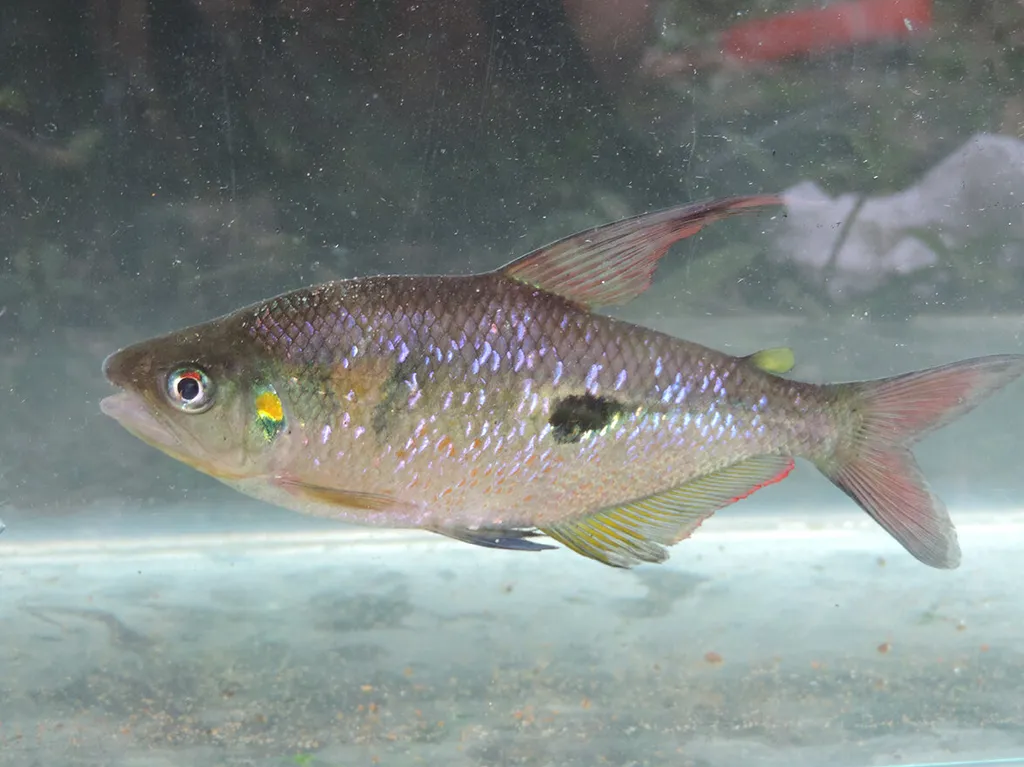
In the intricate web of freshwater ecosystems, a group of fish known as Glyptothorax play a pivotal role, yet their evolutionary history has remained largely shrouded in mystery. A recent study published in the *Journal of Genetic Engineering and Biotechnology* has begun to unravel these secrets, offering insights that could have significant implications for both ecological understanding and agricultural biotechnology.
Researchers, led by Somasundaram Iyyappan from the Division of Fish Genetics and Biotechnology at Sher-e-Kashmir University of Agricultural Science and Technology in Kashmir, have sequenced the complete mitochondrial genomes of five Glyptothorax species: *G. cavia*, *G. trilineatus*, *G. annandalei*, *G. sinensis*, and *G. granosus*. These genomes, ranging from 16,529 to 16,541 base pairs in length, have provided a wealth of data that sheds light on the evolutionary relationships and molecular evolution of these ecologically important fish.
The study reveals that most protein-coding genes in these species begin with the ATG codon and terminate with the TAA stop codon, although some exhibit incomplete stop codons. Notably, the NADH dehydrogenase subunit 6 (ND6) gene stands out with a positive guanine-cytosine (GC) skew, unlike the other protein-coding genes which display a negative GC skew. This variation could be indicative of unique evolutionary pressures or adaptations.
“Understanding the genetic makeup of these fish is not just about filling gaps in our knowledge of biodiversity,” Iyyappan explains. “It’s about uncovering the genetic mechanisms that enable these species to thrive in their environments. This knowledge can be invaluable for developing strategies to conserve and manage freshwater ecosystems, which are increasingly under threat.”
The genetic distance and non-synonymous to synonymous substitution ratio (Ka/Ks) analyses suggest that these species have undergone purifying selection, a process that eliminates deleterious mutations and maintains the integrity of the genome. This selection pressure is likely influenced by the environmental adaptations of these fish, offering a glimpse into the evolutionary forces shaping their genomes.
Phylogenetic analyses have identified *G. sinensis*, *G. annandalei*, and *G. granosus* as closely related species, providing a clearer picture of their evolutionary relationships. This information is crucial for understanding the genetic diversity within the Glyptothorax genus and for developing conservation strategies that preserve this diversity.
The implications of this research extend beyond ecology and into the realm of agricultural biotechnology. The insights gained from studying the mitochondrial genomes of these fish could inform the development of genetically improved fish strains for aquaculture, a sector that is increasingly important for global food security. By understanding the genetic basis of traits such as disease resistance and environmental adaptability, researchers can develop strategies to enhance the productivity and sustainability of aquaculture systems.
Moreover, the methods and insights gained from this study could be applied to other species, both aquatic and terrestrial, to better understand their evolutionary histories and genetic adaptations. This could pave the way for innovative approaches to crop and livestock improvement, as well as the conservation of biodiversity.
As Iyyappan notes, “This research is just the beginning. The more we understand about the genetic diversity and evolutionary history of these species, the better equipped we will be to address the challenges facing our freshwater ecosystems and the broader agricultural sector.”
In the quest to understand and conserve the natural world, every piece of the puzzle is crucial. This study, with its focus on the mitochondrial genomes of Glyptothorax species, adds a significant piece to that puzzle, offering insights that could shape the future of ecological research and agricultural biotechnology.