
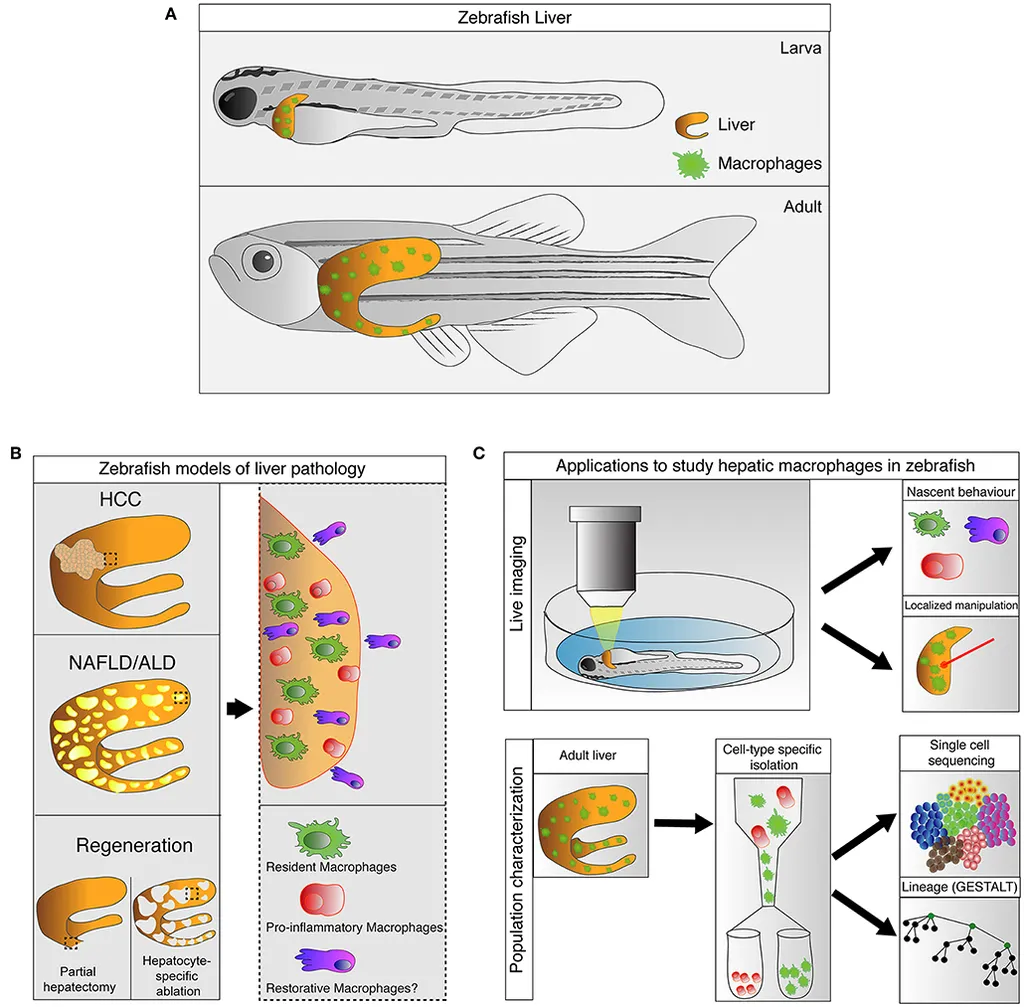
In a groundbreaking study published in *Water Biology and Security*, researchers have uncovered a novel model for studying metabolic dysfunction-associated fatty liver disease (MAFLD) using zebrafish with a deficiency in the SOCS8 gene. Led by Qingsong Zhu from the College of Fisheries and Life Science at Dalian Ocean University and the Institute of Hydrobiology at the Chinese Academy of Sciences, the research provides a detailed look into the progression of metaflammation and its impact on the gut-liver axis.
The study focused on both juvenile (1-month-old) and adult (3-month-old) socs8−/− zebrafish, comparing them with wild-type fish to observe changes in growth, histopathology, transcriptomes, and microbiota composition. The findings revealed significant metabolic dysfunction in the mutant fish, characterized by an increase in oil droplets and a reduction in hepatocyte nuclear density in the liver. These changes are indicative of MAFLD, a condition that has been increasingly recognized as a major health concern in both humans and animals.
“Our research shows that the socs8−/− zebrafish model exhibits a progression of metabolic disorders that closely mirrors the human condition,” said lead author Qingsong Zhu. “This model could be instrumental in understanding the underlying mechanisms of MAFLD and developing targeted therapies.”
In 1-month-old socs8−/− zebrafish, the study observed changes in “arginine and proline metabolism” and an increased percentage of M0 and M2 macrophages, suggesting a protective immune response. These findings were consistent with the GO term “negative regulation of leukocyte differentiation.” The enhanced fatty acid metabolism in these young fish may serve as an indicator of free fatty acid-induced hepatotoxicity associated with simple steatosis but not with liver dysfunction. These findings aligned with the higher growth rates observed in the 1-month-old socs8−/− fish.
As the fish aged to 3 months, the study revealed more severe metabolic dysfunction. GO terms such as “steroid hormone biosynthesis” and “steroid metabolic process” indicated the presence of endoplasmic reticulum stress, contributing to the development of steatohepatitis. DNA repair pathways and associated terms suggested hepatocyte death, and the presence of increased dendritic cells indicated that the 3-month-old socs8−/− model may represent the late stage of MAFLD.
The gut-liver axis was also a significant focus of the study. Imaging results from larvae and single-cell sequencing of intestinal mucosa cells from 3-month-old socs8−/− fish revealed a consistent accumulation of lymphocytes. In 1-month-old socs8−/− fish, enhanced mucin secretion was suggested by a greater number of goblet cells and upregulated “SNARE interactions in vesicular transport,” aligning with “mannose type O-glycan biosynthesis.” The study also found upregulated IL-13 and its receptors, suggesting that innate lymphocytes producing IL-13 may function as regulators of immunity and tissue remodeling.
The enriched pathways “arachidonic acid metabolism” and “intestinal immune network for IgA production” at 1 month indicated enhanced proliferation of intestinal epithelial cells and improved host-microbe interactions, respectively. Comparing 1-month-old socs8−/− with wild-type fish, higher levels of Prevotella indicated enhanced glucose metabolism due to their role in polysaccharide breakdown, while lower levels of Veillonella indicated oxidative stress, potentially associated with a reduced lumen at one month.
In 3-month-old socs8−/− fish, intestinal bacterial overgrowth contributed to the exacerbation of liver dysfunction. Despite an increase in T/NK cells, elevated fatty acid metabolism may impair the function of intestinal lymphocytes. These findings suggest that socs8−/− zebrafish could serve as a valuable model for studying MAFLD and its progression.
The implications of this research for the agriculture sector are substantial. Understanding the gut-liver axis and the progression of metabolic disorders in zebrafish could provide insights into similar conditions in livestock, leading to the development of more effective management and treatment strategies. The study’s findings could also inform breeding programs aimed at improving the health and productivity of farmed fish and other animals.
“This research opens up new avenues for studying metabolic disorders in both humans and animals,” said Qingsong Zhu. “By understanding the underlying mechanisms, we can develop targeted interventions that improve health outcomes and productivity in the agriculture sector.”
As the field of agritech continues to evolve, studies like this one will be crucial in shaping the future of animal health and productivity. The socs8−/− zebrafish model provides a valuable tool for researchers to explore the complexities of metabolic disorders and develop innovative solutions for the agriculture industry.