
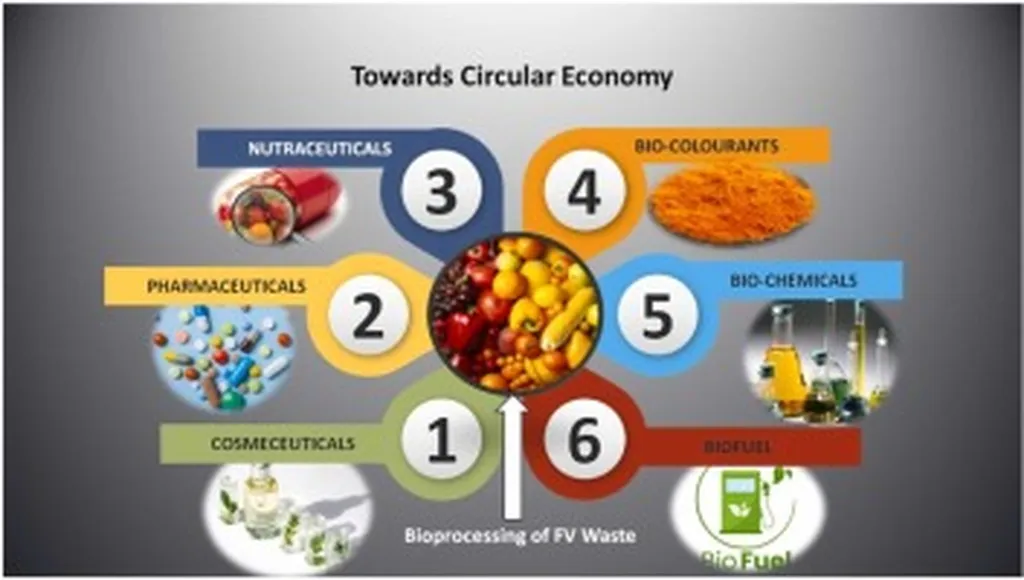
In a world grappling with food waste and environmental sustainability, a recent study published in *Food Chemistry Advances* offers a promising solution: turning fruit waste into valuable resources. Led by Pardeep Kumar Sadh from the Department of Biotechnology at Chaudhary Devi Lal University in India, the research explores the untapped potential of fruit waste in creating a circular economy, benefiting both the environment and the agriculture sector.
Fruit waste, often discarded as environmental pollutants, is rich in fermentable sugars and essential nutrients. This waste includes a variety of phytochemicals, such as colors, polyphenols, and polysaccharides, which are highly sought after in the food industry. “The use of phenolic compounds in functional foods and nutritional supplements has made them more desirable to the business,” explains Sadh. By leveraging these compounds, the agriculture sector can transform what was once considered waste into profitable products.
One of the most exciting developments highlighted in the study is the production of single-cell protein (SCP) from fruit waste. SCP is a sustainable solution to the growing global protein shortage, driven by population growth and increased industrial waste production. “Fruit wastes unsuitable for consumption are often discarded into the environment, causing pollution. However, these residues are rich in fermentable sugars and essential nutrients that microorganisms can use as substrates to produce microbial products such as protein, bioethanol, and biogas,” Sadh notes.
The commercial implications for the agriculture sector are substantial. By integrating multidisciplinary approaches, researchers are uncovering new application areas for fruit waste, creating value in social, environmental, and economic terms. This shift towards a circular economy not only reduces waste but also opens up new revenue streams for farmers and food processors.
Moreover, the study emphasizes the potential of fruit waste in producing functional foods. Most byproducts of fruit processing, such as those from oranges, apples, and grapes, are rich in dietary fiber, unsaturated fatty acids, and bioactive phytochemicals. These components can be utilized to create essential food products, enhancing their nutritional value and market appeal.
The research also delves into the production of bioethanol and bioplastic enzymes from fruit waste, further expanding the range of value-added products. “Currently, integrated and multidisciplinary approaches are being employed to investigate the key components and related bioactivities of fruit waste, exploring new application areas and creating value in terms of social, environmental, and economic aspects,” Sadh adds.
As the agriculture sector continues to evolve, this research paves the way for innovative solutions that address both environmental and economic challenges. By harnessing the power of fruit waste, we can move towards a more sustainable future, where waste is not just discarded but transformed into valuable resources. The study, led by Pardeep Kumar Sadh and published in *Food Chemistry Advances*, serves as a beacon of hope for a greener, more prosperous agricultural landscape.