
In a groundbreaking study published in *Poultry Science*, researchers have uncovered a promising alternative to soybean meal (SM) in laying hen diets, with significant implications for the agriculture sector. The study, led by Xi Bai of the Yunnan Provincial Key Laboratory of Animal Nutrition and Feed Science and the College of Animal Science at Anhui Science and Technology University, explores the potential of walnut cake meal (WM) as a sustainable and nutritious feed ingredient.
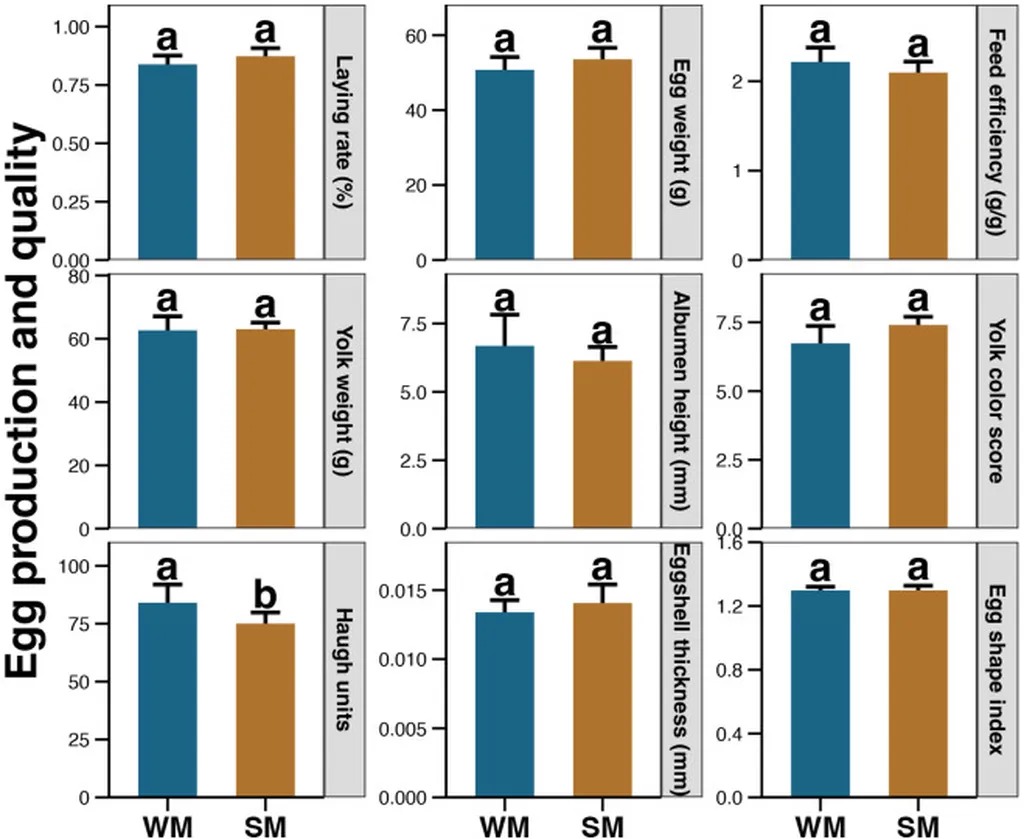
The research team conducted a comprehensive analysis of the effects of WM on egg production, quality, and the cecal microbiome of Jingfen-1 laying hens. They found that replacing SM with WM did not adversely affect the laying rate, egg weight, or feed efficiency. Instead, WM enriched the eggs with polyunsaturated fatty acids, particularly linoleic acid, and enhanced their flavor by increasing the presence of volatile organic compounds associated with sweet and herb-like aromas.
“Walnut cake meal not only provides a viable alternative to soybean meal but also improves the nutritional profile and sensory qualities of eggs,” said lead author Xi Bai. “This dual benefit makes it an attractive option for poultry farmers looking to optimize their feed formulations and reduce costs.”
The study also revealed that WM enriched probiotic bacteria such as Cyanobacteriota and Prevotella in the cecal microbiota of laying hens. Targeted metabolomics and metagenomic sequencing identified genes associated with the synthesis of enriched metabolites like butyric acid, 4-methylvaleric acid, isoleucine, and valine. These metabolites contributed to the improved fatty acid and amino acid composition of the egg yolks, as well as the enhanced flavor.
The commercial implications of this research are substantial. As the demand for sustainable and cost-effective feed ingredients grows, walnut cake meal presents a promising solution for the poultry industry. By reducing the reliance on soybean meal, farmers can mitigate the economic and environmental impacts of soybean cultivation, particularly in regions where soybean production is limited.
Moreover, the improved nutritional and sensory qualities of eggs produced with WM can enhance marketability and consumer satisfaction. As Xi Bai noted, “The enhanced flavor and nutritional profile of eggs produced with walnut cake meal can provide a competitive edge for farmers and benefit consumers seeking high-quality, nutritious food.”
This research opens new avenues for exploring the use of agricultural by-products in animal feed formulations. The multi-omics approach employed in this study provides a comprehensive understanding of the interactions between diet, microbiome, and metabolic outcomes, paving the way for future innovations in animal nutrition and sustainable agriculture.
As the agriculture sector continues to evolve, the integration of innovative feed ingredients like walnut cake meal can drive progress toward more sustainable and efficient production systems. The findings of this study not only highlight the potential of WM but also underscore the importance of interdisciplinary research in addressing the challenges of modern agriculture.