
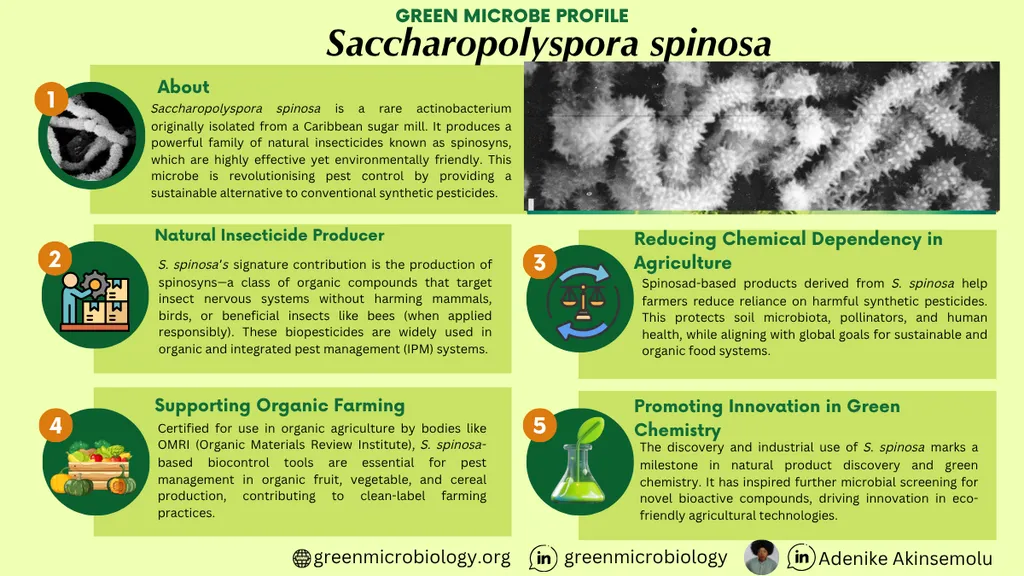
In the quest for sustainable and cost-effective agricultural solutions, a recent study published in *Applied Microbiology and Biotechnology* has shed light on a promising bioinput derived from *Saccharopolyspora spinosa*. The research, led by Luís Felipe Rodrigues Costa from the Department of Agricultural Sciences at the State University of Montes Claros, delves into the chemical composition and bioinsecticidal activity of this microbial bioinput, offering a glimpse into the future of pest control.
The study identified a rich tapestry of bioactive compounds within the bioinput, including spinosyns A and D, which were quantified at concentrations of 29.4 ± 3.6 mg L⁻¹ and 13.3 ± 1.5 mg L⁻¹, respectively. These compounds, along with others like essential amino acids, sphinganine, and diketopiperazines, contribute to the bioinput’s multifunctional action. “The chemical diversity of this bioinput suggests a potential for synergism and a reduced risk of resistance, which is crucial for sustainable agricultural management,” explains Costa.
In vitro trials demonstrated the bioinput’s efficacy, with mortality rates of 82.5% for *Spodoptera frugiperda*, 100.0% for *Dalbulus maidis*, and 64.1% for *Ceratitis capitata*. These results are statistically equivalent to those achieved by commercial products, yet the bioinput offers a more cost-effective solution, potentially reducing costs by up to five times.
The implications for the agriculture sector are significant. As the demand for sustainable pest control solutions grows, this bioinput presents a viable alternative to conventional methods. Its multifunctional action and potential for large-scale production could revolutionize biological agricultural management, reducing reliance on chemical pesticides and promoting environmental sustainability.
Moreover, the study’s findings could pave the way for future developments in the field. The identification of diverse bioactive compounds opens avenues for further research into their individual and synergistic effects. As Costa notes, “Understanding these mechanisms could lead to the development of even more effective and targeted bioinputs.”
In an era where sustainability and cost-efficiency are paramount, this research offers a beacon of hope for the future of agriculture. By harnessing the power of microbial bioinputs, we can strive towards a more sustainable and productive agricultural sector, benefiting both the environment and the economy.