
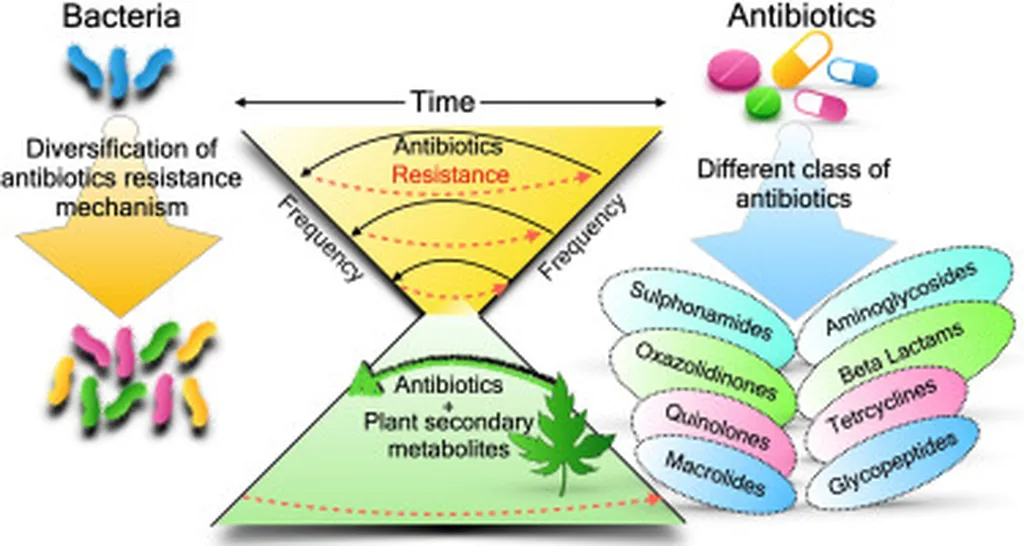
In the relentless battle against antibiotic-resistant bacteria, a team of researchers led by Wahab Shahid from the Department of Agricultural Convergence Technology at Jeonbuk National University has made a significant stride. Their work, published in *Nanotechnology Reviews*, introduces a novel approach that combines green synthesis, advanced nanomaterial engineering, and molecular insights to tackle the growing threat of bacterial infections.
The study focuses on the synthesis of silver nanoparticles (AgNPs) using Agastache rugosa (A. rugosa) leaf extract, a method that is both innovative and environmentally sustainable. “The use of plant extracts for synthesizing nanoparticles not only reduces the environmental impact but also enhances the biocompatibility of the resulting nanomaterials,” Shahid explains. This green synthesis approach is a departure from traditional chemical methods, offering a cleaner and more sustainable alternative.
The researchers further modified the surface of the AgNPs using poly(vinylpyrrolidone) (PVP) and polydopamine (PDA), followed by conjugation with the antibiotic Ceftazidime (Cfz). This multi-step process resulted in the creation of PDA@AgNPs-Cfz nanocomposites, which demonstrated superior antibacterial and antibiofilm activity against Pseudomonas aeruginosa (P. aeruginosa). The enhanced efficacy of these nanocomposites was evident in their significantly improved minimum inhibitory concentration (MIC) and minimum bactericidal concentration (MBC) values compared to AgNPs or Cfz alone.
One of the most compelling aspects of this research is its potential impact on the agriculture sector. Antibiotic resistance is a critical issue in agriculture, where the overuse of antibiotics can lead to the emergence of resistant strains of bacteria. These resistant strains can pose significant challenges to crop protection and livestock health, ultimately affecting food security. The development of effective and sustainable antimicrobial strategies, such as the one proposed by Shahid and his team, could revolutionize the way we approach bacterial infections in agriculture.
The study also highlights the importance of molecular docking studies in understanding the interactions between bioactive compounds and bacterial proteins. This insight is crucial for the development of targeted antimicrobial therapies that can effectively combat antibiotic-resistant bacteria. “By elucidating the molecular mechanisms underlying the antibacterial activity of these nanocomposites, we can pave the way for the design of more effective and specific antimicrobial agents,” Shahid notes.
The commercial implications of this research are substantial. The agriculture sector stands to benefit greatly from the development of sustainable and effective antimicrobial strategies. The use of green synthesis methods and the conjugation of antibiotics with nanomaterials offer a promising avenue for the development of new antimicrobial agents that are both effective and environmentally friendly.
In conclusion, the research led by Wahab Shahid represents a significant advancement in the field of antimicrobial strategies. By combining green synthesis, advanced nanomaterial engineering, and molecular insights, the study offers a comprehensive approach to tackling antibiotic resistance. The findings underscore the potential of PDA@AgNPs conjugated with Cfz as a promising strategy to address antibiotic resistance and bacterial infections in an environment-friendly manner. This study contributes to the development of sustainable, innovative solutions for environmental and clinical challenges associated with microbial contamination, with far-reaching implications for the agriculture sector.