
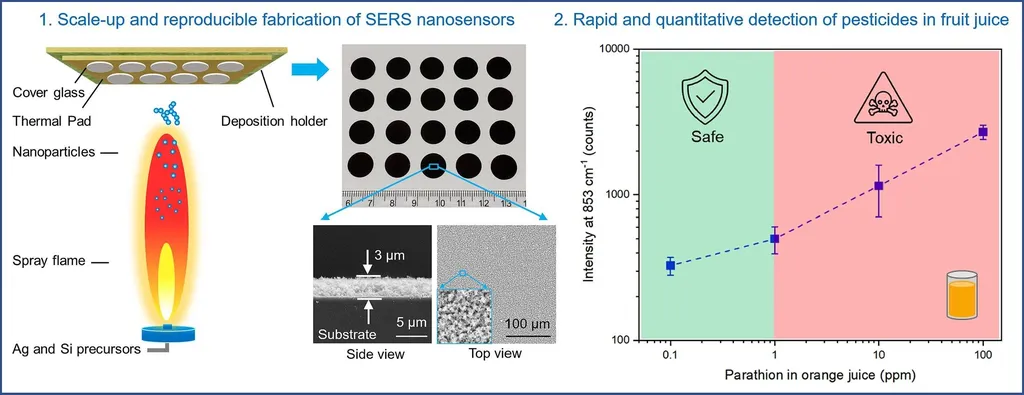
In the ever-evolving landscape of agricultural technology, a groundbreaking development has emerged from the Iranian Research Institute of Plant Protection. Researchers have designed a rapid, cost-effective nanobiosensor capable of detecting organophosphorus and carbamate pesticides in agricultural products. This innovation, published in the *Journal of Crop Protection*, could revolutionize on-site pesticide detection, offering farmers and agricultural businesses a swift and visually intuitive method to ensure food safety and regulatory compliance.
The nanobiosensor leverages gold colloidal nanoparticles, which undergo a noticeable color change upon interaction with targeted pesticides. This visual cue allows for immediate identification without the need for complex laboratory equipment. “The sensitivity of this nanobiosensor is particularly notable,” explains lead author Mohsen Morowati. “It shows the highest sensitivity to carbofuran and significant morphological changes in the presence of Trichlorfon, making it a versatile tool for various agricultural applications.”
The synthesis process involves chemically growing gold plasmonic nanoparticles on grain particles, which are then optimized with different concentrations and volumes of aptamer and salt. The incubation time for pesticide samples with the nanobiosensor is remarkably short, ranging from 10 to 15 minutes. This rapid detection capability is a game-changer for the agriculture sector, where timely decision-making can significantly impact crop yields and marketability.
The commercial implications of this research are vast. Farmers can now conduct on-site tests to ensure their produce meets regulatory standards, reducing the risk of costly recalls and enhancing consumer trust. “The ease of synthesis, indigenous production, and the ability to detect pesticides quickly and visually at the lowest concentrations of analytes make this method highly attractive for commercial applications,” Morowati adds.
Beyond immediate detection, the potential for functionalization with specific biomolecules opens doors for targeted detection of a wider range of pesticides and contaminants. This adaptability could lead to a new era of precision agriculture, where farmers and agribusinesses can proactively manage pesticide use and minimize environmental impact.
As the agriculture sector continues to embrace technological advancements, this nanobiosensor represents a significant step forward. Its potential to replace conventional detection methods could streamline operations, reduce costs, and enhance the overall efficiency of agricultural practices. With further research and development, this innovation could become a standard tool in the arsenal of modern farming, shaping the future of food safety and agricultural sustainability.
The research, led by Mohsen Morowati from the Pesticides Research Department at the Iranian Research Institute of Plant Protection, underscores the critical role of nanotechnology in addressing contemporary agricultural challenges. As the sector continues to evolve, such innovations will be pivotal in ensuring food security and safety for a growing global population.