
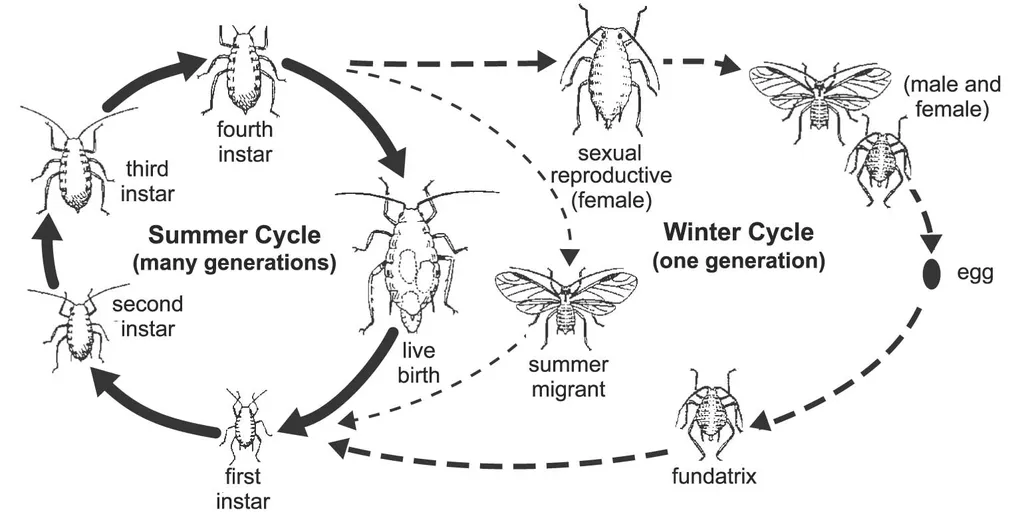
In the heart of Southwestern Iran, a critical battle is waged each year between walnut farmers and two tiny but formidable foes: the small walnut aphid (Chromaphis juglandicola) and the large walnut aphid (Panaphis juglandis). These pests threaten the region’s vital walnut industry, and understanding their life cycles is crucial for effective pest management. New research published in the *Journal of Crop Protection* sheds light on the seasonal activity of these aphids and their natural enemies, offering hope for more sustainable and targeted control strategies.
The study, led by Arsalan Khalili-Moghadam of the Plant Protection Department at Shahrekord University, monitored aphid populations in Farokhshahr and Saman walnut orchards over two consecutive years, 2022 and 2023. The findings reveal distinct patterns in aphid population fluctuations, with the small walnut aphid reaching peak densities between mid-May and late June, while the large walnut aphid exhibited a shorter peak between mid-May and mid-June or mid-July. “Understanding these fluctuations is key to timing interventions effectively,” Khalili-Moghadam explains. “Farmers can now anticipate peak infestation periods and apply control measures more precisely.”
The research also uncovered that both aphid species overwinter as eggs in small seams and cracks of walnut trees, particularly at the bases of fallen leaves. These eggs hatch depending on local climate conditions, typically during the third decade of March in the Saman orchard and the first decade of April in the Farokhshahr orchard. This insight is particularly valuable for farmers, as it allows them to prepare for the onset of aphid activity and implement early-season management practices.
The commercial impact of these findings cannot be overstated. Walnut production is a cornerstone of the agricultural economy in Chaharmahal va Bakhtiari province, and aphid infestations can lead to significant yield losses. By providing a clearer picture of aphid life cycles, this research enables farmers to adopt more targeted and integrated pest management (IPM) strategies. “This research is a game-changer for walnut farmers,” says a local agricultural expert. “It gives them the tools they need to protect their crops more effectively and sustainably.”
The study also highlights the role of natural enemies in controlling aphid populations. While the research did not delve deeply into the specifics of these natural predators, it underscores the importance of conserving and enhancing their populations as part of a holistic IPM approach. This could open new avenues for research into biological control methods, further reducing the reliance on chemical pesticides.
Looking ahead, this research could shape future developments in the field by encouraging more localized and climate-informed pest management strategies. As climate change continues to impact agricultural systems, understanding how local conditions influence pest life cycles will become increasingly important. Farmers and agricultural experts can use these insights to develop adaptive and resilient pest management practices that can withstand the challenges posed by a changing climate.
In summary, the findings published in the *Journal of Crop Protection* offer a significant step forward in the fight against walnut aphids. By providing detailed insights into their seasonal activity and overwintering habits, this research equips farmers with the knowledge they need to protect their crops and ensure the sustainability of the walnut industry in Southwestern Iran. As Khalili-Moghadam notes, “This is just the beginning. There is still much to learn, but we are on the right path to more effective and sustainable pest management.”