
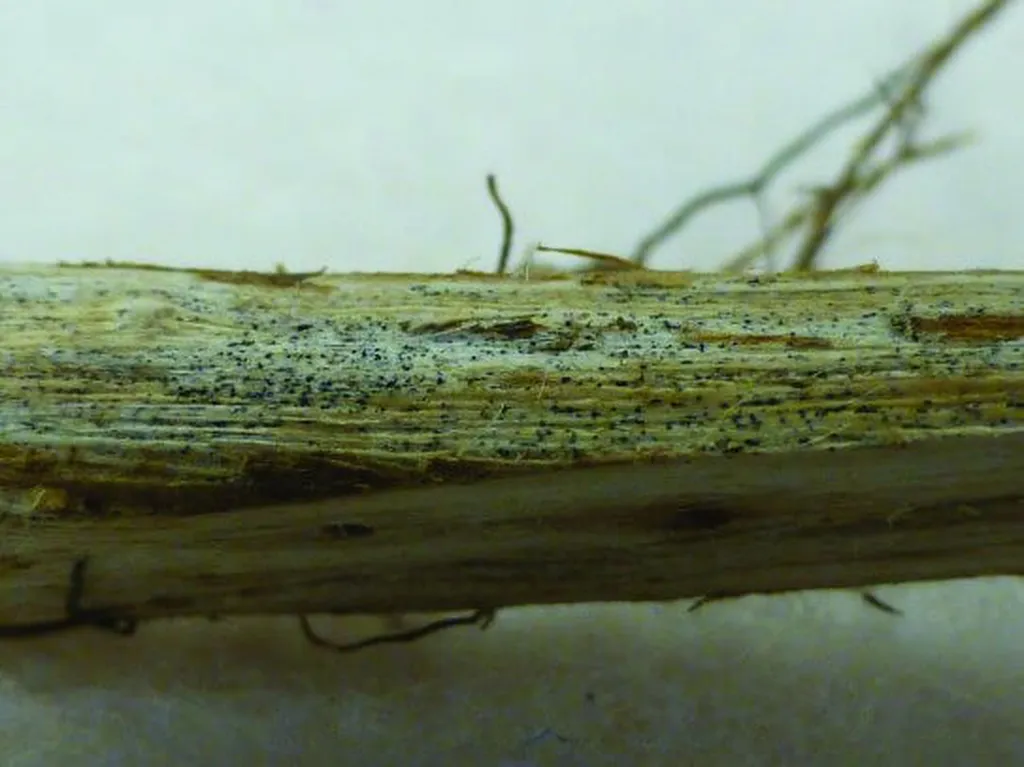
In a significant stride towards combating charcoal rot, a persistent threat to soybean crops, researchers have pinpointed key genetic markers that could revolutionize breeding programs. The study, published in *Frontiers in Plant Science*, unveils the genetic architecture of resistance to this devastating disease, offering hope for farmers and a boost to the agriculture sector.
Charcoal rot, caused by the necrotrophic fungal pathogen *Macrophomina phaseolina*, has long been a bane for soybean farmers, leading to substantial yield losses. To tackle this issue, a team led by Vennampally Nataraj from the Indian Council of Agricultural Research (ICAR)-National Soybean Research Institute conducted a comprehensive genome-wide association study (GWAS). The research involved a glasshouse experiment and a three-year field experiment using 214 diverse soybean accessions.
The study identified eight single-nucleotide polymorphisms (SNPs) associated with seedling resistance and ten SNPs linked to adult plant resistance. Notably, two SNPs—one each for seedling (S14_50857981) and adult plant resistance (S14_51754926)—were found within a 1-Mb region on chromosome 14. This discovery is particularly exciting for breeders aiming to develop resistant varieties.
“Identifying these SNPs is a game-changer,” said Nataraj. “It provides a clear target for breeders to develop soybean varieties that are resilient to charcoal rot, which can significantly enhance yields and reduce the need for chemical interventions.”
The research also pinpointed 23 genes with annotations associated with defense response pathways. Three of these genes, encoding an NB-ARC domain linked to defense responses, were located near the SNP S14_50857981. This finding underscores the potential for targeted genetic modifications to bolster disease resistance.
One soybean accession, PI 159923, stood out for its resistance under both field and glasshouse conditions. This genotype is now poised to become a valuable parent in breeding programs aimed at creating high-yielding, charcoal rot-resistant varieties.
The commercial implications of this research are substantial. Charcoal rot resistance can lead to more stable crop yields, reducing the economic burden on farmers and enhancing food security. As climate change exacerbates the prevalence of such diseases, the development of resilient crop varieties becomes increasingly critical.
“This study not only advances our understanding of charcoal rot resistance but also paves the way for more sustainable and productive agriculture,” Nataraj added. “By leveraging these genetic insights, we can develop crops that are better equipped to withstand environmental stresses and pathogens.”
The findings published in *Frontiers in Plant Science* by lead author Vennampally Nataraj from the Indian Council of Agricultural Research (ICAR)-National Soybean Research Institute, Indore, Madhya Pradesh, India, mark a pivotal step forward in the quest for disease-resistant soybean varieties. As the agriculture sector grapples with the challenges posed by climate change and pathogen outbreaks, such genetic breakthroughs offer a beacon of hope for a more resilient and productive future.