
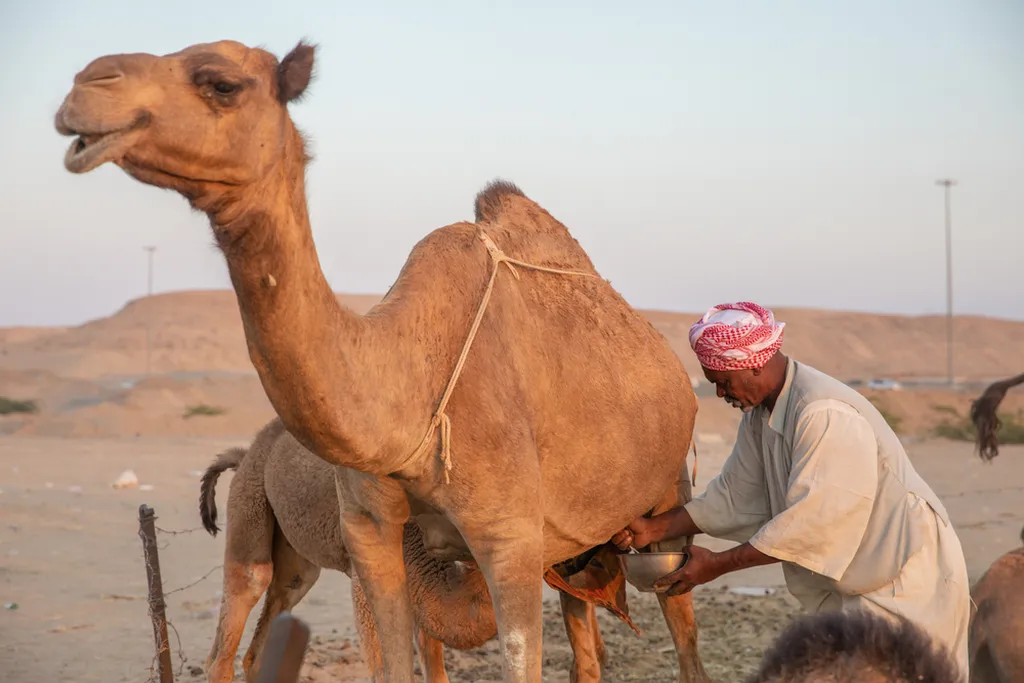
In a groundbreaking study published in *Frontiers in Microbiology*, researchers have uncovered the potential of camel milk and fermented camel milk to prevent ulcerative colitis, a condition that affects millions worldwide. The study, led by Weisheng Xu from the Key Lab of Germplasm Innovation and Utilization of Triticeae Crops at Inner Mongolia Agricultural University, sheds light on the mechanisms behind these dairy products’ beneficial effects, offering promising avenues for both human health and the agriculture sector.
Ulcerative colitis, a chronic inflammatory bowel disease, is often linked to gut microbiota imbalances and reduced levels of short-chain fatty acids (SCFAs). The study found that preemptive intervention with camel milk and fermented camel milk significantly mitigated the pathological manifestations of dextran sulfate sodium (DSS)-induced ulcerative colitis in mice. “Both treatments restored intestinal barrier integrity, elevated anti-inflammatory cytokines, and regulated the intestinal flora imbalance,” Xu explained. Notably, fermented camel milk exhibited superior efficacy compared to regular camel milk, suggesting enhanced benefits through fermentation.
The research highlights the potential of these dairy products to preserve the intestinal barrier, regulate immune responses, and restore gut microbiota homeostasis and SCFA production. “We hold optimistic prospects for camel milk and fermented camel milk as dietary supplements to prevent ulcerative colitis and stabilize gut microbiota homeostasis,” Xu stated. This finding could revolutionize the agricultural sector, particularly in regions where camel farming is prevalent, by creating new market opportunities for camel milk and its fermented products.
The study’s implications extend beyond human health, offering a glimpse into the future of agritech and functional foods. As consumers increasingly seek natural and effective solutions for gut health, the demand for camel milk and fermented camel milk could surge, benefiting farmers and the broader agricultural economy. Moreover, the research underscores the importance of gut microbiota in overall health, paving the way for further innovations in probiotics and functional foods.
The findings published in *Frontiers in Microbiology* not only advance our understanding of ulcerative colitis but also open new doors for the agriculture sector. As the world continues to explore the potential of functional foods, camel milk and its fermented counterparts stand out as promising candidates, offering a blend of tradition and innovation for a healthier future.