
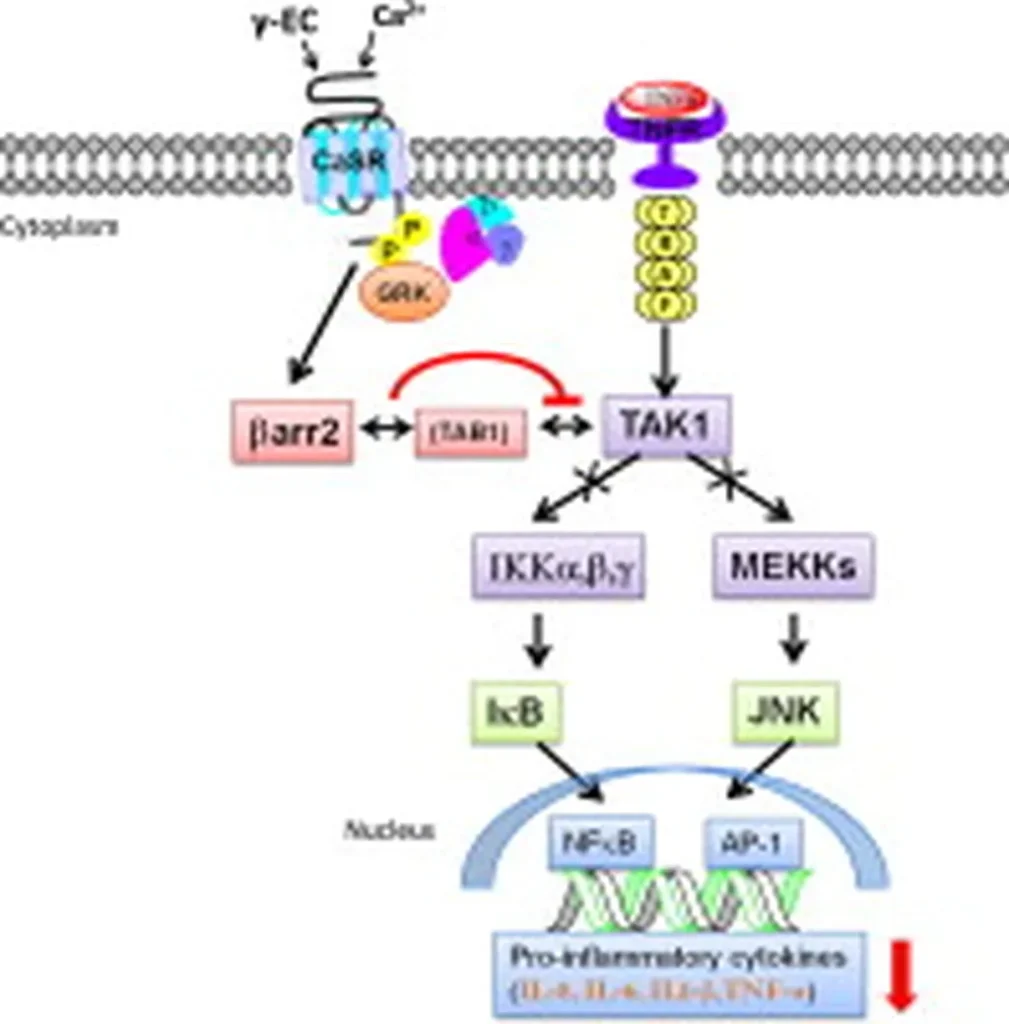
In the quest to combat inflammatory bowel disease (IBD), a compound known as gamma-glutamyl-cysteine (γ‐EC) has emerged as a promising candidate, offering a dual approach that could revolutionize treatment strategies and potentially benefit the agriculture sector. A recent study published in the journal *eFood* sheds light on the molecular mechanisms through which γ‐EC alleviates jejunal inflammation, providing insights that could pave the way for innovative therapeutic interventions.
The research, led by Shiyan Jian from the Guangdong Provincial Key Laboratory of Animal Nutrition Control at South China Agricultural University, explores how γ‐EC interacts with the NF‐κB pathway and modulates the gut microbiota. Using lipopolysaccharides (LPS)-induced IBD mouse models and intestinal porcine epithelial cells from the jejunum (IPEC-J2), the study demonstrates that γ‐EC enhances the expressions of tight junction proteins such as ZO‐1, occludin, and claudin‐1. This enhancement is crucial for maintaining the integrity of the intestinal barrier, which is often compromised in IBD patients.
“Our findings suggest that γ‐EC has the potential to modify the jejunal intestinal barrier by suppressing the NF‐κB pathway,” Jian explained. “This suppression leads to a decrease in the expressions of proteins like IKKα, IκBα, and p65, which are associated with inflammation.”
The study also revealed that γ‐EC increases the abundance of Akkermansia, a beneficial gut bacterium, and enhances the production of short-chain fatty acids (SCFAs) such as acetate, propionate, and butyrate. These SCFAs play a vital role in maintaining gut health and reducing inflammation. The research further validated that γ‐EC upregulates the mRNA expressions of ZO‐1 and claudin‐1 in LPS-treated IPEC-J2 cells, reinforcing its therapeutic potential.
The implications of this research extend beyond human health into the agriculture sector. Understanding how γ‐EC interacts with the gut microbiota and the NF‐κB pathway could lead to the development of novel feed additives or supplements for livestock. These additives could improve animal health, enhance productivity, and reduce the need for antibiotics, which are often used to manage gut health in livestock. This could have significant economic benefits for farmers and the agricultural industry as a whole.
Moreover, the study’s findings could inspire further research into the use of γ‐EC and similar compounds in the treatment of other inflammatory conditions. The potential to modulate the gut microbiota and the NF‐κB pathway opens up new avenues for developing targeted therapies that address the root causes of inflammation rather than just the symptoms.
As the agricultural industry continues to seek sustainable and effective ways to improve animal health and productivity, the insights gained from this research could prove invaluable. The study’s lead author, Shiyan Jian, and colleagues have provided a foundation upon which future developments in the field can be built, offering hope for both human and animal health.
In the words of Jian, “Our research highlights the potential of γ‐EC as a therapeutic agent for intestinal inflammation related to IBD. The findings could have significant implications for both human medicine and the agriculture sector, paving the way for innovative solutions to complex health challenges.”