
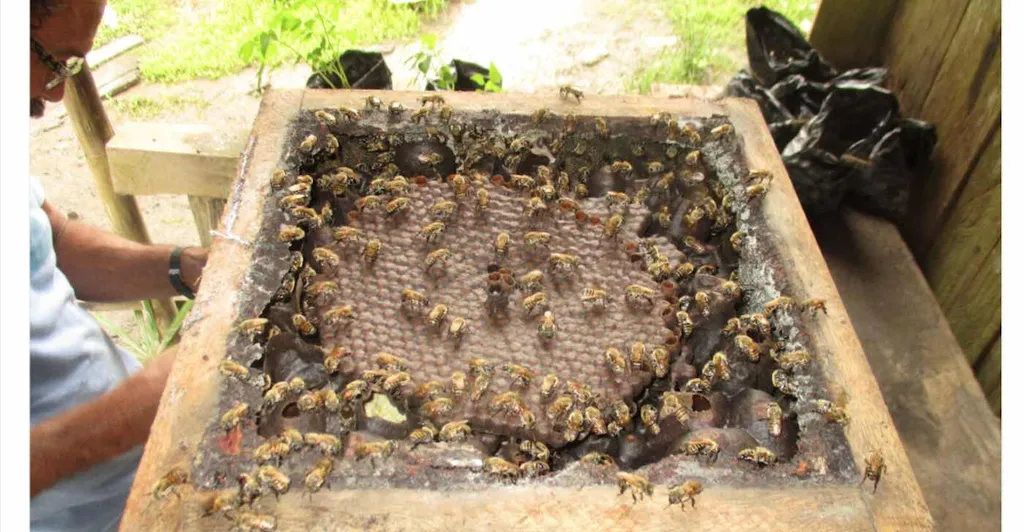
In the verdant landscapes of Northeast India, a sweet secret has been hiding in plain sight, and a recent study has just cracked open its potential. Researchers have uncovered that stingless bee honey, often overshadowed by its more common counterparts, packs a powerful nutritional and antioxidant punch that could revolutionize the agritech and functional food sectors.
The study, published in *Frontiers in Nutrition*, compared the physicochemical properties, mineral profiles, and bioactivities of honeys from four bee species found in Assam: Apis cerana, A. mellifera, A. dorsata, and the lesser-known Tetragonula iridipennis, or stingless bee. The findings revealed significant interspecific variations, with T. iridipennis honey standing out as a nutritional powerhouse.
“T. iridipennis honey exhibited elevated diastase activity, proline content, and mineral richness, along with the highest total phenolic and flavonoid content,” said lead author Partha Pratim Gyanudoy Das from the AICRP on Honey Bees and Pollinators at Assam Agricultural University. These biochemical traits translated into superior antioxidant capacity and a broad antibacterial spectrum, inhibiting pathogens like Salmonella Typhi, Shigella flexneri, and Streptococcus mutans.
The implications for the agriculture and food industries are substantial. With growing consumer demand for natural, functional foods, stingless bee honey could emerge as a valuable commodity. Its high antioxidant potential and antimicrobial properties make it an attractive candidate for food preservation and functional food development. Moreover, the study provides a comprehensive biochemical baseline for Assam honeys, opening avenues for sustainable beekeeping practices and bioactive compound exploration.
The research also highlights the importance of biodiversity in agriculture. By understanding and harnessing the unique properties of different honey varieties, farmers and beekeepers can diversify their products and tap into niche markets. This could lead to increased income and sustainable livelihoods, particularly in regions like Assam where beekeeping is a traditional practice.
As the world grapples with the challenges of food security and sustainability, studies like this offer a glimpse into the untapped potential of natural resources. The findings could shape future developments in the field, encouraging further research into the bioactivities of lesser-known bee species and their contributions to agriculture and human health.
In an era where technology and tradition intersect, this research serves as a reminder that nature often holds the key to innovation. By unlocking the secrets of stingless bee honey, we may just find a sweeter, healthier, and more sustainable future.