
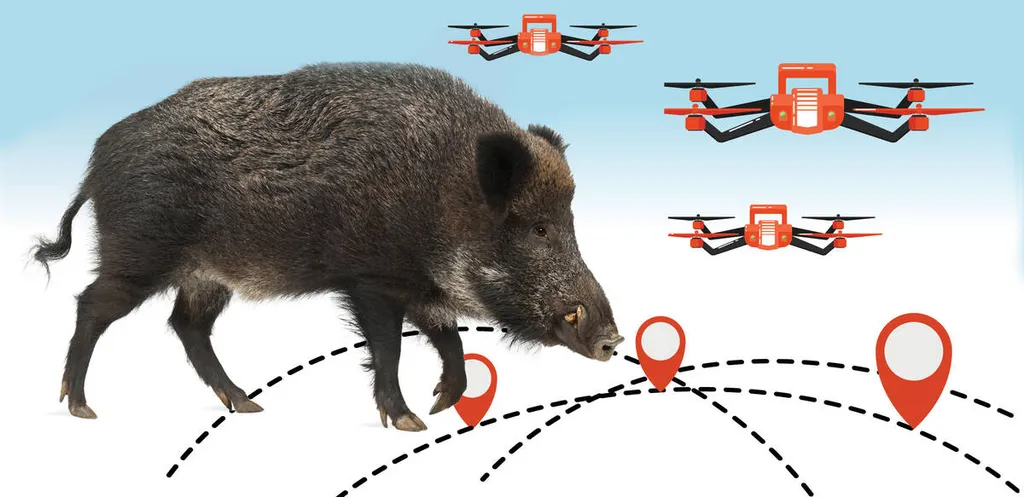
In the ongoing battle against invasive wild pigs, a new study offers a promising strategy that could significantly boost removal efforts and protect agricultural resources. Researchers have found that using drones equipped with thermal cameras to scout for wild pigs before ground and aerial shooting operations can increase removal rates, particularly in areas with low pig densities.
Published in the Wildlife Society Bulletin, the study led by Justin W. Fischer from the United States Department of Agriculture’s National Wildlife Research Center, reveals that drone-assisted removal rates were highest for aerial operations in forested areas with medium to high wild pig densities and when there was snow. “Scouting with drones increased median removal rates of aerial shooting efforts by 3.4 pigs per hour and ground shooting efforts by 0.2 pigs per hour under low wild pig densities,” Fischer explained. This method not only enhances the efficiency of removal but also holds substantial potential for mitigating the economic impacts of wild pigs on agriculture.
Wild pigs are a destructive invasive species, causing extensive damage to crops, forests, and other natural resources. Their rooting and wallowing behaviors can destroy soil structure, contaminate water sources, and spread diseases, leading to significant financial losses for farmers and landowners. According to the study, integrating drones into wild pig management programs could be a game-changer, particularly in areas where traditional methods have proven less effective.
The use of thermal cameras on drones allows for precise location of wild pigs, even in challenging terrains and low-visibility conditions. This technology provides real-time data, enabling wildlife managers to strategize and execute removal operations more effectively. “Using thermal camera-equipped drones to scout for wild pigs immediately before aerial operations can increase removal rates,” Fischer noted. This approach not only saves time and resources but also enhances the overall success of culling efforts.
The study also highlights the importance of considering environmental conditions, such as snow cover and habitat type, when deploying drones for wild pig management. The findings suggest that drone-assisted removal rates were particularly effective in forested areas and during snowy conditions, where traditional methods might be less efficient.
As the agricultural sector continues to grapple with the economic and environmental impacts of invasive species, the integration of advanced technologies like drones and thermal cameras offers a beacon of hope. This research not only provides valuable insights into improving wild pig removal rates but also paves the way for future developments in the field of invasive species management.
The study, published in the Wildlife Society Bulletin and led by Justin W. Fischer from the United States Department of Agriculture’s National Wildlife Research Center, underscores the potential of drone technology in enhancing the efficiency and effectiveness of wild pig control efforts. As researchers continue to explore the applications of this technology, the agricultural sector can look forward to more innovative and sustainable solutions for managing invasive species and protecting valuable resources.
In the ever-evolving landscape of agritech, the integration of drones and thermal imaging represents a significant step forward in the fight against invasive wild pigs. By leveraging these advanced tools, wildlife managers and agricultural stakeholders can work together to mitigate the economic and environmental impacts of this destructive species, ensuring a more sustainable and productive future for the agricultural sector.