
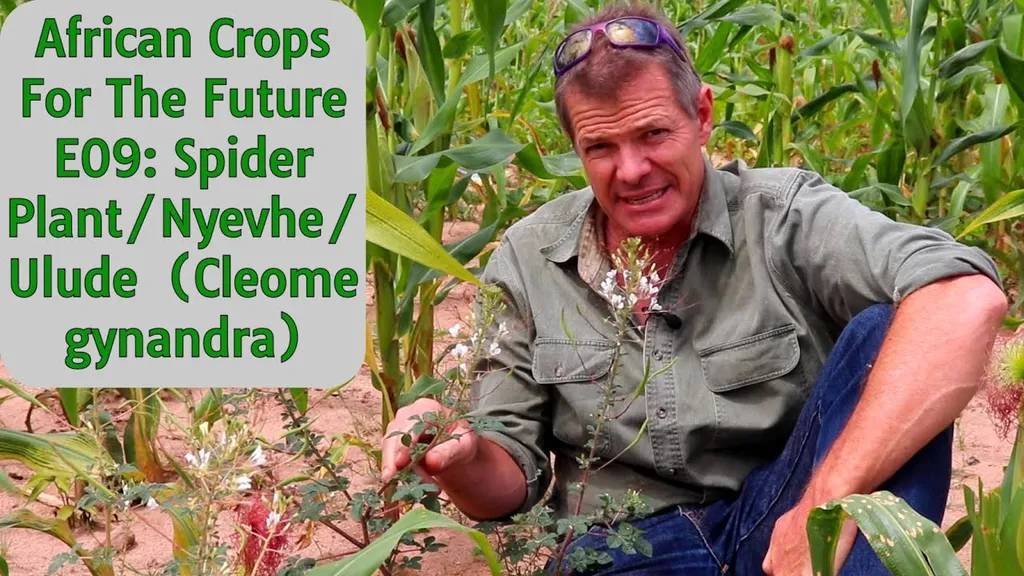
In the heart of Zimbabwe, a quiet revolution is taking place, one that could reshape the future of a often-overlooked crop. Spider plant, a nutrient-rich and medicinal crop, is gaining attention thanks to a collaborative effort between farmers and researchers. The study, published in the Journal of Underutilised Crops Research, sheds light on the breeding priorities and variety preferences for this versatile plant, offering promising avenues for the agriculture sector.
The research, led by Munyaradzi Mativavarira from the Department of Crop Sciences at Marondera University of Agricultural Sciences and Technology, employed participatory approaches to empower farmers in the decision-making process. Through farmer field schools (FFSs) across various districts, landrace genotypes of spider plant were planted and evaluated. Farmers met, learned, and discussed important breeding traits, ultimately ranking the genotypes based on their preferences.
The top six breeding priorities identified across the FFSs were size of leaves, number of branches, taste, late maturity, germination, and early leaf growth. These priorities highlight the practical considerations that farmers have when selecting varieties for cultivation. As one farmer noted, “We need plants that grow quickly and produce many branches so we can harvest more leaves.”
Preferences for different genotypes varied among the FFSs, reflecting the diverse needs and conditions of the farmers. For instance, CGGUR was preferred in Tsholotsho for its higher branching habits, while CGKENYA was favored in Rushinga. In Mudzi, CGMRGP-Marondera stood out for its larger leaf sizes and branching. These preferences underscore the importance of tailored crop improvement programs that consider local contexts.
The study’s findings have significant commercial implications for the agriculture sector. By identifying preferred genotypes and breeding priorities, researchers and breeders can develop improved varieties that meet farmers’ needs. This can enhance productivity, improve nutritional outcomes, and boost the economic value of spider plant. As Mativavarira explains, “These genotypes can be utilised for future genetic improvement, seed production, and variety release, ultimately benefiting farmers and consumers alike.”
The research also highlights the value of participatory approaches in crop improvement. By involving farmers in the selection and evaluation process, researchers can gain insights into the practical challenges and preferences that drive decision-making. This collaborative approach not only empowers farmers but also ensures that the resulting varieties are well-suited to local conditions and needs.
Looking ahead, this research could shape future developments in the field of agritech and crop improvement. The identified genotypes and breeding priorities provide a roadmap for developing improved spider plant varieties that are tailored to the needs of farmers. Additionally, the study’s emphasis on participatory approaches offers a model for engaging farmers in the crop improvement process, fostering a more inclusive and collaborative approach to agricultural innovation.
In the words of one farmer, “This research gives us hope that our voices are heard and that the plants we grow will be better suited to our needs.” As the agriculture sector continues to evolve, the insights gained from this study could pave the way for a more sustainable and farmer-centric approach to crop improvement.