
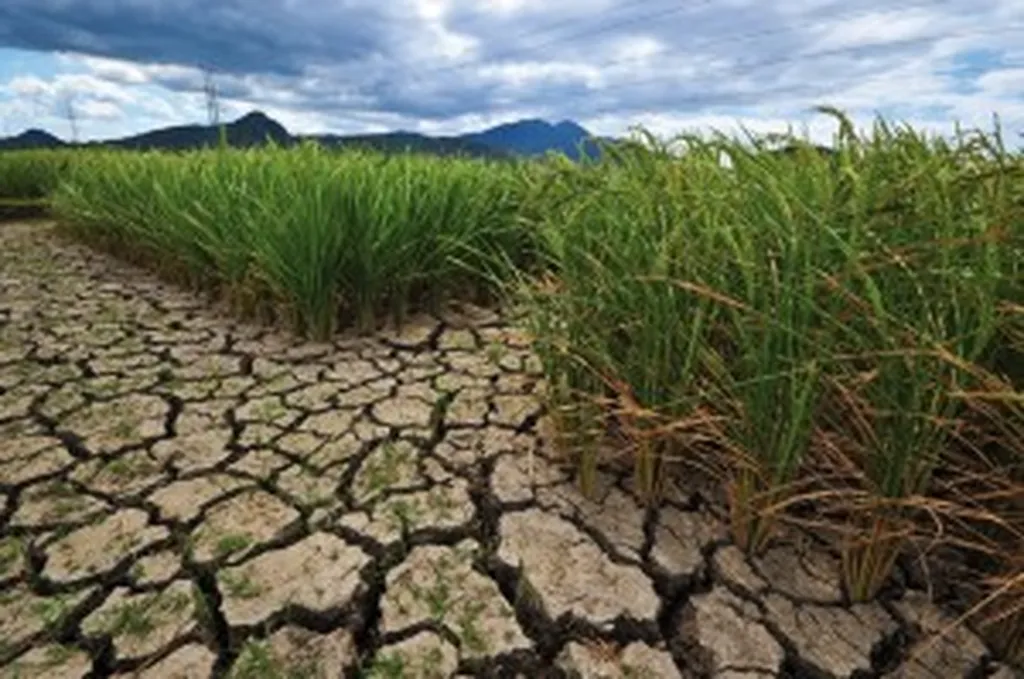
In the face of climate change, understanding how plants cope with drought is becoming increasingly vital for agriculture. A recent study published in *Frontiers in Plant Science* has shed light on the drought tolerance mechanisms of *Blumea laciniata*, a medicinal plant with significant therapeutic properties. The research, led by Hongjuan Wang from the Biotechnology Research Institute at the Chongqing Academy of Agricultural Sciences, could have profound implications for crop cultivation strategies in drought-prone regions.
*Blumea laciniata*, known for its medicinal value, has been studied for its responses to drought stress induced by polyethylene glycol (PEG). The researchers subjected the plants to two PEG concentrations (20% and 30%) and analyzed their responses over five time points (0, 1, 2, 4, and 7 days) using RNA sequencing (RNA-seq) and Weighted Gene Co-expression Network Analysis (WGCNA). The study revealed that *B. laciniata* exhibits natural drought tolerance, a trait that could be harnessed to improve agricultural resilience.
Under drought conditions, the plants showed visible stress symptoms such as chlorosis, curling, wilting, and necrosis, with more severe effects at the higher PEG concentration. “The plants’ responses were quite telling,” noted Wang. “The severity of the symptoms correlated with the intensity of the stress, providing a clear visual indicator of the plant’s coping mechanisms.”
The RNA-seq analysis uncovered distinct transcriptional reprogramming in the leaves of *B. laciniata* under PEG stress. Venn and KEGG enrichment analyses highlighted that the plant primarily responds to drought by regulating phenylpropanoid and flavonoid biosynthesis pathways. These pathways are crucial for producing compounds that protect plants from stress.
One of the most significant findings was the identification of two transcription factors, GRF2 and NF-YA3, as key regulators associated with drought resistance. “These transcription factors could be the key to unlocking new genetic resources for drought-resistant crops,” Wang explained. “Understanding their role could lead to the development of more resilient plant varieties.”
The commercial implications of this research are substantial. As climate change continues to impact agriculture, the ability to cultivate drought-resistant crops could revolutionize farming practices. By leveraging the genetic insights gained from this study, agritech companies and farmers could develop strategies to mitigate the adverse effects of drought, ensuring food security and economic stability.
This study not only provides a theoretical basis for understanding drought resistance in *B. laciniata* but also offers a roadmap for future research in plant stress responses. The identification of key transcription factors and pathways opens up new avenues for genetic engineering and breeding programs aimed at enhancing crop resilience.
As the agricultural sector grapples with the challenges posed by climate change, studies like this one are invaluable. They offer hope for a future where crops can thrive despite adverse conditions, ensuring a sustainable and secure food supply. The research led by Hongjuan Wang from the Biotechnology Research Institute at the Chongqing Academy of Agricultural Sciences, published in *Frontiers in Plant Science*, is a testament to the power of scientific inquiry in addressing real-world problems.