
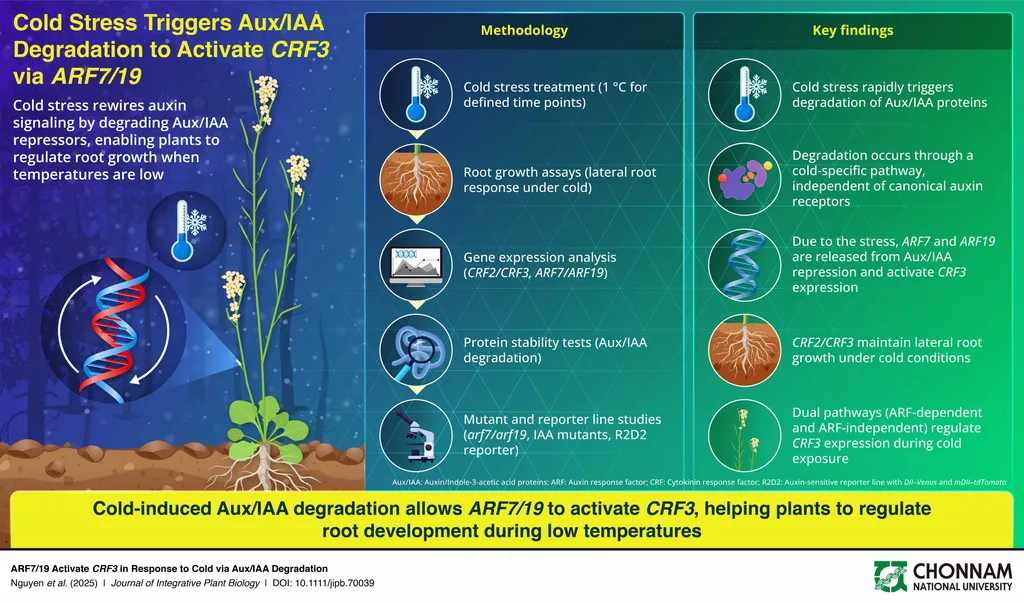
In a world where climate change is reshaping agricultural landscapes, understanding how plants cope with cold stress is becoming increasingly vital. A recent review published in *Frontiers in Plant Science* delves into the intricate physiological, biochemical, and molecular mechanisms that enable plants to withstand low temperatures, offering a roadmap for developing more resilient crops. Led by Rajib Roychowdhury from the Agricultural Research Organization (ARO) – Volcani Center in Israel, the research consolidates decades of scientific inquiry into a comprehensive framework that could revolutionize crop improvement strategies.
Cold stress is a significant threat to global food security, stunting plant growth, development, and yield. As temperatures fluctuate unpredictably due to climate change, farmers are facing unprecedented challenges. “Understanding how plants naturally adapt to cold stress is crucial for breeding crops that can thrive in colder environments,” Roychowdhury explains. The review highlights several key strategies plants employ to mitigate the effects of cold, including osmotic adjustments, enhanced antioxidant defenses, and the accumulation of osmoprotectants—molecules that protect cells from damage.
One of the most critical pathways identified in the review is the ICE1-CBF-COR genetic signaling pathway. This pathway regulates cold-responsive genes through transcription factors like C-repeat binding proteins (CBFs), which play a pivotal role in acclimatization to low temperatures. “The CBF pathway is like a master switch that turns on a suite of genes to help plants survive cold stress,” Roychowdhury notes. By deciphering this pathway, scientists can develop crops with enhanced cold tolerance, potentially boosting yields in regions prone to temperature fluctuations.
The commercial implications of this research are profound. As global demand for food continues to rise, the ability to grow crops in previously inhospitable environments could open up new agricultural frontiers. For instance, regions with short growing seasons or high-altitude areas could become more productive, providing farmers with new opportunities to diversify their crops and increase their income. Additionally, cold-tolerant crops could reduce the reliance on energy-intensive greenhouse farming, making agriculture more sustainable and cost-effective.
Beyond immediate applications, the review underscores the need for further research to address methodological limitations and explore untapped areas of plant cold tolerance. “While we’ve made significant progress, there’s still much to learn about the complex interplay between different signaling pathways and how they contribute to cold resistance,” Roychowdhury acknowledges. Future studies could focus on integrating omics technologies—such as genomics, proteomics, and metabolomics—to gain a more holistic understanding of plant responses to cold stress.
The findings also have implications for biotechnology. By leveraging genetic engineering and CRISPR-Cas9 technology, scientists could precisely edit genes involved in the CBF pathway to enhance cold tolerance in commercially important crops. This approach could accelerate the development of new varieties that are not only resilient to cold but also resistant to other abiotic stresses, such as drought and salinity.
In conclusion, the review by Roychowdhury and colleagues represents a significant step forward in our understanding of plant cold tolerance. By unraveling the intricate mechanisms that enable plants to survive in cold environments, the research paves the way for innovative breeding and biotechnological approaches that could transform agriculture. As climate change continues to pose challenges, the insights gained from this study will be invaluable in ensuring food security and promoting sustainable farming practices.