
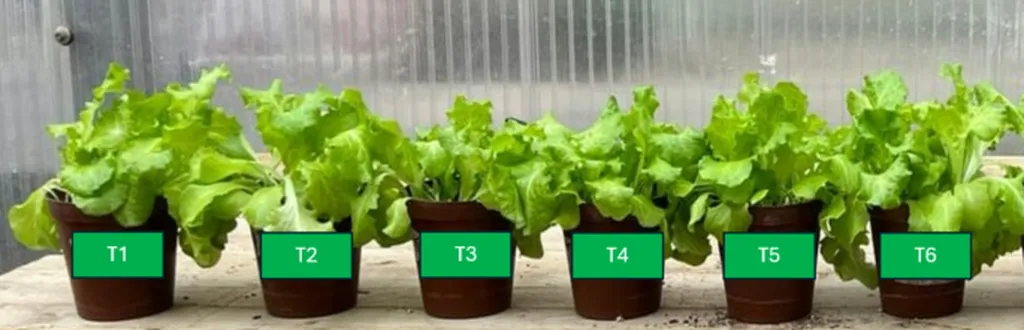
In a groundbreaking study published in *Scientia Horticulturae*, researchers have unveiled the potential of Chlorella vulgaris, a microalga, to revolutionize lettuce farming under salinity stress. The study, led by Sofia Marka from the Agricultural University of Athens, explores how extracts from Chlorella vulgaris can act as a biostimulant, enhancing crop performance and stress tolerance in hydroponic lettuce systems.
Salinity stress is a significant challenge for farmers worldwide, particularly in arid and semi-arid regions where soil salinity can severely impact crop yield and quality. The study investigated the effects of two concentrations of Chlorella vulgaris extract (CV10 and CV50) on lettuce grown hydroponically under both normal and salinity stress conditions. The results were promising, with both concentrations significantly promoting lettuce growth and mitigating the negative impacts of salinity stress.
One of the most striking findings was the extract’s ability to improve nitrate balance and reduce nitrate accumulation in lettuce, enhancing its nutritional quality. “The reduction in nitrate content is particularly noteworthy,” Marka explained, “as it addresses a critical concern for consumers and regulators alike, making lettuce a safer and more marketable product.”
The study also revealed that the extract alleviated oxidative stress induced by salinity, boosting the plant’s antioxidant capacity by increasing phenolic and flavonoid content. This not only improves the plant’s resilience but also enhances its nutritional profile, potentially opening up new market opportunities for farmers.
Metabolomic analysis provided further insights into the biostimulant’s effects. The higher concentration of the extract (CV50) triggered distinct metabolic reprogramming, influencing processes related to osmotic adjustment, energy metabolism, and secondary metabolite biosynthesis. Salinity-stressed plants treated with CV50 exhibited significant accumulation of key sugars, amino acids, organic acids, and phenylpropanoids, all of which are associated with stress resilience.
The commercial implications of this research are substantial. As the global population grows and arable land becomes scarcer, the need for sustainable and efficient agricultural practices becomes ever more pressing. Microalgal biostimulants like Chlorella vulgaris extract offer a promising solution, enhancing crop yield and quality while reducing the environmental footprint of agricultural practices.
Moreover, the study’s findings could pave the way for similar research into other crops and biostimulants, potentially unlocking a new era of sustainable agriculture. As Marka noted, “This research is just the beginning. The potential for microalgal biostimulants to transform agriculture is immense, and we are excited to explore these possibilities further.”
With the agricultural sector under increasing pressure to meet the demands of a growing population while minimizing environmental impact, the insights from this study could not be more timely. As farmers and agritech companies alike seek innovative solutions to enhance crop resilience and productivity, microalgal biostimulants like Chlorella vulgaris extract may well become a cornerstone of sustainable agriculture in the years to come.