
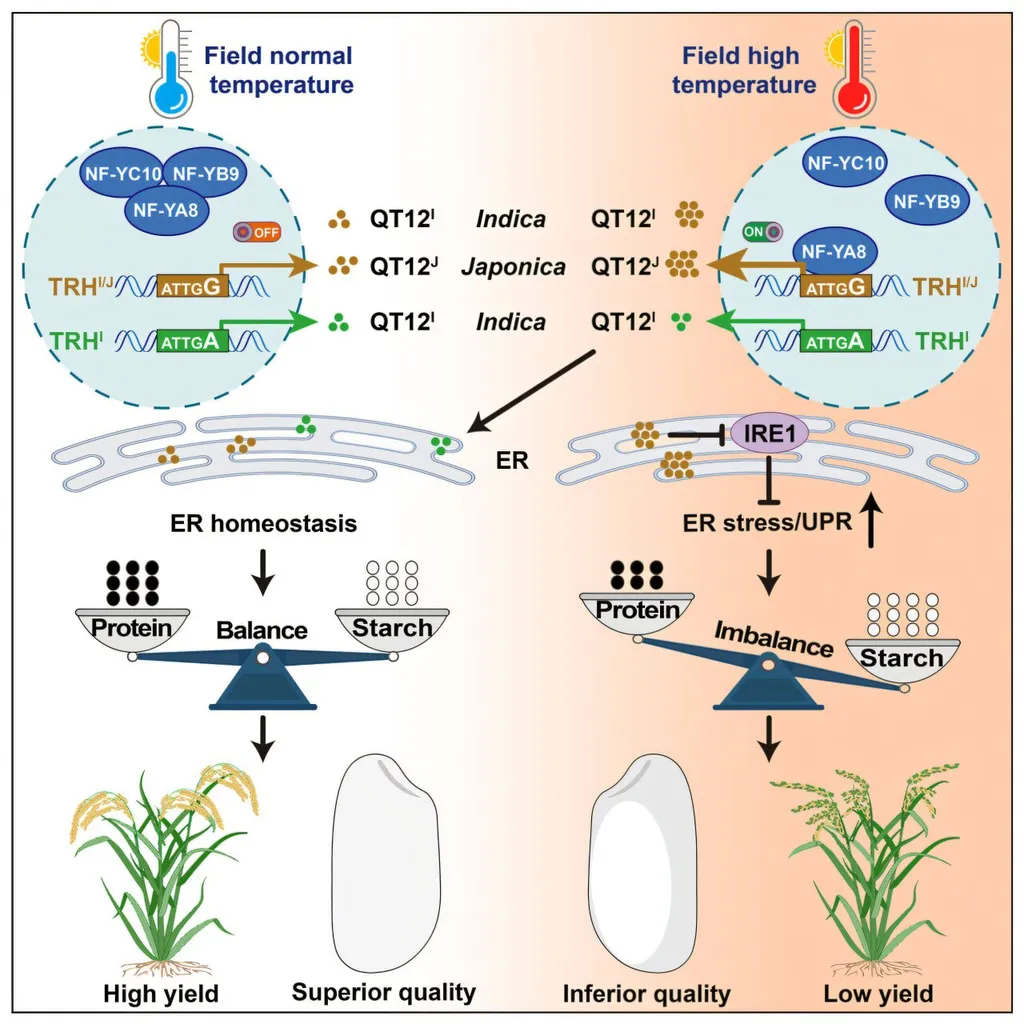
In a significant stride towards enhancing rice resilience, researchers have identified 12 key genes within the MYB transcription factor family that play pivotal roles in regulating rice responses to both abiotic and biotic stresses. Published in *Scientific Reports*, this study, led by Md. Atik Mas-ud from the College of Plant Science and Technology at Huazhong Agricultural University, sheds light on the genetic mechanisms underlying stress tolerance in rice, offering promising avenues for developing more robust rice varieties.
The MYB transcription factors are well-known for their roles in stress tolerance, but the specific functions of key genes within this family have remained largely unexplored until now. The research team identified 183 putative OsMYB transcription factors distributed across the rice genome and pinpointed 12 uncloned key genes using advanced computational algorithms. These genes were found to be randomly distributed on seven chromosomes, classified into three subfamilies, and exhibited evolutionary links among these gene families.
The study employed a comprehensive approach, including phylogenetic analysis, gene structure analysis, domain architecture, conserved motifs, phytohormonal cis-acting elements, and protein structure analysis. Syntenic pair analysis revealed that these key genes have multiple relationships with other plant species, suggesting a conserved mechanism across different crops.
“Understanding the genetic basis of stress tolerance is crucial for developing rice varieties that can withstand adverse environmental conditions,” said lead author Md. Atik Mas-ud. “Our findings provide a foundation for future research and practical applications in agriculture.”
Gene Ontology (GO) enrichment analysis highlighted the significant roles of these key genes in gene expression regulation, transcription factor activity, and nuclear localization. Expressology tree analysis indicated that these genes might have various functions under development and stress conditions. The gene expression data analysis showed that the expression of the 12 key genes is induced by abiotic stresses such as drought, salt, cold, and heat, as well as different biotic stresses, suggesting their involvement in stress response mechanisms.
Relative gene expression results through qRT-PCR analysis revealed that these key genes are heat and salt-induced, playing crucial roles in rice responses to heat and salt stress. The identification of these key genes opens up new possibilities for developing rice varieties that are tolerant to both abiotic and biotic stresses, which could have significant commercial impacts for the agriculture sector.
“By understanding and manipulating these key genes, we can enhance the resilience of rice crops, ensuring food security and economic stability for farmers worldwide,” added Mas-ud. This research not only advances our scientific understanding but also paves the way for practical applications in crop improvement, potentially revolutionizing the agriculture industry.
The findings of this study could shape future developments in the field of agritech, particularly in the realm of genetically modified crops. By focusing on these key genes, researchers and agricultural companies can develop rice varieties that are more resilient to environmental stresses, ultimately leading to higher yields and more sustainable farming practices. This research represents a significant step forward in the quest to improve crop resilience and food security in the face of a changing climate.