
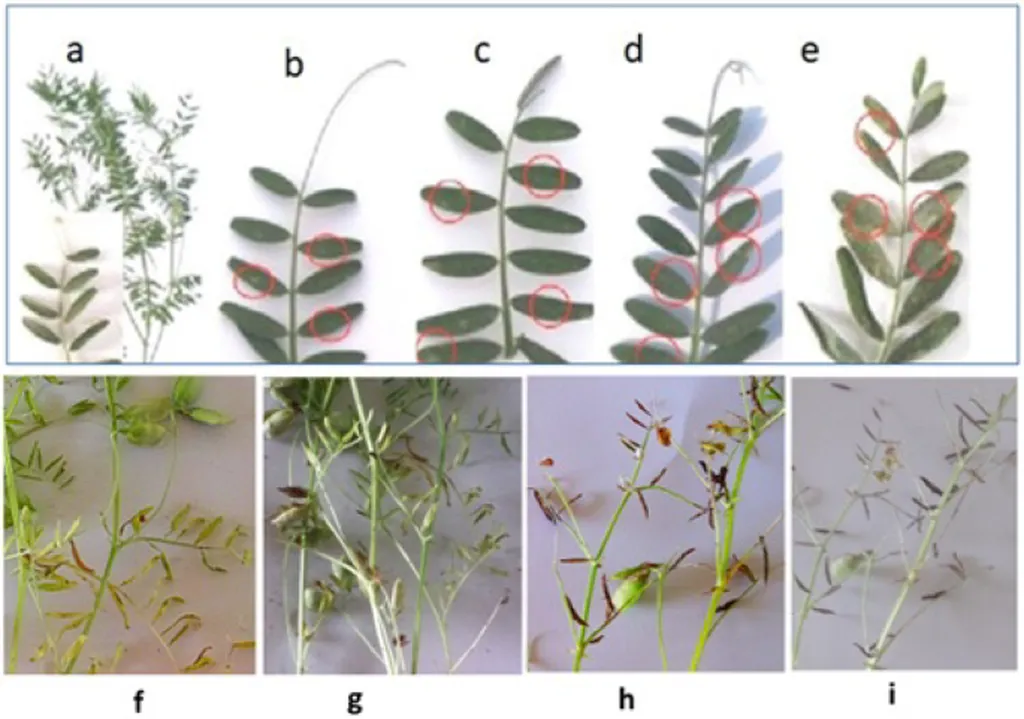
In the relentless battle against crop diseases, scientists are turning to advanced technologies and genetic insights to bolster plant defenses. A recent study published in *Scientific Reports* sheds light on the fight against Ascochyta blight, a significant threat to lentil cultivation worldwide. Led by Mohsen Modareskia from the Department of Plant Breeding and Biotechnology at Shahrekord University, the research offers promising avenues for developing resistant lentil varieties, potentially transforming the agriculture sector.
Ascochyta blight, caused by the pathogen *Ascochyta lentis*, poses a substantial challenge to lentil production, impacting yields and quality. Traditional breeding methods have struggled to keep pace with the evolving pathogen, necessitating innovative approaches. Modareskia and his team embarked on a comprehensive study to evaluate 79 lentil genotypes, employing a combination of phenotyping and genetic analysis to identify resistant varieties.
The study revealed that 69.62% of the genotypes were susceptible, while 21.51% showed moderate resistance, and only 8.86% exhibited strong resistance. “This variation in resistance highlights the genetic diversity within lentil germplasm, which is crucial for breeding programs aiming to develop resistant varieties,” Modareskia explained.
To delve deeper into the genetic underpinnings of resistance, the researchers utilized defense-gene related Simple Sequence Repeats (SSRs). These genetic markers provided insights into the population structure and the genomic regions associated with disease resistance. The SSR locus RRM1, with a Polymorphism Information Content (PIC) value of 0.74, proved particularly effective in evaluating the lentil germplasm.
The integration of machine learning techniques further enhanced the study’s findings. By combining a genetic algorithm with a quadratic Support Vector Machine (SVM), the researchers identified the allele PP2C-7 of the gene PP2C as a key feature for predicting lentil reactions to *A. lentis*. This approach not only streamlined the identification of resistant genotypes but also demonstrated the potential of artificial intelligence in plant breeding.
The study also explored the molecular response of lentil plants to *A. lentis* infection. Transcripts of defense-related genes, including RBP-hnRNPs (a transcriptional factor) and PR-2 (an anti-fungal compound), were measured at 24, 48, and 72 hours post-inoculation. Resistant genotypes showed a rapid and robust response, particularly at 48 and 72 hours, underscoring the importance of timely and vigorous defense mechanisms.
The implications of this research for the agriculture sector are profound. By identifying resistant genotypes and understanding the genetic basis of resistance, breeders can develop lentil varieties that are more resilient to Ascochyta blight. This not only enhances crop yields but also reduces the reliance on chemical pesticides, promoting sustainable agriculture practices.
Moreover, the application of machine learning and genetic analysis in this study sets a precedent for future research. As Modareskia noted, “The continuous screening of lentil germplasm is essential due to the co-evolution of pathogens and resistant genes. Artificial intelligence, through defense genes relevant SSRs, could reliably identify resistance type genotypes, paving the way for more efficient and targeted breeding programs.”
In conclusion, this research represents a significant step forward in the fight against Ascochyta blight. By leveraging advanced technologies and genetic insights, scientists are equipping lentil crops with the tools they need to thrive in the face of this persistent pathogen. The findings not only offer immediate benefits for lentil cultivation but also open new avenues for innovation in plant breeding and disease resistance research.