
In the face of escalating salinity stress threatening global agriculture, a novel solution has emerged from the lab of Masuma Akter at the Department of Agronomy, Faculty of Agriculture. Her team’s research, published in *Plant Signaling & Behavior*, reveals that magnesium oxide nanoparticles (MgO-NPs) could be a game-changer for soybean farmers grappling with saline soils.
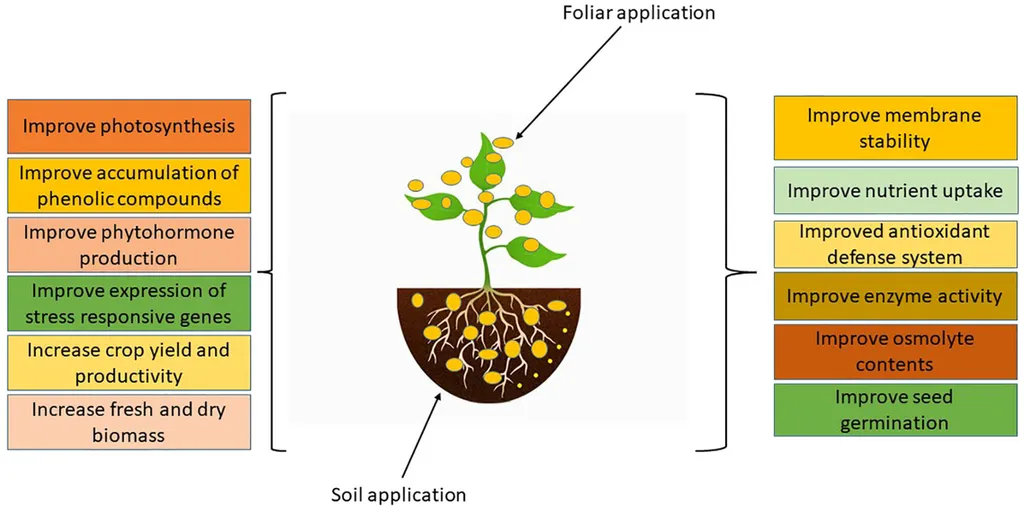
Soybean, a critical crop for food and biofuel, is particularly vulnerable to salinity, which disrupts its physiological and biochemical processes, leading to significant yield losses. Akter’s study demonstrates that foliar application of MgO-NPs can effectively mitigate these effects. “We found that 400 ppm of MgO-NPs significantly improved the plant’s ability to cope with salinity stress,” Akter explains. This treatment boosted the relative water content, photosynthetic rate, and membrane stability index of soybean plants, while also enhancing chlorophyll and carotenoid contents.
The implications for the agriculture sector are substantial. Salinity affects an estimated 20% of irrigated lands worldwide, and soybean is a major crop in many of these regions. By using MgO-NPs, farmers could potentially improve their yields and secure their livelihoods. “This is not just about increasing yield; it’s about making agriculture more resilient in the face of climate change,” Akter notes.
The study also sheds light on the underlying mechanisms. MgO-NPs were found to elevate proline and soluble sugars, which help plants osmoregulate, and reduce malondialdehyde and hydrogen peroxide levels, indicating decreased oxidative stress. Moreover, the nanoparticles enhanced antioxidant activity and improved yield traits, including pod number, seed weight, and overall seed yield per plant.
While the results are promising, Akter cautions that more research is needed. “Field studies are essential to validate these findings and explore the practical application of MgO-NPs,” she says. Nonetheless, the potential is clear. This research could pave the way for innovative nanomaterial-based solutions to combat salinity stress in crops, not just soybeans, but potentially a wide range of agriculturally important plants.
As the world grapples with the challenges of climate change and food security, such breakthroughs offer a glimmer of hope. They underscore the importance of investing in agricultural research and technology, and the potential of nanotechnology to revolutionize farming practices. The journey from lab to field is long, but with each step, we edge closer to a more sustainable and productive future for global agriculture.