
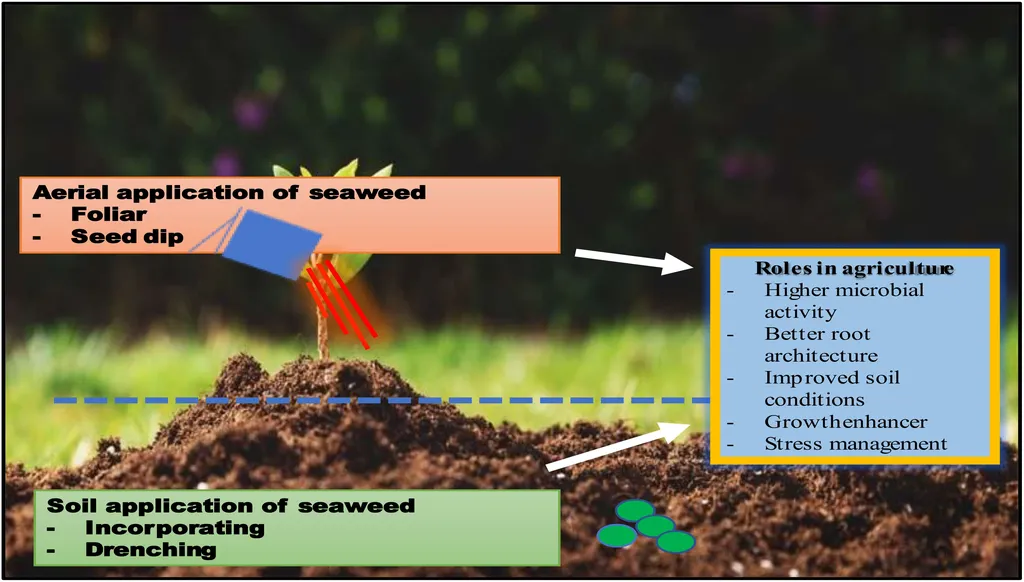
In the quest for sustainable and resilient crop production, a recent study published in *Green Processing and Synthesis* offers promising insights into the use of seaweed extract and citric acid for enhancing early seedling vigour in lentils. This research, led by Bhardwaj Kartik from the Amity Institute of Organic Agriculture (AIOA) at Amity University, Noida, India, explores how these natural priming agents can bolster crop performance, particularly in challenging environments.
The study focuses on the critical phase of early seedling growth, a determinant of crop success, especially in adversity-prone and rainfed areas. By priming lentil seeds with varying concentrations of seaweed extract (1% to 4%) and citric acid (50 to 150 ppm), the researchers observed significant improvements in germination rates, root and shoot elongation, and overall seedling vigour. “The most effective treatment was a combination of 4% seaweed extract and 50 ppm citric acid,” noted Bhardwaj. “This treatment resulted in a remarkable 93.33% germination rate and enhanced seedling vigour index, indicating robust early growth.”
The seaweed extract, rich in plant regulators, phytoelicitor activity, and antioxidants, promoted root and shoot elongation, while citric acid improved membrane stability and reactive oxygen species scavenging. These enhancements suggest that primed seeds are better equipped to withstand environmental stresses, a crucial factor for farmers in unpredictable climates.
The commercial implications of this research are substantial. Lentil production, a vital component of global agriculture, often faces challenges related to poor germination and early seedling mortality. By integrating seaweed extract and citric acid priming into standard agricultural practices, farmers can potentially increase crop yields and reduce the need for chemical interventions. “This eco-friendly approach not only improves early seedling performance but also aligns with sustainable agricultural practices,” Bhardwaj explained. “It offers a practical solution for enhancing crop resilience and productivity.”
The study’s findings highlight the potential for natural priming agents to revolutionize crop management strategies. As the agricultural sector continues to seek sustainable and effective solutions, the use of seaweed extract and citric acid priming could become a cornerstone of modern farming practices. This research paves the way for further exploration into the benefits of natural priming agents, potentially extending to other crops and agricultural systems.
In an era where sustainability and resilience are paramount, this study provides a beacon of hope for farmers and agronomists alike, offering a glimpse into the future of eco-friendly and productive agriculture.