
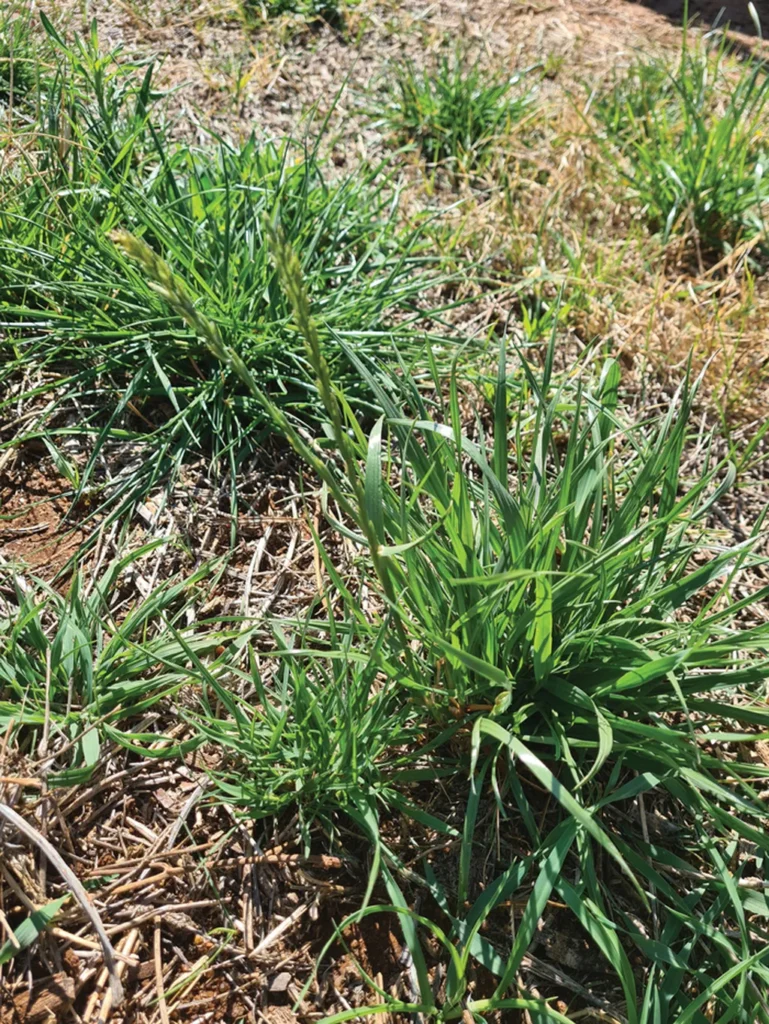
In the ongoing battle against herbicide-resistant weeds, a new study offers a glimmer of hope for farmers in South Africa grappling with glyphosate-resistant smooth pigweed. The research, published in the journal *Weed Technology*, provides a roadmap for managing these resilient weeds, which have been confirmed in the KwaZulu-Natal Province.
The study, led by Nhlanhla M. Shabangu, a postgraduate student at the University of Pretoria, evaluated various herbicide products with different sites of action (SOAs) to find effective alternatives for controlling glyphosate-resistant (GR) smooth pigweed populations. The findings could have significant commercial impacts for the agriculture sector, offering new strategies to combat this persistent weed.
Smooth pigweed, a notorious competitor with crops, has developed resistance to glyphosate, the most widely used herbicide in the world. This resistance poses a substantial challenge to farmers, threatening crop yields and profitability. “The increasing number of weeds resistant to multiple herbicides is a growing concern,” Shabangu explained. “Our study aimed to provide alternative options for controlling these GR smooth pigweed populations.”
The research team conducted dose-response assays for both preemergence and postemergence herbicides under glasshouse conditions. They tested seeds from GR smooth pigweed populations from Bergville and Winterton, as well as a glyphosate-susceptible (GS) population from Hendrina. The results were promising. Preemergence herbicides, such as mesotrione, atrazine, imazethapyr, and acetochlor, provided greater than 90% control across all populations.
For postemergence herbicides, mesotrione proved effective in controlling all the GR populations. However, the GS population from Hendrina showed reduced sensitivity, highlighting the need for tailored approaches based on local weed populations. Atrazine was also effective at higher-than-recommended rates in the GR populations. The study also found that a tank mixture of tembotrione and atrazine had an additive effect compared to the sole application of these herbicides.
Chlorimuron-ethyl, on the other hand, was only effective on the GS population, underscoring the importance of understanding the specific resistance profiles of weed populations. “These results suggest that incorporating effective preemergence and postemergence herbicides into weed management programs could improve control of GR populations of smooth pigweed,” Shabangu noted.
The findings of this study could shape future developments in weed management, emphasizing the need for integrated approaches that combine multiple herbicides with different SOAs. This strategy can help delay the onset of resistance and prolong the useful life of existing herbicides. For the agriculture sector, this means more sustainable and effective weed control, ultimately leading to better crop yields and economic returns.
As the fight against herbicide-resistant weeds continues, research like this offers valuable insights and practical solutions. It underscores the importance of ongoing scientific investigation and collaboration between researchers, farmers, and industry stakeholders to address the challenges posed by resistant weeds.
The study, “Managing resistance: Evaluating alternative herbicides for glyphosate-resistant smooth pigweed (Amaranthus hybridus) in the Republic of South Africa,” was published in *Weed Technology* and led by Nhlanhla M. Shabangu from the Department of Plant and Soil Sciences at the University of Pretoria.