
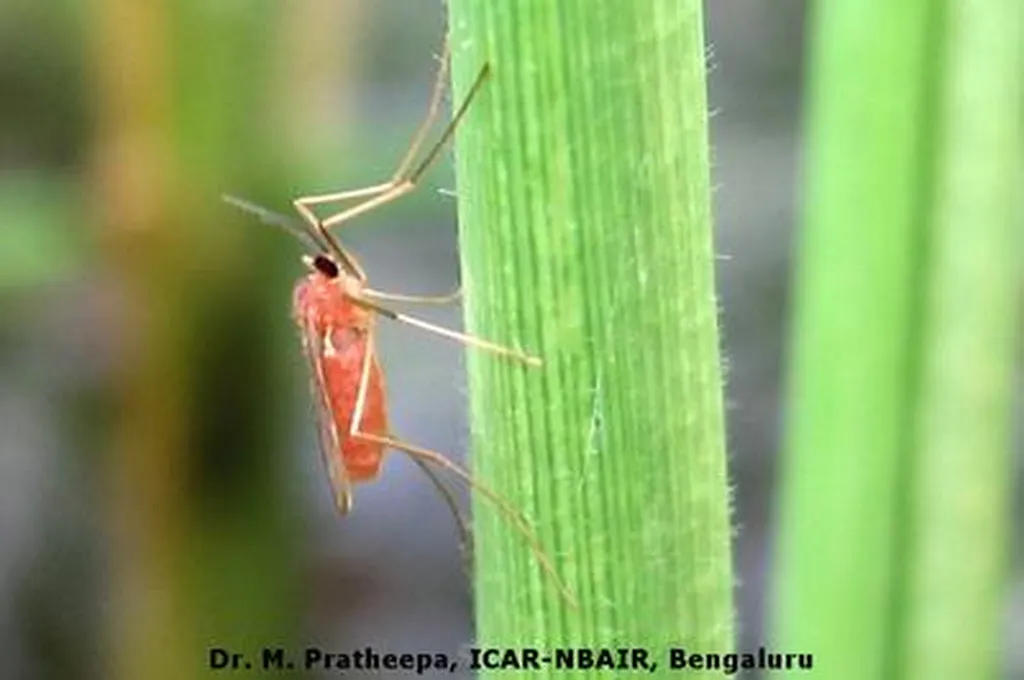
In the heart of Asia, where rice paddies stretch as far as the eye can see, a tiny pest is causing big problems. The Asian rice gall midge, Orseolia oryzae, is a formidable foe for rice farmers, capable of slashing yields and threatening food security. But a new review published in *Plant Protection Science* offers a beacon of hope, outlining the latest strategies to combat this persistent pest and secure the future of rice production.
The review, led by Sivasubramaniyan Sathishkumar from the Department of Plant Biotechnology at Tamil Nadu Agricultural University, delves into the intricate world of the rice gall midge, exploring its biology, lifecycle, and the damage it inflicts on rice crops. “Understanding the enemy is the first step in defeating it,” Sathishkumar asserts, highlighting the importance of comprehending the pest’s infestation mechanisms and the plant’s defensive responses.
The research underscores the significance of breeding resistant rice varieties, a strategy that has shown great promise in the long-term control of the gall midge. By pyramiding resistance genes—combining multiple resistance genes into a single variety—scientists are creating rice plants that are more resilient against this pest. This approach, coupled with integrated pest management (IPM) techniques, could revolutionize rice farming, reducing reliance on chemical pesticides and promoting sustainable agriculture.
Advances in crop improvement techniques, such as genotyping, phenotyping, and marker-assisted breeding, are also highlighted in the review. These cutting-edge methods allow breeders to identify and select resistant plants more efficiently, accelerating the development of new, durable rice varieties. “The future of rice pest management lies in our ability to harness these technologies and deploy them effectively in the field,” Sathishkumar notes.
The review also emphasizes the importance of monitoring gall midge populations for virulence, ensuring that breeding efforts stay one step ahead of the pest’s evolutionary adaptations. By understanding the genetic basis of resistance, scientists can develop more targeted and effective strategies for combating the gall midge.
Looking ahead, the research points to several exciting avenues for future exploration. Identifying novel resistance genes, improving molecular breeding techniques, and developing IPM strategies that combine genetic resistance with eco-friendly controls are all key areas of focus. As the global population continues to grow, the demand for rice—a staple food for more than half the world—will only increase. Ensuring the sustainability of rice production is not just an agricultural imperative; it’s a moral one.
For the agriculture sector, the implications of this research are profound. By developing durable, gall midge-resistant rice varieties, farmers can protect their yields and livelihoods, while also contributing to a more sustainable and secure food future. As Sathishkumar and his colleagues continue to unravel the complexities of rice gall midge resistance, they are paving the way for a new era of innovation in rice pest management. The battle against the Asian rice gall midge is far from over, but with each new discovery, farmers and scientists alike are gaining ground in this crucial fight.