
In the relentless pursuit of precision medicine, researchers have turned to automated machine learning (AutoML) to enhance the prediction of breast cancer variant pathogenicity. A recent study published in the *Computational and Structural Biotechnology Journal* sheds light on how thoughtful dataset selection can significantly improve the accuracy of these predictions, potentially revolutionizing early detection and treatment strategies.
Breast cancer remains a formidable challenge, with its development influenced by a complex interplay of genetic predispositions, environmental factors, and somatic mutations. Accurate prediction of variant pathogenicity is crucial for identifying high-risk individuals and tailoring personalized treatment plans. However, existing computational tools often fall short due to their lack of disease-specific training and limited generalization across diverse variant datasets.
To address this gap, lead author Rahaf M. Ahmad from the Department of Genetics and Genomics at the United Arab Emirates University, along with her team, systematically benchmarked the predictive utility of four distinct variant datasets using three AutoML frameworks: TPOT, H2O AutoML, and MLJAR. Their goal was to evaluate how dataset composition influences classification performance and to identify the optimal dataset for breast cancer-specific pathogenicity prediction.
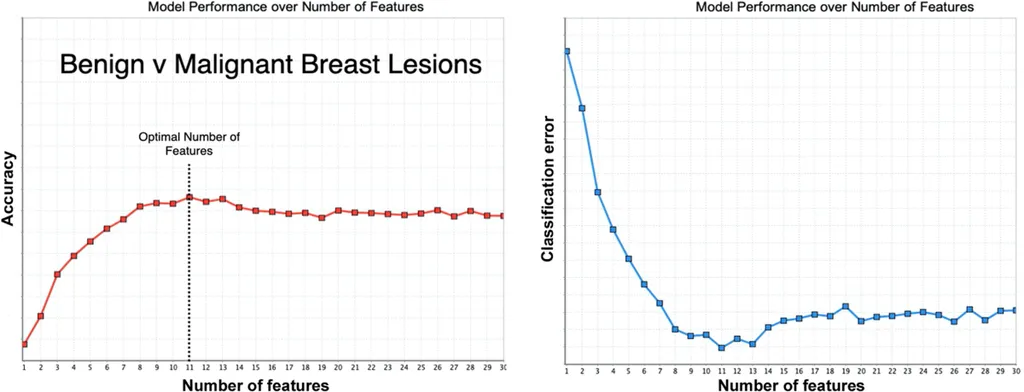
The study revealed that Dataset-2, curated from both cancer-specific and non-cancer databases, consistently yielded the highest predictive performance across all frameworks. H2O AutoML achieved a remarkable accuracy of 99.99%, while TPOT and MLJAR also demonstrated robust generalization on this dataset. Feature importance analyses highlighted conservation scores and pathogenicity metrics as dominant predictors, underscoring the biological relevance and transparency of the models.
“This study presents a scalable, interpretable AutoML benchmarking framework tailored to the clinical prioritization of breast cancer variants,” Ahmad explained. “By demonstrating the superiority of cancer-specific, disease-relevant datasets, our findings underscore the critical importance of thoughtful dataset design in machine learning pipelines for genomic medicine.”
The implications of this research extend beyond breast cancer, offering a foundational tool for precision diagnostics and the advancement of personalized oncology. The study’s framework is readily transferable to other genetic disorders, providing a robust method for optimizing dataset selection and improving predictive accuracy.
As the field of genomic medicine continues to evolve, the integration of AutoML and carefully curated datasets holds promise for enhancing the precision and efficacy of diagnostic tools. This research not only advances our understanding of breast cancer variant pathogenicity but also paves the way for innovative approaches in personalized medicine, ultimately improving patient outcomes and shaping the future of oncology.