
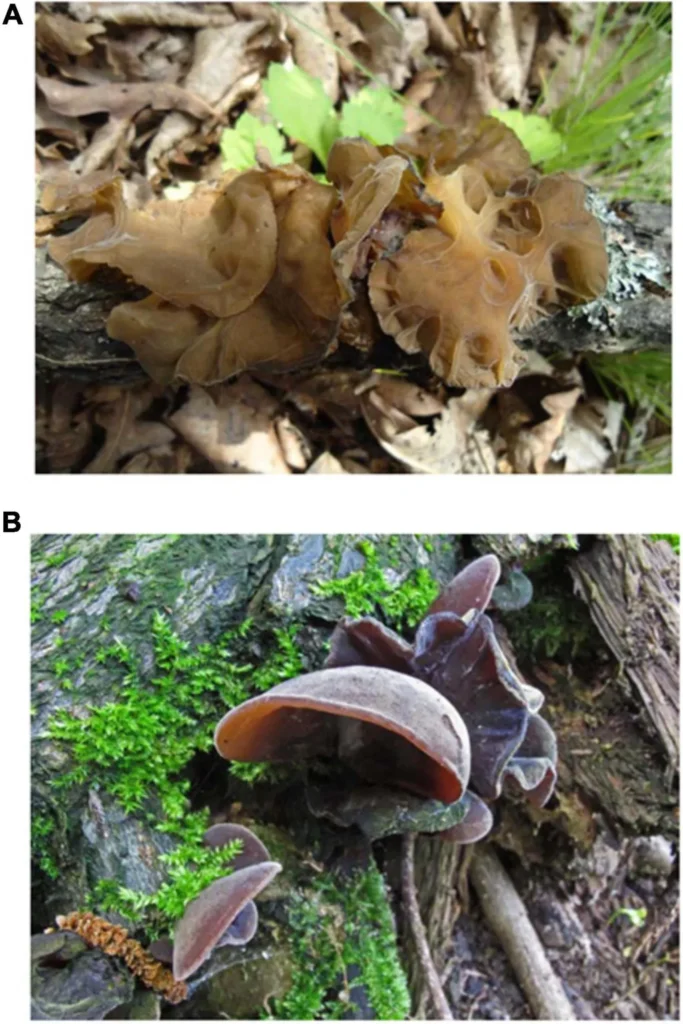
In the lush, biodiverse landscapes of Hainan Province, China, a team of researchers has uncovered a promising new strain of Auricularia, a genus of edible and medicinal mushrooms. This discovery, published in the journal *Studies in Fungi*, could have significant implications for the agriculture and food industries, particularly in the cultivation and utilization of tropical fungal resources.
The study, led by Jing-Fang Sun of the Haikou Key Laboratory for Conservation and Utilization of Edible and Medicinal Fungal Germplasm Resources, identified a wild strain of Auricularia cornea collected from Qixianling National Forest Park. Through a combination of morphological analysis and genetic sequencing, the researchers confirmed the strain’s identity and set out to optimize its cultivation conditions.
“Understanding the optimal growth conditions for this wild strain is crucial for its commercial cultivation,” Sun explained. The team conducted a series of experiments to determine the ideal nutrient composition, pH levels, and temperature for mycelial growth. They found that the strain thrived in a substrate rich in mannitol and yeast extract, with a pH of 7.0 and a temperature of 30°C.
The researchers also developed an optimal substrate formula for fruiting body production, which included sawdust, corncob, bran, cottonseed hull, corn flour, and small amounts of CaCO3 and gypsum. The resulting fruiting bodies were analyzed for their nutritional composition, revealing a crude polysaccharide content of 2.93%, crude fiber of 15.5%, crude fat of 2.3%, and ash of 2.8%. However, the study identified methionine and cysteine as the restricted amino acids in the fruiting bodies.
The findings of this study provide a valuable reference for the exploration and utilization of Auricularia resources in Hainan’s tropical rainforests. “This research not only contributes to the scientific understanding of Auricularia cornea but also paves the way for the development of new varieties and commercial applications,” Sun noted.
The commercial potential of this research is substantial. Auricularia species are highly valued in the food industry for their unique texture and nutritional benefits. The successful cultivation of this wild strain could lead to new products and markets, particularly in regions with similar tropical climates. Additionally, the study’s insights into optimal growth conditions and nutritional composition can inform future breeding programs and agricultural practices.
As the global demand for sustainable and nutritious food sources continues to grow, the cultivation of edible and medicinal mushrooms like Auricularia cornea offers a promising avenue for innovation. This research not only advances our understanding of fungal biology but also highlights the potential for agricultural advancements in the tropics.
The study, led by Jing-Fang Sun and published in *Studies in Fungi*, underscores the importance of exploring and utilizing the rich biodiversity of tropical regions. As the world seeks new solutions to food security and sustainability, the insights gained from this research could play a crucial role in shaping the future of agriculture.